Watch on UN Web TV

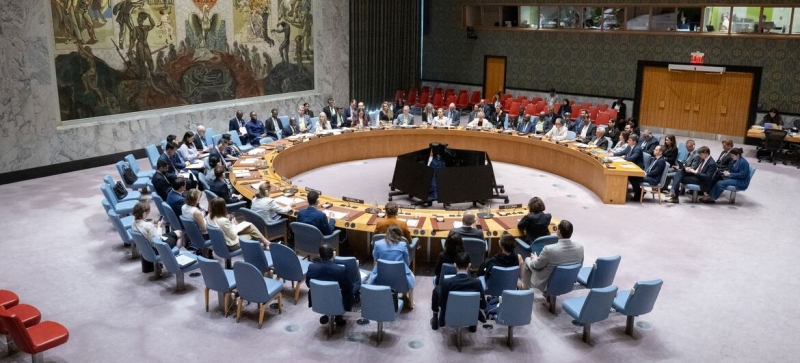
Photo UN/E. Debebe Meeting room of the UN Security Council. UN Security Council meeting on Ukraine: the UN deputy head stressed the need for urgent diplomatic efforts to achieve peace Peace and Security
July was the deadliest month for Ukrainian civilians since May 2022, and the number of civilian casualties continues to rise. This was stated on Monday by UN Under-Secretary-General for Political and Peacebuilding Affairs Rosemary DiCarlo at a meeting of the UN Security Council.
DiCarlo recalled that August 24 marked four and a half years since the beginning of the full-scale invasion of the Russian Federation into the territory of Ukraine. During this time, the war, she said, led to widespread loss of life, destruction and population displacement. In July alone, at least 17 children were killed and another 166 were injured, the highest monthly number of child casualties since April 2022.
According to data presented at the Security Council meeting, since the previous briefing, Russia has intensified large-scale attacks on civilians and civilian infrastructure in Ukraine. Kyiv and the Kyiv region were subjected to some of the most intense shelling of the entire war. On the night of August 20, as a result of another attack using ballistic missiles and long-range drones, according to the Ukrainian authorities, at least 17 people were killed and more than 40 were injured. Residential buildings, a school, a children’s hospital and other civilian objects were damaged.
According to the Office of the UN High Commissioner for Human Rights, since February 2022, the deaths of at least 16,874 Ukrainian civilians, including 820 children, have been confirmed. 51,273 people were injured, including 3,126 children.
“I reiterate the Secretary General’s strong condemnation of the Russian Federation’s attacks on the civilian population and civilian infrastructure of Ukraine,” DiCarlo said.
60~p>The Deputy Head of the UN also expressed concern about the expanding consequences of the conflict on the territory of the Russian Federation. She said the Secretary-General equally condemns the recent drone attacks, which have reportedly caused civilian casualties and the destruction of civilian infrastructure in Russia. From January to July 2026, Russian authorities reported 329 civilian deaths and 2,197 injuries across the country.
During her speech, Rosemary Dikralo paid special attention to the situation in the Black and Azov Seas: ongoing attacks on port, grain and shipping infrastructure negatively affect the export of Ukrainian agricultural products and create risks for global food security. According to the Food and Agriculture Organization of the United Nations (FAO), international grain prices rose 3.4 percent in July. a ceasefire leading to a just, lasting and comprehensive peace in accordance with international law, the UN Charter and relevant UN resolutions,” she said.
Humanitarian consequences of war
Special attention at the Security Council meeting was paid to the humanitarian consequences of the war. UN Under-Secretary-General for Humanitarian Affairs and Emergency Relief Coordinator Tom Fletcher, who recently visited Ukraine, reported that in the first half of 2026, the number of civilian casualties increased by 37 percent compared to the same period last year.
During a trip to Kherson, Fletcher became familiar with the consequences of the active use of drones near the front lines. According to him, this territory has turned into a zone where people are constantly in danger, where roads and buildings are completely covered with nets from drones, and residents are forced to adjust their routes and movement schedules every day. Drone attacks have increased by 60 percent since the start of the year, often targeting civilians.
Humanitarian organizations also operate in extremely dangerous conditions. According to UN data, from January to July, 10 humanitarian workers were killed and almost 40 were injured in Ukraine. During this period, at least twenty warehouses containing humanitarian aid were destroyed. Both humanitarian convoys and vehicles involved in the evacuation of civilians came under fire. Despite this, in the first six months of the year, humanitarian organizations managed to help more than three million people.
“The people I met during my trip to Ukraine need no further words of admiration for their resilience. They need protection. They need help. And above all, they need this war to end,” concluded Tom Fletcher.