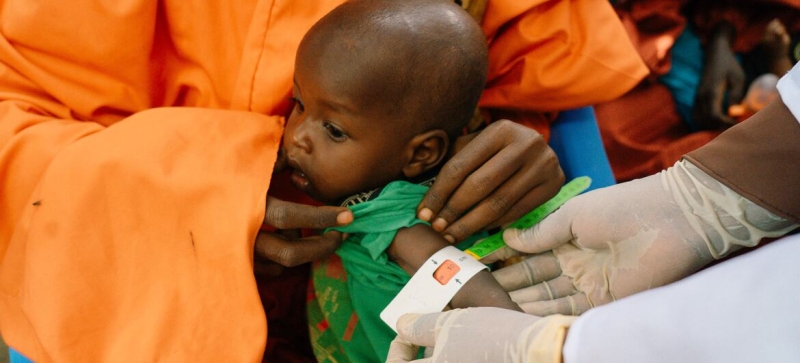

© WFP/S. Cuevas-Gallardo A child is being screened for malnutrition in the Somali town of Burhakaba. Somalia: Child hunger soars as humanitarian aid dwindles Humanitarian aid
The global humanitarian funding crisis is increasingly affecting the most vulnerable children in Somalia, where hundreds of health and food facilities have been forced to close. The United Nations Children’s Fund (UNICEF) warned about this on Friday.
“Feeding centers are closing, and access to safe water and education is becoming increasingly elusive for those who need it,” said UNICEF spokesman James Elder.
Speaking from Nairobi via video link to reporters in Geneva after visiting a number of towns north of Mogadishu, Elder noted that 205 feeding centers have already closed due to unprecedented cuts in humanitarian aid funding. “As always, it’s the children who pay the price,” he said. he.
In the first six months of this year, the number of children admitted to specialized stabilization centers with severe acute malnutrition and complications increased by 32 percent compared to the same period last year.
“Fewer facilities mean a longer journey for mothers and babies. A longer journey means later treatment. Delayed treatment results in more severe disease and increases the risk of preventable death,” Elder warned.Increasing drought has destroyed much of Somalia’s crops and livestock, depriving hundreds of thousands of people in the country of access to food and water. More than half a million people were forced to flee their homes in the first three months of 2026, with nine out of ten displacements caused by drought.
Of particular concern to humanitarian actors is the fact that 85 percent of those displaced are women and children, who are also among those most affected malnutrition.
“Now is not the time to retreat. “Somalia faces a worsening climate crisis, severe droughts in the north, conflict and displacement, as well as the impact of the war in Iran and rising fuel and fertilizer prices,” a UNICEF official warned. floods.
“Further disruptions are very likely. Under current severe funding reduction scenarios, up to 618 health facilities across the country could close,” added Elder.
About six million people in Somalia face severe food insecurity, according to the UN World Food Programme. Nearly 500,000 children under five are in urgent need of treatment for acute malnutrition.
“Nearly 1.2 million children are expected to suffer from malnutrition this year, including half a million girls and boys with severe acute malnutrition,” Elder said.
External support UNICEF
During the 2022 drought, UNICEF support helped keep 130,000 girls and boys in school, making an important contribution to protecting children in a country that has one of the world’s highest rates of child abuse.
In 2024 and 2025 Over the years, thousands of children formerly associated with armed groups or at risk of recruitment have received reintegration assistance through specialized child protection services.
“Dismantling an effective system of care at a time of greatest need is not saving money. This is a decision that will come at a much higher cost in terms of safety, developmental delays and, increasingly, loss of children’s lives,” Elder said.