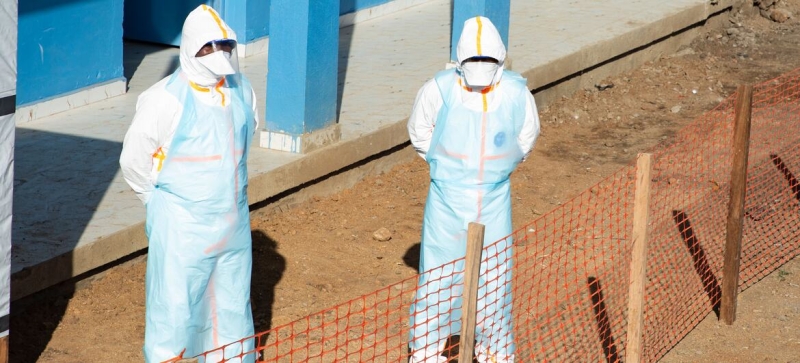

© UNICEF/K. Ndomba-Mbikayi There is still no approved vaccine against Bundibugyo. DR Congo: Ebola claims the lives of people who do not have the opportunity to see a doctor in a timely manner Healthcare
A massive outbreak of Ebola in the Democratic Republic of the Congo (DRC) has killed more than 1,900 people, with most of those infected never reaching treatment centers. Between 60 and 70 percent of Ebola deaths occur in the DRC in communities without medical care, and the problem is now the focus of the World Health Organization (WHO).
“Bundibugyo virus continues to outpace our efforts,” acknowledged WHO regional director for Africa Dr. Mohamed Janabi, speaking in Bunia, the epicenter of the outbreak in eastern DR Congo. There is still no approved vaccine against Bundibugyo.
Three months into the epidemic, WHO, together with Congolese authorities and other partners, intends to urgently step up the response.
What they are saying numbers
Doctor Janabi spent three days in Bunia, the capital of the province of Ituri. This was his fifth visit to the DRC since the epidemic was officially declared on May 15.
Along with Steve Ahuka, one of the specialists leading the local response, Janabi visited several treatment centers and met with local residents to understand why the death toll remained so high.
Discussions with representatives of the local transport association revealed shortcomings in the patient transport system. According to the WHO, half of the deaths among transported patients are due to the fact that they cannot receive care during transport.
“We asked ourselves why people were dying in Bunia, and this is what we realized,” Dr. Janabi said. “There are no such services [for Ebola treatment] in health centers outside Bunia. As a result, everyone goes to Bunia. Unfortunately, they arrive too late.”
Distance as a factor in mortality
The concentration of medical resources in one city turns distance into a factor in mortality.
Because there are no facilities close to where patients live, people must travel long distances to get help, often while already in critical condition.
Travel itself can also contribute to the spread of an epidemic. Patients transferred to Bunia are not always immediately taken to an Ebola treatment center; some are first sent to their local relatives. If a person dies, their body may be returned to their home village, increasing the risk of new infections.
WHO aims to break this chain by bringing health services closer to local communities, better information and transport services, and transport of patients to specialized centers.
“True Story success”
The city of Aru, also in Ituri province, demonstrates what can be achieved with the new strategy. For two weeks now, not a single new case of the disease has been recorded there, which WHO calls “a true success story.”
According to Dr. Janabi, after identifying one case of infection, specialists identified 159 contacts, including 121 people suspected of having the disease. However, the response was not limited to monitoring these people and was extended to the surrounding communities.
In addition, new health facilities and awareness campaigns are being launched in the region so that patients no longer have to travel to Bunia for treatment. The goal is twofold: to start treatment earlier and to prevent the provincial capital from becoming a hub of both patients and the risk of further transmission.
Focus on local communities
“Now we must protect Bunia,” Dr. Janabi said, adding that WHO intends to work with DR Congo’s health authorities to consider setting up new centers outside the city to treat people could receive care where they live.
WHO also plans to deploy an additional 400 beds in the province for Ebola patients and another 100 beds to provide patients with other health services. However, the organization emphasizes the need to expand the response beyond the health system. For example, market traders could organize hand washing themselves. Janabi said the fight against Ebola must be a collective effort.
“I don’t expect the central government to do everything that needs to be done,” he said. “I don’t expect our agencies to do everything necessary.” But if we raise awareness among market traders, I think they might be able to spare a bucket or two for handwashing.” So, three months into the epidemic, WHO is counting not only on scaling up the fight, but also on changing its approach: less concentrated efforts in Bunia and more early response near transmission hotspots. Dr. Janabi believes that this approach could produce results within the next two to three months.