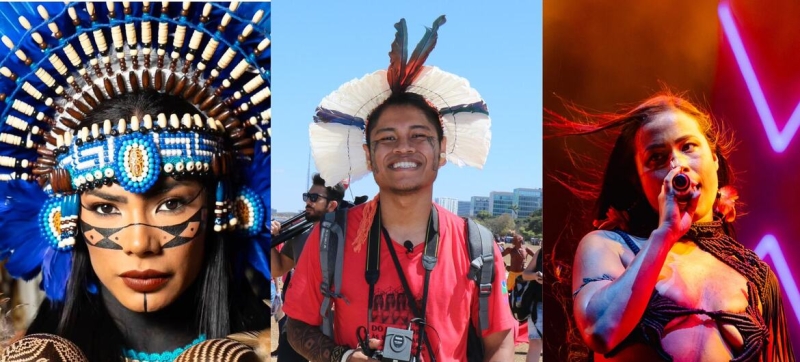

Rayllon Miranda da Silva/Christian Variu/VanceBumbeers From left to right: Marciele Albuquerque, Cristian Variu, Kae Guajajara. Brazil’s young indigenous people are fighting for their rights through art Felipe de Carvalho Climate and Environment
As climate change reshapes Brazil’s indigenous lands, a new generation of the country’s original inhabitants is coming to the forefront of resistance. They see temperatures rising, devastating fires raging, the lands of their ancestors being lost, and their usual sources of food disappearing. At the same time, the new era opens up spaces in the digital world where social media, music, photography and dance form a powerful form of resistance.
Ahead of the International Day of the World’s Indigenous People on August 9, UN News spoke with three youth leaders who are using their voices—and their creativity—to reach millions of people online.
When the Forest Stops Feeding
UN News guests included dancer and entrepreneur Marciele Albuquerque (Munduruku people), singer-songwriter Kae Guajajara (Guajajara people) and photographer Christian Variu (Xavante people). All three are involved in the UN Verified initiative to combat climate misinformation.
Marciele grew up in Juruti, in the heart of the Amazon forest, where childhood meant playing outdoors, swimming in rivers and picking fruit just steps from the village. Today it’s a different story.
“We feel like it’s getting hotter every year,” she says. – Fruits are no longer in the same abundance. They used to grow right next to the village, in the forest. Now we have to go much further – and still there are fewer of them. We see how the seasons have changed: droughts have become extreme, and so have floods.”
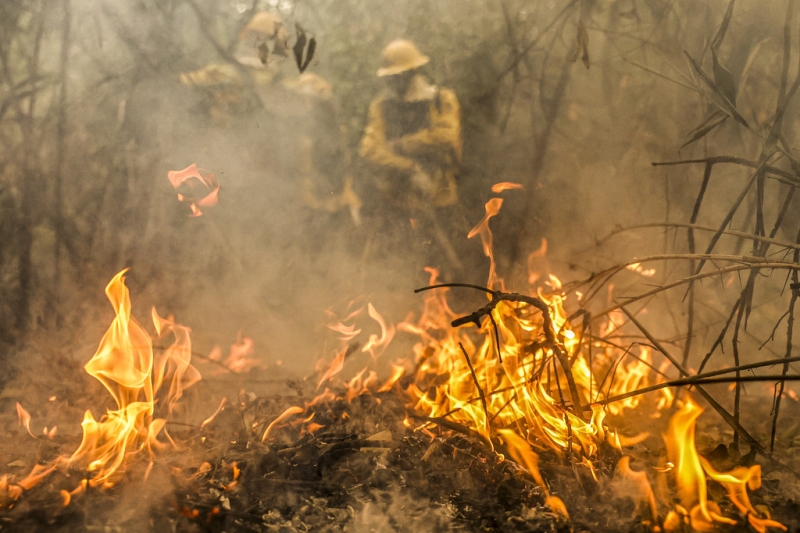
© Agência Brasil/M. Camargo Increasingly intense fires are reshaping the daily lives of indigenous communities.
Fires change everyday life
Cristian Variu is from the Araguaí Valley, Mato Grosso. There, increasingly intense fires are reshaping the Cerrado natural area, disrupting the daily lives of indigenous communities. The consequences go far beyond the environment.
“Life is becoming more and more difficult because the fires are no longer under control,” he says. “They seriously disrupt the food chains that form the basis of the diet of the Xavante people. Because of this, products that are bad for us are increasingly entering our communities. One problem leads to another – and the end result is an impact on health.”
The UN estimates that more than 370 million indigenous peoples around the world are already facing the effects of climate change – and the situation is getting worse as global temperatures rise.
Music is a tool for survival
Born in Mirinzal, Maranhão, Kae Guajajara believes that the current environmental crisis is the result of a development model imposed on indigenous peoples from outside. She emphasizes that distinguishing between facts and misinformation is important today to help communities prepare for climate threats in advance.
For Kae, music has become an act of resistance: “Our songs once celebrated the beauty of nature and our connection to it. Today these same songs speak of the misfortunes of our lands and how we are forced to leave them. They talk about deforestation. We live in a new reality. We tell these stories through music, reimagining ourselves and our times.”
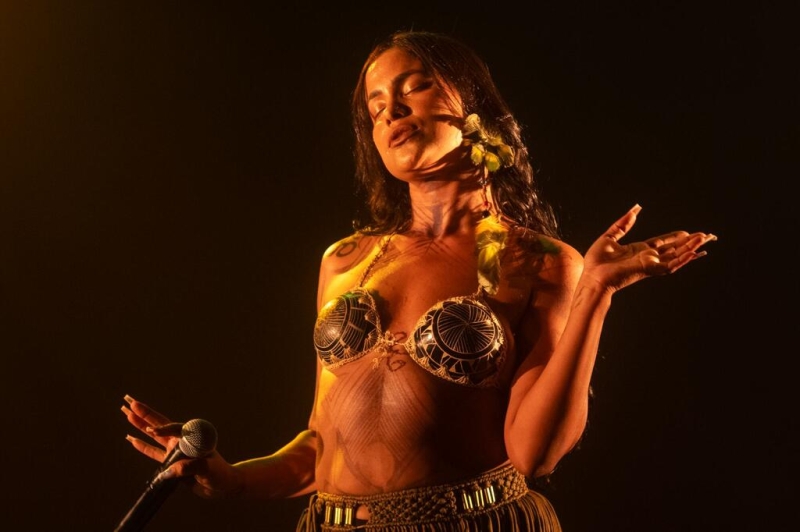
@ SESC Santana/visaovh A fragment of Kae Guajajara’s performance at a music festival.
Kae, who grew up in a favela in Rio de Janeiro, reminds us that about half of Brazil’s indigenous population now lives in cities. She calls for greater government support for urban Indigenous communities.
Kae notes the growing presence of Indigenous artists in the music industry and sees it as a chance to heal a long-standing colonial wound.
Digital activism
Remembering past generations, Christian Variu says that it was they who achieved constitutional rights for their people and created organizations that strengthened civil institutions. His own generation is fighting on another front: “When I look at the actions of indigenous peoples today, I see that our main contribution is communication. Our presence on screen and in the media has become a force.”
Increasing digital activism is helping indigenous peoples participate in political institutions and decision-making in a way that was previously denied to them, he said.
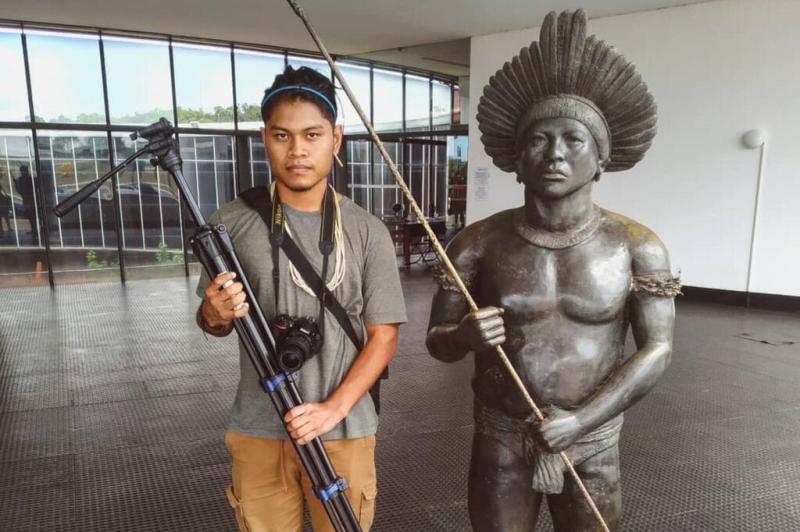
Photo from the personal archive of K. Variu Photographer Cristian Variu is from the Araguaí Valley, Mato Grosso.
“Art is also a way to fight”
Marciele Albuquerque knows this better than many. She became the first indigenous woman to be awarded the title of Cunha-Poranga, the highest title at the famous Parintins Folk Festival. She uses dance to celebrate her ethnic identity and inspire new generations.
One of the songs that accompanied Marciele’s creative triumph – Guerreira das Lutas – still evokes strong emotions in her: “The chorus lists many peoples: Munduruku, Tupinamba, Kayapó, Atroari, Asurini, Zoe, Satere, Hixharyana… This part gives me the most strength, because I represent not only my people. I represent the incredible diversity of Brazil’s indigenous people.”
The song, written in her honor in 2022, became popular throughout the country after her participation in the reality show Big Brother Brasil.
For Marciele, art is not entertainment, but a way to fight. She believes the Parintins Festival allows audiences to connect with indigenous issues while celebrating their culture.
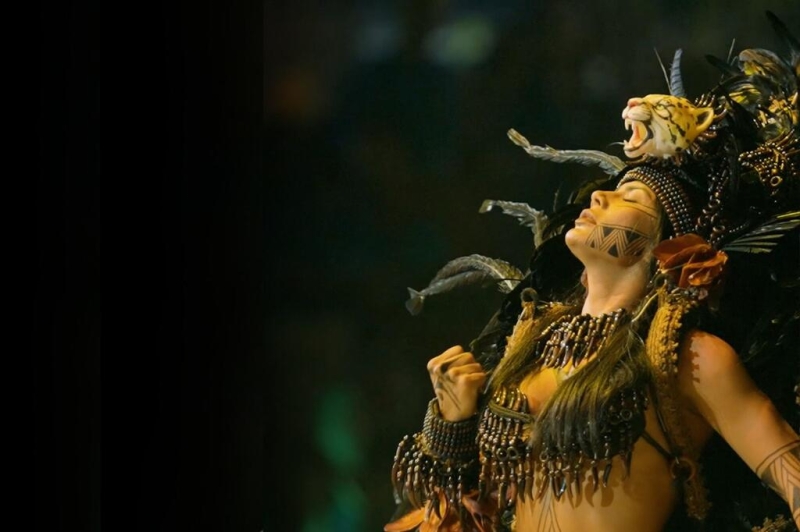
Photo from the personal archive of M. Albuquerque Marciel Albuquerque performing at the Parintins Festival in 2026.
The Power of the Samuma Tree
Kae Guajajara follows a similar path in music, breaking stereotypes about indigenous people losing their identity by using smartphones or making electronic music. Instead, she says, indigenous artists are expanding traditions by weaving them into new musical languages: “Today, you can increasingly hear the sound of maracas against the backdrop of synthesizers.”
Performing at major festivals in Brazil and abroad, Kae is also popularizing the Guajajara language of the people. One of her most famous songs, Samaúma, has a message that perfectly captures her philosophy.
“I really like that song,” she says, “because it says that no matter how much concrete you pour on the ground, roots will still come through. They will grow, break the concrete and take back everything that is theirs.”
For Kae Samuma, a majestic ancient tree revered by many peoples, a symbol of resilience, endurance and life itself.
Ahead of the International Day of the World’s Indigenous Peoples, all three UN News Service guests emphasize that challenges do not weaken indigenous peoples, they make them stronger, more united and decisive. They are like the roots of Samuma, the legendary “Queen of the Forest”, who rises from the earth despite all obstacles.