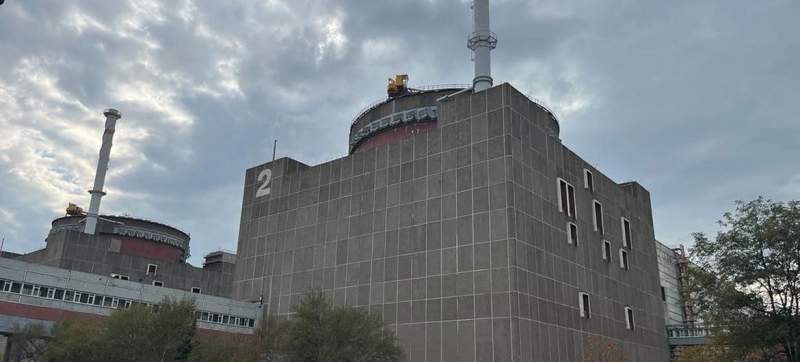

Ⓒ IAEA Zaporozhye Nuclear Power Plant, Ukraine. The IAEA records an increase in military activity near Zaporizhia NPP and warns of new risks to nuclear safety Peace and security
The International Atomic Energy Agency (IAEA) reported on Thursday increased military activity near the Zaporozhye Nuclear Power Plant (ZNPP) and the town of Energodar, where a significant portion of its personnel live. According to IAEA Director General Rafael Mariano Grossi, this undermines efforts to ensure the safety of the plant.
One of the most alarming incidents of recent times was the failure of Internet communications that began on Monday. This is the longest loss of communication in almost four years of the IAEA’s presence at the Zaporizhia NPP. The reasons for the shutdown have not yet been established. At the same time, the station was faced with water supply problems.
“The recent internet outages and water supply problems are another example of the difficulties that plant employees face in an extremely difficult and stressful environment,” Grossi said.
He reiterated the need to comply with the seven principles of nuclear safety during a conflict, including ensuring conditions in which personnel can make decisions without external influence.
The IAEA has also recorded an increase in military activity at other Ukrainian nuclear facilities. Today, one of the operating nuclear power plants reported a power line shutdown, coinciding with the detection of a cruise missile and a drone in the monitoring zone.
Air raid alarms sound almost daily on the territory of the Chernobyl nuclear power plant; Over the past week, two drones have been detected in the monitoring zone. A similar situation is observed at the South Ukrainian Nuclear Power Plant.
“Continuous reports of air raid alerts and drone activity near nuclear facilities underscore the need for maximum restraint and strict adherence to the basic principles of protecting nuclear safety,” said Grossi.
Despite the difficult situation, the IAEA continues its technical assistance program for Ukraine. This week, the operator Energoatom was given a mobile system for monitoring internal exposure, and the Kharkov Institute of Physics and Technology was given equipment for emergency lighting. The supplies were financed by Norway and the UK.
Since the beginning of the conflict, the IAEA has organized more than 240 deliveries of equipment, and almost 50 Ukrainian organizations have received assistance. Grossi noted that the agency will continue to support Ukrainian nuclear facilities with the assistance of member states and the European Union.