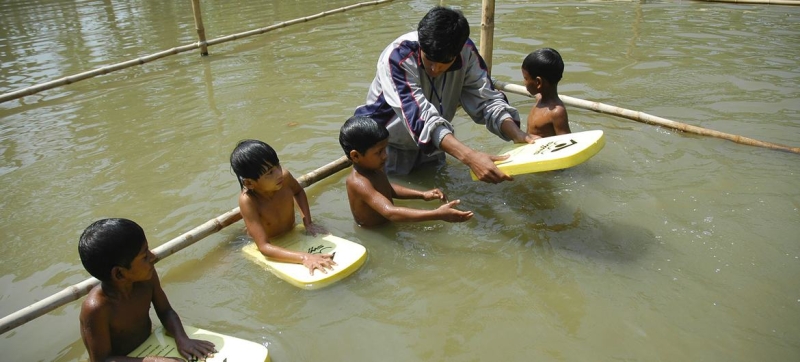

Photo UNICEF/M. Wasif Swimming lessons for children in Bangladesh. WHO unveils seven strategies to prevent drowning Sustainable Development Goals
According to the World Health Organization, nearly 300,000 people drown every year worldwide. Drowning is one of the top ten threats to life for children aged five to 14 years. Ahead of World Drowning Prevention Day on July 25, WHO has unveiled seven strategies to help governments and communities prevent water-related tragedies.
“Every drowning is a tragedy, and most of these deaths are preventable,” said WHO Director-General Tedros Adhanom Ghebreyesus. — Preventing drownings is not the task of one ministry, but a common cause. The reward for these efforts will be lives saved.”
Heat increases risk
Climate change makes the problem even worse. Floods, storms and extreme heat waves are becoming more common, increasing the risk of drowning.
A study in the UK found that with a one-degree increase in temperature, the number of deaths from drowning increases by 7.2 percent, and on days when the temperature exceeds 25 degrees, the risk is almost five times higher than on days below 10 degrees. climate.
Seven measures to save lives
A set of measures called PROTECT covers seven areas:
- creating safe infrastructure in water; transport;
- swimming and water safety training;
- adequate child care;
- preparing local communities for floods and other emergencies situations.
Three tragedies a day
A new program was introduced in Ghana, where about 1,100 people drown every year —an average of three people a day. Children and youth are particularly likely to be targeted.
The launch of the program in Ghana reflects the country’s growing focus on water safety. WHO has called on other countries to implement proven measures that will help protect the most vulnerable communities.
The theme of this year’s World Drowning Prevention Day – “Together for Water Safety” – reminds that such tragedies can only be prevented by the joint efforts of authorities, professionals and local residents.