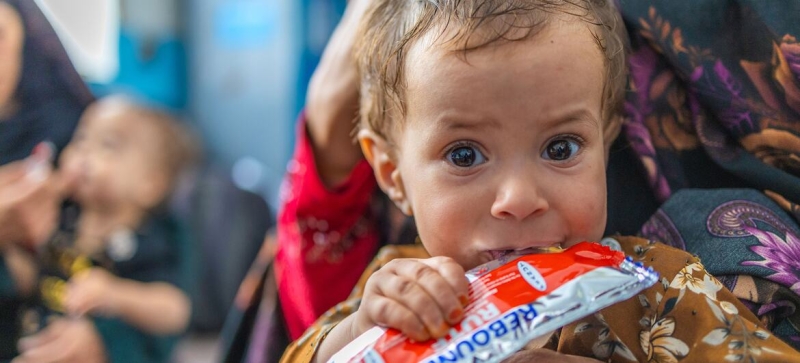

© UNICEF A one-year-old girl is being assessed for malnutrition at a clinic in Kabul. UNICEF sounds alarm: Nearly four million children in Afghanistan are at risk of malnutrition Humanitarian Assistance
Afghanistan has a rapidly growing child nutrition crisis, with some 3.7 million children under five at high risk of malnutrition. This warning was issued by the United Nations Children’s Fund (UNICEF).
UNICEF has conducted a study of this scale for the first time that simultaneously assesses levels of childhood malnutrition and the daily experiences of families facing food insecurity. The study covered every province in the country and revealed early signs of a looming crisis: children are eating less varied foods, skipping meals, or simply going hungry.
The report, titled “Too Little, Too Late: Afghanistan’s Young Child Nutrition Crisis,” found that many households are already forced to reduce the number of meals they eat, forgo more nutritious foods, and reduce portion sizes for children.
UNICEF is particularly concerned that the situation is worsening even before the start of what is traditionally the most dangerous season for children’s health in Afghanistan. Compared to 2025, child wasting rates worsened in 26 of Afghanistan’s 34 provinces. Usually the peak of such cases occurs between July and September, but this time the crisis began to develop much earlier. are getting closer to malnutrition even before the most dangerous season begins,” said UNICEF Representative in Afghanistan Tajudeen Oyewale. According to him, new data allows us to react in advance, without waiting until the child is in critical condition.
Experts emphasize that wasting is one of the most dangerous forms of malnutrition. This is a condition in which the child’s weight is too low in relation to his height. The cause may be lack of nutrition, illness, or a combination of both. Without prompt treatment, the condition can quickly become life-threatening.
UNICEF research shows that children from the most food-insecure households are six times more likely to be malnourished during seasonal crises than their peers from wealthier households.
The problem is not limited to food insecurity. The rise in malnutrition is also linked to disease outbreaks, low vaccination rates, insufficient access to clean water and sanitation, as well as funding shortfalls and disruptions in humanitarian aid supplies, according to humanitarian organizations. All these factors mutually reinforce each other, making children especially vulnerable.
Against this background, UNICEF calls on the international community to urgently increase funding for programs to support children and pregnant women. The Foundation, in particular, intends to expand the initiative aimed at ensuring adequate nutrition of children aged six to 23 months, as well as strengthen preventive measures to prevent the development of severe forms of malnutrition.