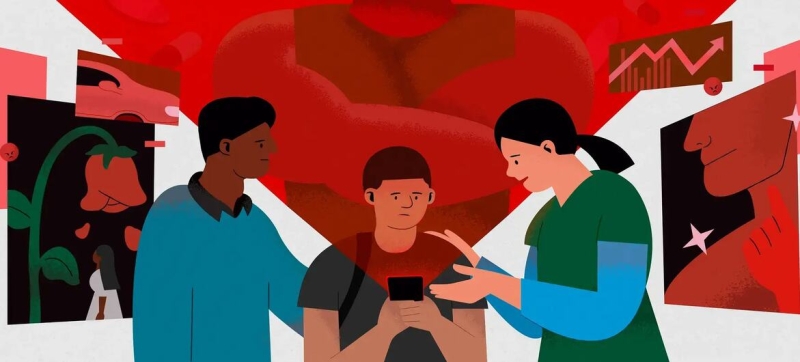

© UN Women/P. Watanashiriku Many boys and young men are searching for answers to questions about their own identity, trying to cope with loneliness and uncertainty, and need support and a sense of belonging. How teenagers are drawn into communities that spread misogyny and what parents can do Culture and education
Today, teenagers spend several hours a day on the Internet. Along with entertainment and educational content, many of them are exposed to the so-called “manosphere” – a network of online communities and bloggers who talk about masculinity, relationships, fitness, career and self-development. However, advice on how to become successful or confident often hides misogyny, stereotypes and ideas about male superiority. UN Women experts explain why this content is troubling and how parents can discuss this topic with their children.
What is the manosphere?
The manosphere is the umbrella name for a network of online communities, forums, blogs and social media accounts united by discussions of issues of masculinity and male identity. Many of them position themselves as platforms where men can talk about relationships, fatherhood, health or personal growth. However, such communities are often united by their rejection of feminism and the spread of the false idea of men as “victims” of modern society. Instead of support, they often promote harsh gender stereotypes, misogyny, and the idea that a man’s worth is determined by his power, material success, and dominance over women.
How teenagers get into the manosphere?
Most often this happens unnoticed. A teenager is looking for advice on working out, self-confidence or dating. Then social media algorithms begin to recommend similar videos – about how to become a “real man”, gain respect or increase your status. Research shows that accounts created on behalf of young men received recommendations containing extremist misogynist content within 23 minutes, regardless of previous views. Gradually, such content becomes more and more radical: success begins to be associated with dominance, control and financial superiority, and failures are attributed to the actions of women, feminism or society.At first glance, the content of the manosphere does not always look radical. However, over time, it can affect the way teens think, talk, and relate to others. Experts recommend paying attention to whether the child begins to spend significantly more time on the Internet, hides what he watches, perceives relationships as competition or control, and also increasingly expresses dissatisfaction with women or feminism. An alarming signal may also be the appearance in speech of such expressions as “alpha”, “beta”, red pill (red pill), as well as disparaging statements about girls and generalizations like “all women are like that.”
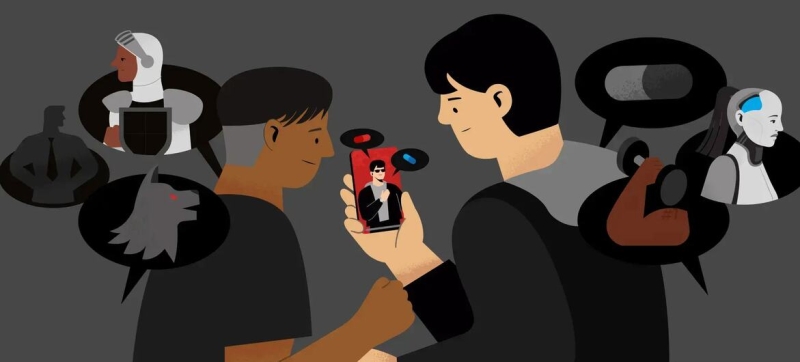
© UN Women/P. Watanashiriku Provocative content receives more views, and its authors receive more income from advertising, subscriptions and paid courses
At the same time, the authors of the guide emphasize that individual words or jokes in themselves do not mean that the teenager was under the influence of the manosphere. Many people repeat popular expressions without fully understanding their meaning. Such situations should be used as a reason for conversation, and not for punishment.Many boys and young men are searching for answers to questions about their own identity, trying to cope with loneliness, uncertainty or rejection in relationships, and need support and a sense of belonging. If they don’t find understanding at home, at school or among their peers, that place often becomes the Internet.
The manosphere offers simple answers to complex questions and creates a sense of community. However, personal difficulties here are often attributed to external reasons, and frustration and anger are directed against women or feminism.
What is behind the popularity of such content?
The authors of the guide note that many of the most famous representatives of the manosphere make money from their audience. Social network algorithms are more likely to promote posts that evoke strong emotions, so provocative content receives more views, and its authors receive more income from advertising, subscriptions and paid courses. As a result, simple and often false explanations for complex problems spread especially quickly.
Are all male influencers the same?
No. Many authors, on the contrary, promote ideas of respect, emotional well-being, mental health and healthy masculinity. In addition, teenagers themselves are increasingly critical of such content, abandoning toxic communities or completely limiting the use of social networks.
UN Women/P. Phut Pheng Research shows that online rhetoric can influence offline behavior.
Why this applies not only to the Internet?
Research shows that online rhetoric can influence offline behavior. When demeaning women, sexism or hate speech become the norm in the digital space, they gradually carry over into everyday communication. For boys, this can mean pressure to conform to rigid expectations of what a “real man” is, and for girls, it can mean feeling insecure and objectified. As a result, everyone suffers: the level of mutual respect and trust decreases. The authors of the guide also cite research showing that young men who hold rigid ideas about masculinity are ten times more likely to commit sexual harassment. from prohibitions and accusations in favor of open dialogue. Instead of judging bloggers or content, it’s better to ask your teen what they find interesting and why. It is useful to discuss together what you see, asking simple questions: “What idea is the author trying to convey?”, “Why did this video become so popular?” or “Who might benefit from this?”. This approach helps develop critical thinking.
The authors of the guide also recommend talking with children more often about emotions, friendship, respect and healthy relationships, and helping them find positive communities and role models. The most important thing is remain calm and maintain trusting relationships. Even if the conversation turns out to be difficult, it is important that the teenager knows that he can openly discuss such topics with his parents.