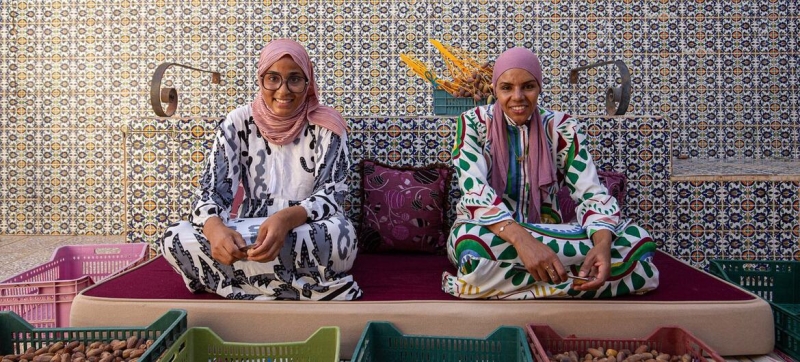

© FAO/X. Ben Hassine Kauter and her staff are making nutritious and healthy desserts from dates thanks to support from FAO’s Agricultural Acceleration Programme. Dates from the Heart of the Desert: How the UN is helping turn local resources into sustainable sources of income Economic Development
Inspired by the cultural heritage of her region, a Tunisian woman created her own date products business, helping to expand opportunities for the local population
With a proud smile, Kauter Aunalla hands over neatly packaged fresh baked goods to his regular customer. Each confection brings the warmth of the oasis of Kebili, located in southern Tunisia, and shows how women entrepreneurs can transform local resources into sustainable sources of income that contribute to the development of local communities. A distinctive feature of its products is the delicate, honey-like taste of dates, which Kauter has known since childhood.
“I grew up in the countryside, and dates were always on our table,” Kauter shares her memories. “They served as a source of nutrients, helping us stay strong and healthy.”
The tradition of date cultivation, which evolved over many centuries, helped Kauter gain financial independence and opened up new professional opportunities for her. In 2022, after graduating from the Faculty of Agronomy in the city of El Kef, located in northwestern Tunisia, she made the bold decision to return to her native Kebili and open her own business. This is how Sweet Jana, a small private bakery, was born, using this traditional local ingredient to create a wide range of products that contribute to the local economy.
Using the natural sweet taste of dates, Kauter is introducing a new approach to snacking that makes it nutritious, balanced and healthy. life.
“We offer a variety of products to meet different needs, from athletes who want a natural source of energy to parents who want healthy snacks for their kids,” she says. “Our recipes combine local traditions and modern techniques, allowing our products to meet the needs of today.”
Although Kaouter Bakery has already successfully established its place in the market and is expanding its activities, her professional journey as a woman entrepreneur in Tunisia has not been smooth sailing. Limited access to finance, practical information and markets continues to pose significant barriers, especially in the agricultural sector. In rural areas, where opportunities are limited and unemployment remains high, especially among university graduates, many are moving abroad in search of better opportunities.
“Often I had to cope with all the difficulties alone,” she says. “But I didn’t give up, because I understood the importance of my project. The trials I overcame strengthened me and allowed me to gain valuable experience for further growth.”
Kauter is part of the Food and Agriculture Organization of the United Nations (FAO) Agricultural Acceleration Program, which provides tailored advice and expertise to young agribusinesses in eleven countries in Europe, North and West Africa, and South-East Asia. Thanks to the technical and financial support provided through this FAO program, Kauter was able to improve her own skills and the professional level of her enterprise’s staff, increase its profitability, and expand its positive social and environmental impact.
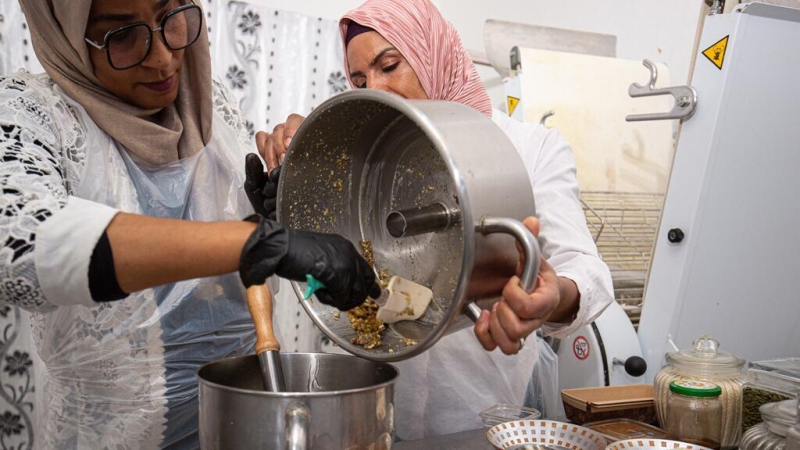
© FAO/X. Ben Hassine Through the FAO programme, Kauter was able to improve her own skills and the professional development of her business’s staff, increase its profitability, and expand its positive social and environmental impact.
The program is aimed not only at supporting individual entrepreneurs, but also at strengthening the entire agribusiness support system through training mentors and representatives of organizations working with young agricultural enterprises. Kauter worked closely with a mentor who specialized in responsible investing, which allowed her to improve the efficiency and sustainability of her business.
“The mentorship changed the way I work. What previously seemed complex has become more understandable,” Kauter shared. – When you have support nearby, you feel more confident and realize that you are not alone. A mentor will always come to the rescue and guide.”
The program helps small agricultural enterprises overcome major difficulties and, over time, reach a new level. This is especially important in Tunisia, where many businesses find it difficult to expand their operations and grow. In practice, such support produces tangible results: FAO estimates that two years after the end of the program, the majority of supported enterprises are still growing or expanding their operations. This approach largely reflects Kauter’s own views.
Recognizing the challenges women face in her country, Kauter has made empowerment a core principle of her business. She recruited eight women from her family and neighboring communities, creating new opportunities in rural areas where they were still very limited.
“It was important to me to show that our project can really contribute to the development of the local economy,” shares Kauter. “Helping women gain employment and become financially independent, especially in rural areas, is one of my main goals.”
Kouter also places a strong emphasis on environmental responsibility in her work. This principle underlies the work of her enterprise. Sweet Jana bakery uses environmentally friendly packaging and minimizes waste throughout all stages of production, reducing its environmental impact, although such methods are still underutilized by small producers. Even the pits of the dates are not wasted, but are given to farmers who turn them into feed for livestock, creating a closed loop, reducing waste and supporting local agricultural production.
Like Kauter, young agri-food entrepreneurs around the world are turning local resources into new opportunities, creating their own businesses and new jobs, contributing to the development of their communities. With support from the Agricultural Acceleration Program, they are moving towards more sustainable and responsible forms of business, contributing to more inclusive, resilient and sustainable agriculture and food systems.