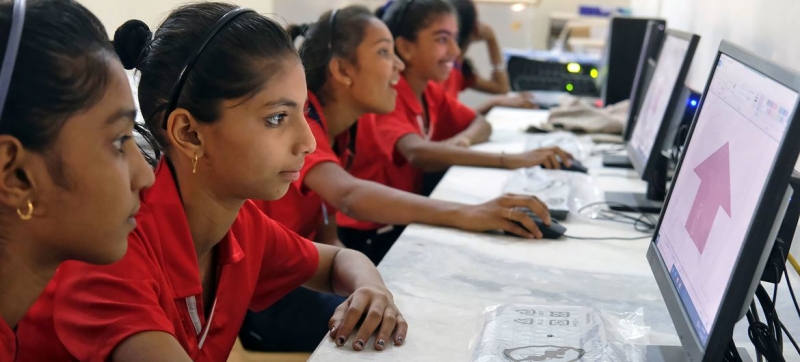

© UNICEF AI can facilitate the spread of sexually violent content and outright deepfakes. The greatest danger is faced by women and children. WE EXPLAIN | AI Advancement: Why the World Needs to Act Now Daniel Dickinson Economic development
Artificial intelligence is developing faster than government institutions are able to respond to this process. Just a few years ago, AI could only answer user questions or generate text, but today it is able to write computer code, analyze huge amounts of data, create realistic images and video content, help scientists develop new drugs – and increasingly it acts independently, with minimal human supervision.
Safe use of AI is only possible if certain rules are strictly followed. This is the main conclusion of the preliminary report of the UN Independent International Scientific Panel on Artificial Intelligence, which was published on Wednesday.
The scientific panel warns that the window for effective global governance of AI remains open, but this state of affairs may not last long.
60~h2>Why this important?
AI has the potential to become one of humanity’s most revolutionary technologies. When used responsibly, it can accelerate progress towards the Sustainable Development Goals by improving health and education, accelerating scientific research, developing agriculture and making life easier for people with disabilities.
On the other hand, unchecked, this technology can deepen inequality, spread misinformation, threaten human rights and disrupt labor markets. There is also the danger that powerful AI systems will become concentrated in the hands of a limited number of governments and companies.
According to the report, the main challenge at this stage is to find a way to unlock the enormous benefits of AI while preventing its growing risks.
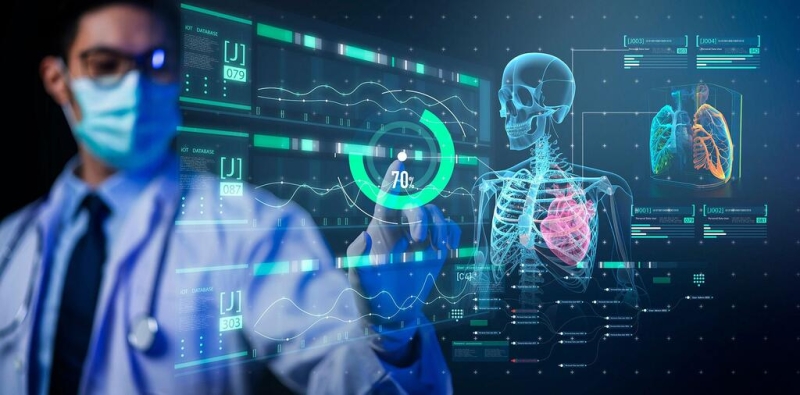
© Adobe Stock/DIgilife With the support of artificial intelligence, major medical breakthroughs are being made.
Be proactive
AI capabilities have advanced at incredible speed over the past few years. The next wave is already on its way. Instead of simply responding to requests, AI agents are increasingly planning multifaceted tasks, independently using new digital tools, writing software, and performing complex tasks with little or no human supervision.
According to the report, the complexity of the tasks that AI systems can perform is doubling every few months.
Advantages: than A.I. can help us?
The team’s report contains a long list of real-world successes achieved recently thanks to AI. antibiotics.
An international scientific group emphasizes in its report that this is not about the future – the technological revolution is happening now.
Risks: what to worry about experts?
Experts note that artificial intelligence also creates fundamentally new dangers.
- Online violence: AI can promote the spread of materials related to sexual violence, as well as outright deepfakes. At the same time, the greatest danger threatens women and children.
- Misinformation:AI can create convincing-sounding false information, undermining trust in public debate and democracy.
- Crime: Criminals are increasingly using AI to carry out cyberattacks and scams purposes.
- Mental Health: Some AI systems can reinforce harmful beliefs, leading to mental health crises, including suicide attempts.
- Loss control:As AI becomes more autonomous, it becomes increasingly difficult to control.
- Environmental impact: Data centers absorbing huge amounts of electricity contribute to greenhouse emissions gases.
Some have rushed ahead, others are lagging behind
Although artificial intelligence is used around the world, widespread access to AI is mainly concentrated in developed countries. The United States has approximately three-quarters of the global computing power of leading artificial intelligence supercomputers; China has about 15 percent, making just two countries about 90 percent of all AI power on Earth. Most advanced artificial intelligence models are developed by companies also based in the United States and China.
At the same time, many developing countries lack the computing infrastructure, technical capabilities and data, as well as the investment and local language resources needed to fully exploit AI. As a result, such states often depend on technologies that they themselves are unable to create, test for safety, or adapt to their communities.
An international scientific panel warns that unless these gaps are addressed, AI could exacerbate existing global inequality rather than reduce it.

© UNICEF/X. Rutherford In Uganda, a visually impaired student uses an AI-powered assistive device to read and record lessons.
Why AI needs regulation?
Current technical management systems were not designed for technologies that are evolving so quickly, experts say. Governments face what is often called the “evidence dilemma”: policymakers need reliable scientific evidence to implement control measures, but by the time that evidence is available, technology may have advanced even further.
Although there are already more than 40 restrictions and ethical guidelines for AI governance in different parts of the world, they remain fragmented and inconsistent, and are rarely tested for effectiveness.
The report says greater peer review, international cooperation and common standards are needed to ensure the safety, transparency and accountability of AI systems. In addition, countries require significant investment in digital infrastructure, education and technology. AI.
In 2025, the UN General Assembly created the Independent International Scientific Panel on Artificial Intelligence, consisting of 40 experts from all regions of the world, working on a voluntary basis.
The role of this commission is scientific, not regulatory. It tracks the latest evidence related to the opportunities and risks of AI, and produces independent reports that governments can use in developing national policies.
The research team’s findings will be presented at the UN Global Forum on AI Governance, which opens in Geneva on July 6.