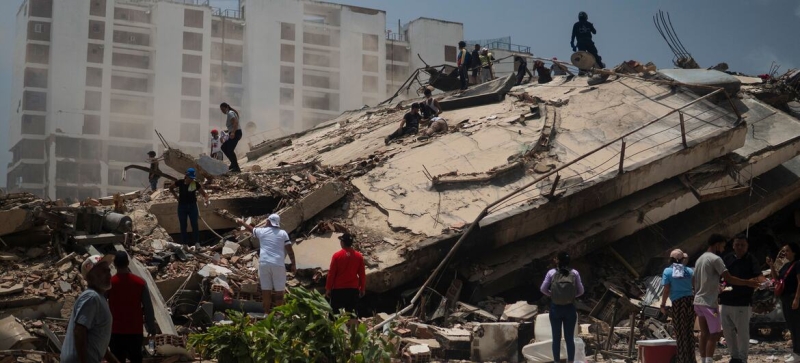

© UNICEF/R. Herna In the city of La Guaira, Venezuela, people search the rubble of collapsed buildings in search of survivors. Earthquakes in Venezuela: emergency services paralyzed, many doctors missing Humanitarian aid
Six days after the devastating earthquakes in Venezuela, the United Nations High Commissioner for Refugees (UNHCR) reported widespread food shortages in the hardest-hit state of La Guaira. Basic services in the region are virtually non-existent, communications are almost completely non-existent, and due to limited access to humanitarian aid, tensions are rising in local communities.
A rapid assessment of humanitarian needs in disaster-affected regions late last week showed that half of the victims were taking shelter with relatives or neighbors. Almost forty percent are forced to live on the streets, in public spaces, churches, schools or in makeshift shelters that provide neither safety, privacy nor basic sanitation. Of particular concern is the presence of unaccompanied or separated children among the victims. According to authorities as of Monday, 1,719 people have been confirmed dead; at least 5,034 Venezuelans were injured; 15,866 people lost their homes.
Health care system is on the verge of collapse
The situation in the healthcare system remains critical. According to World Health Organization (WHO) representative Christian Lindmeier, the number of injured people exceeds the capacity of local medical institutions. Of the 21 health facilities inspected in Caracas, La Guaira, Miranda and Falcon, three are in critical condition, six are structurally damaged or partially functioning, and the rest are operating under enormous pressure. Hospitals are experiencing a chaotic influx of patients, overcrowded wards, long waiting lists for operations, biosecurity failures and overworked staff. Forensic services and morgues are on the verge of collapse. © UNICEF/L. Garcia Many people affected by the La Guaira earthquakes are living in tents. Health risks are multiplying. WHO warns of the threat of outbreaks of measles, diphtheria, whooping cough, yellow fever, as well as water-borne and rodent-borne diseases. The situation is aggravated by low vaccination rates and limited access to vaccinations. Of further concern to WHO is the lack of information about the fate of a number of key health workers in La Guaira, including those who provided the entire cycle of obstetric care in the region, which has led to a critical situation in the maternity care system. Clearing the rubble is a critical first step toward recovery in Venezuela. According to a preliminary estimate by the United Nations Development Program (UNDP), the hardest-hit areas of La Guaira state were left with about 1.2 million tons of debris and debris. Of the total volume of rubble, approximately 915 thousand tons are damaged buildings, and 332 thousand are household items and personal belongings. materials delivered from the European reserve warehouse in Copenhagen. Combined with the previous supply from Panama, this aid is expected to support more than 100,000 children and families for three months. However, this is not enough: UNICEF estimates that about 680 thousand children need help, and the fund has asked the international community to allocate $52 million for further action.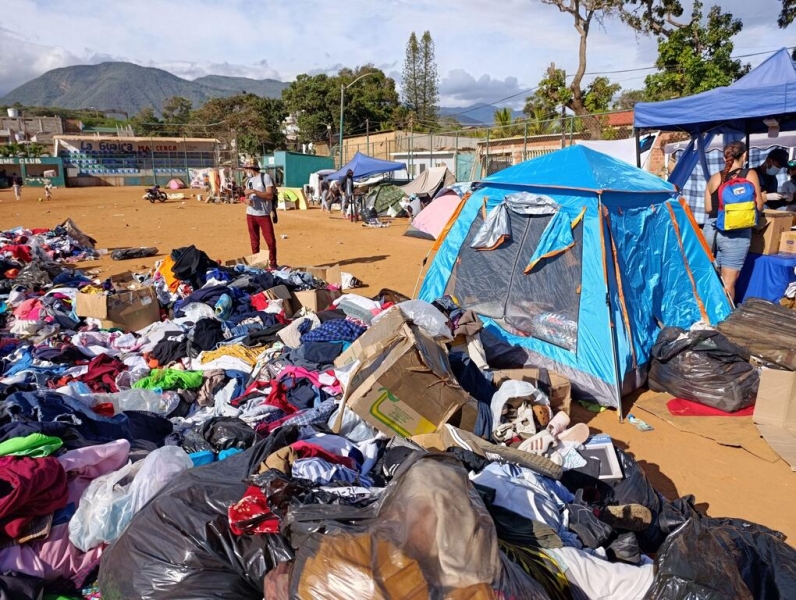
Clearing rubble