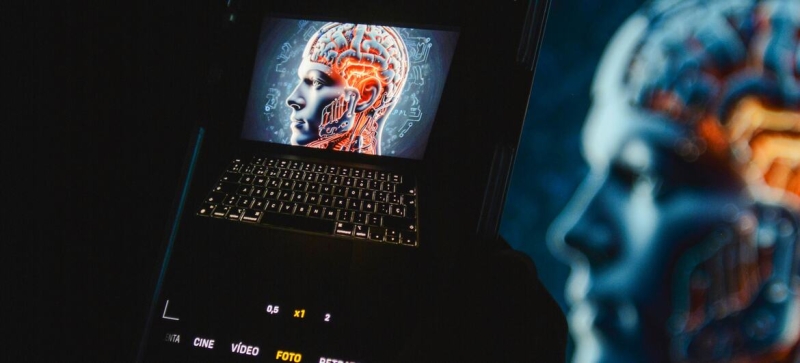

© Unsplash/A. Geranrekab Artificial intelligence today is increasingly influencing the way we work, communicate and obtain information. UN report: AI shows bias against women Ana Carmo Women
Artificial intelligence reproduces outdated ideas about the role of women in society.
Artificial intelligence today is increasingly influencing the way we work, communicate and obtain information. But old prejudices persist. UN Women warned that new technologies are reproducing gender stereotypes, increasing violence online and excluding women from the decisions that will shape the digital future.
The warning comes as research shows generative AI is rapidly entering the daily lives of billions of people, from writing emails to campaigns and presentations, but also exacerbating existing inequalities through discriminatory algorithms. In the UK alone, 88 percent of advertising and media companies already use such technologies in one form or another.
Ahead of the UN Global Dialogue on Artificial Intelligence Governance and the AI for Good summit in Geneva in early July, UN Women is calling on governments, companies and developers to consider gender equality as early as the design, implementation and regulation of systems. AI.
Gender and racial biases
The collected data shows that the problem is widespread. A study of 133 artificial intelligence systems found that 44 percent of the systems exhibited gender bias, and more than a quarter of the systems exhibited both gender and racial discrimination.
Major language models repeatedly associated women with home, family, and childcare, while men were associated with business, leadership, and career success. In some cases, the AI produced responses that portrayed women as sex objects or subservient to men.
According to UN Women, when researchers asked language models to simply continue a sentence that began with a person’s gender, about one in five responses contained sexist or misogynistic elements. Some answers even described women as property or objects.
This is not a fault of the system
Experts emphasize that this is not about random failures or technical errors, but about a pattern that is repeated in various systems. As UN Women points out, these results are predictable: the models are trained on massive amounts of text that reflect decades of unequal representation of men and women. people – in a world where women were relegated to home and family, and men to business and career.” What’s most troubling, she says, is that it’s not a technical defect: “It’s a serious gap in public policy.”
Of the 138 countries included in the study, only 24 mention a gender perspective in national AI development strategies, and only 18 provide specific measures to ensure gender equality.
The expert emphasizes that the problem will not disappear by itself with the next software update. In her view, it is the result of decisions made over and over again in the selection of training data, product development, and policy making.For many women and girls, the risks go far beyond stereotypes. Women already face disproportionate levels of violence online, and advances in AI are making some forms of violence easier to create and spread. According to UN Women, almost one in four women surveyed – human rights defenders, activists or journalists – reported that they had experienced online violence using AI tools. Twelve percent said their personal images had been shared without consent, and six percent had been victims of deepfakes or altered photos and videos.
As AI-generated content becomes the norm, fears are growing that bullying, manipulation and abuse of images will become increasingly difficult to detect and prevent.
Women are still not among those who create technologies
At the same time, women remain underrepresented in the industries where such technologies are developed. According to the International Labor Organization, women make up only 30 percent of the global artificial intelligence workforce.
UN Women warns that the people creating these systems do not reflect the diversity of the society they are intended for. Without greater participation from women and other underrepresented groups, existing biases risk becoming entrenched in future technologies.
Economic Impact
AI’s impact on the labor market may also be uneven. Women are almost twice as likely as men to work in occupations that are at high risk of automation outside the artificial intelligence sector. Other factors that can exacerbate the situation include race, disability, income and location.
As the labor market transforms, UN Women warns that without targeted action, already vulnerable populations could find themselves further removed from the opportunities of the future.
Inclusion is beneficial and business
Fighting prejudice is not only a human rights issue, says UN Women, but also an economic necessity.
Research by the Unstereotype Alliance found that advertising without gender stereotypes produces better commercial results. Companies that take an inclusive approach experience higher sales growth, greater customer loyalty, and a stronger market position.
In June 2026, the initiative introduced practical guidance that helps marketers identify bias before publishing content created using generative AI.
Choices that will shape the future
UN Women emphasizes that when used responsibly, artificial intelligence can not reinforce stereotypes, but identify them, expand the representation of different groups and make technologies more accessible. But whether this will happen depends on who is involved in creating the systems and whose experience is taken into account in their development.
The organization calls for integrating the principles of gender equality, as well as the rights and experiences of women and girls, at all stages of the artificial intelligence lifecycle – from development to implementation and regulation.
The message ahead of the July meetings in Geneva is clear: if women and girls will not participate in shaping the future of AI, the inequalities of the past may carry over into the technologies of tomorrow.