

© UNODC UNODC representatives are checking documents at a fraudulent center discovered in the Cambodian capital Phnom Penh. Digital slavery: how technology facilitates human trafficking and how countries around the world are trying to counter it Peace and Security
A student from the Republic of Korea thought he had found an opportunity to work abroad. Instead, the young man ended up at the center of an online scam, where he died after being brutally tortured. The story shocked the country and became a clear example of how human trafficking is changing in the digital age. Permanent Representative of South Korea to the UN Jihoon Cha spoke about this at an event dedicated to the creation of the Group of Friends to Combat Trafficking in Persons Using Technology.
Today, human trafficking less and less often begins with an acquaintance on the street or the abduction of a person from a bus stop. Increasingly, these are messages in instant messengers, online advertisements, contacts on social networks and promises that are supported by realistic photos and videos. Experts also warn that children are becoming increasingly vulnerable to online grooming, sexual exploitation and other forms of abuse carried out using digital technologies.
At an event at UN headquarters to mark the inauguration of a new international alliance, diplomats and representatives of UN agencies described a situation in which organized crime groups are adapting to new realities faster than states and law enforcement agencies.
Centers of criminal activity
According to data provided by the Executive Director of the United Nations Office on Drugs and Crime (UNODC), Monica Juma, at least 300 thousand people from more than 70 countries are believed to have become victims of human trafficking and were involved in the activities of fraudulent centers. Trapped inside the vast complexes, people are forced to participate in Internet fraud schemes, deceiving people around the world.
At the same time, Australia’s Permanent Representative James Larsen warned that such centers rarely engage in only such scams. According to him, these are “nodes of polycriminal activity” associated not only with human trafficking and labor exploitation, but also with drug trafficking, money laundering and other forms of transnational organized crime.
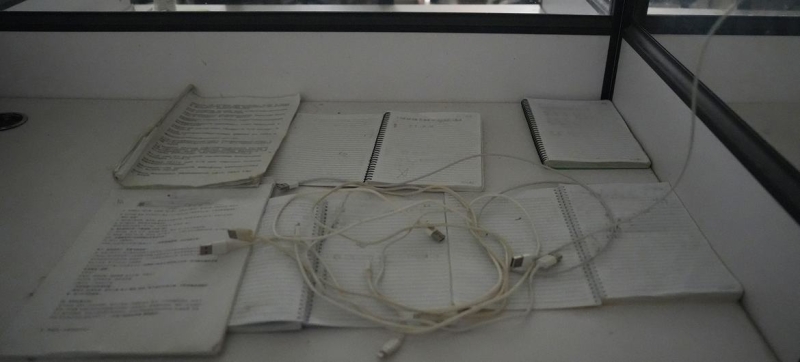
UNODC/L.Gil Correspondence scripts for fraudulent activities.
Juma also noted that criminals are increasingly using artificial intelligence to automate fraudulent schemes, hide identities and create compelling fake content, allowing criminal networks to operate with unprecedented speed and anonymity.
In Southeast Asia alone, UNODC estimates that such criminal networks generate up to $37 billion in revenue annually. However, behind these numbers are real people, many of whom never intended to engage in illegal activities.
Vietnam Permanent Representative Do Hung Viet described a scheme that is becoming increasingly common: fake advertisements for attractive jobs abroad.
“What starts with a single click of a mouse can quickly lead to exploitation, coercion and violence. This reality requires us to adapt. As criminal networks become more sophisticated, we must make better use of technology for prevention, investigation, identification and support of victims,” he said.
The Vietnamese diplomat also recalled the UN Convention against Cybercrime, known as the Hanoi Convention, calling it a reliable framework and practical tool for international cooperation in combating trade-related crimes people and using technology. He said the document was signed by 72 states during a ceremony in Hanoi last October, and then five more countries joined.Chetchai Chaiwaiwit, Permanent Representative of Thailand, a country at the crossroads of regional migration and trade routes, provided an example of practical responses.
Since February 2025, Thai authorities have worked with embassies, international organizations and civil society groups to help repatriate more than 13,000 people from more than 40 countries. They were rescued from the fraudulent centers of the region. The ambassador emphasized that people found in such centers cannot automatically be considered criminals.

© IOM/S. Desjardins A woman from Mauritania became a victim of human traffickers.
“Our approach is victim-centred and takes into account the trauma they have experienced. We also apply the principle of non-punishment within the national referral mechanism to effectively identify victims and distinguish them from criminals,” he added.
Deputy Permanent Representative of Brazil Norberto Moretti warned that many victims do not immediately realize that they have been trafficked. Some continue to collaborate with criminal networks because they are under pressure or control. According to the Brazilian diplomat, investigations should focus on identifying signs of coercion and exploitation, rather than on criminalizing victims.
“Additionally, since women and girls make up 61 percent of identified victims of human trafficking worldwide and nearly 92 percent of victims of sexual exploitation, it is critical to consider the disproportionate impact this type of crime has on them,” he stressed.
Digital solutions
While criminals cooperate effectively at the international level, governments often lag behind them. Technologies that are used to exploit people are developing rapidly. However, this is beginning to change. Data analytics, digital intelligence, faster information sharing and coordinated action can help disrupt criminal networks. The big question is whether states can act as quickly as the criminals themselves.
Netherlands Permanent Representative Lise Gregoire Van Haaren gave an example of how technology can be part of the solution. The Dutch police participated in international hackathons with law enforcement agencies in other countries and used proactive analysis of digital platforms to identify cases of “electronic pimping” – advertising and exploitation of people for sexual purposes over the Internet. Investigators then worked with municipalities, social services and private organizations to identify and assist potential victims.
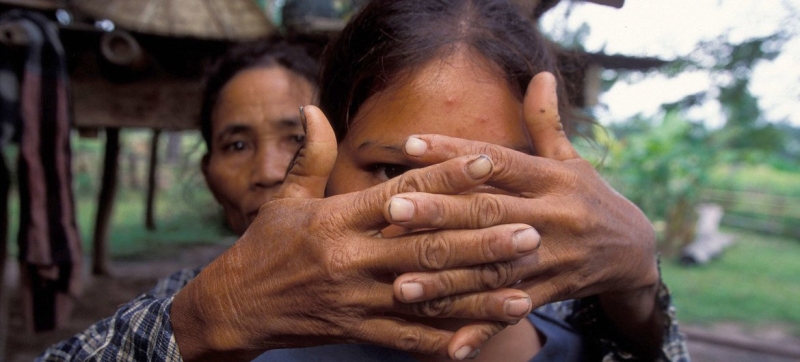
Photo UNICEF/J.Holmes A mother covers the face of her daughter, who was trafficked at age sixteen.
In Singapore, authorities have created an anti-fraud operations center that works directly with banks, payment processors and technology companies to identify and stop fraudulent transactions in real time. Permanent Representative Burhan Ghafoor noted that such public-private partnerships have become essential as criminal networks move money and exploit people through digital platforms faster than traditional investigative mechanisms can respond.
Philippine Permanent Representative Enrique Manalo spoke about a centralized anti-trafficking database designed to track cases, identify trends and support decision-making in the country. He also noted increased cooperation between police, prosecutors, social workers and international partners, especially in cases involving online sexual exploitation of children.
In turn, the representative of Kazakhstan, Alimzhan Surankulov, highlighted the important role of technology companies, financial institutions and civil society in identifying suspicious activity, preventing online recruitment and providing assistance to victims.
“Our response must remain firmly victim-centred and based on human rights. Particular attention should be paid to children, women, migrants and other vulnerable groups,” he said.
Global efforts
The representative of the Russian Federation, Maxim Kuzevich, emphasized that criminal groups are increasingly using digital technologies and artificial intelligence to facilitate illegal activities. At the same time, he noted that the new Group of Friends should complement, and not duplicate, existing UN mechanisms, in particular the Group of Friends against Trafficking in Persons, chaired by Belarus.
Delivering closing remarks on behalf of the Inter-Agency Coordination Group against Trafficking in Persons, UNICEF Child Protection Specialist Katherine Cocco emphasized that while technology is used harmfully by criminal networks, it can also serve as a tool for prevention, investigation and support victims.
Read also:
“Epstein dossier”: independent UN experts call for bringing those responsible to justice
According to UNICEF, children make up a third of all identified victims of human trafficking worldwide.
“As we develop responses to technology-enabled trafficking, we must ensure that children and their rights are not sidelined, but rather at the center of policy, prevention, protection and accountability mechanisms,” she stressed.
The new Group of Friends is designed to help countries share information, coordinate actions and develop common approaches to combating crime, which increasingly begins on the Internet and goes far beyond state borders. According to participants, if criminals are mastering new technologies, then international cooperation, digital innovation and victim protection mechanisms must develop just as quickly.