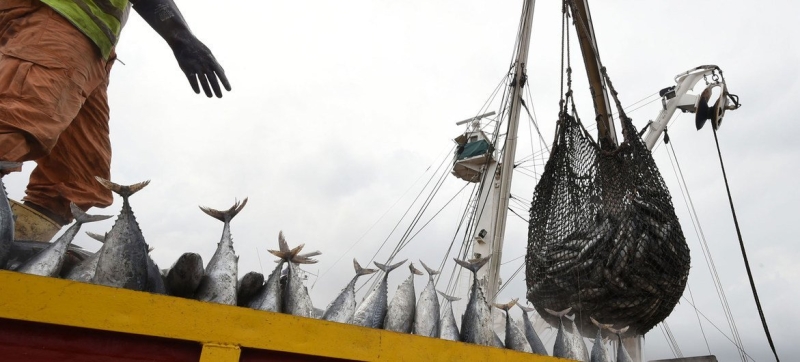

© FAO/C. Kambu Unloading tuna in the port of Abidjan, Ivory Coast. Global fish production has hit a record, but the future of the industry is threatened by climate change and overfishing Economic Development
Global aquaculture—the farming of fish and seafood—has overtaken traditional high-sea fishing for the first time in history. This is stated in the new report of the Food and Agriculture Organization of the United Nations (FAO) “The State of World Fisheries and Aquaculture in 2026”. And while the industry is breaking records, climate change and overfishing are calling its future into question.
There are more fish, but also risks
In 2024, global fish and seafood production reached a record 188.2 million tons. For billions of people, this is not just food – it is a source of protein, vitamins, omega-3 acids and personal income. On average, every person on the planet eats 20.7 kilograms of fish per year – more than ever.
In some countries, fish provides half of all animal protein in the diet. The industry employs almost 64 million people and, from processing to trade, supports the livelihoods of approximately 600 million people worldwide.
Aquaculture takes center stage
Farms produced 103.3 million tons of fish in 2024, more than was caught in the ocean. The FAO calls this a “watershed moment” for the global food system.
Asia remains the industry leader, but production is also growing rapidly in African and Latin American countries. For many rural areas, aquaculture is a chance to escape poverty and significantly improve their own nutrition. Particularly promising are small farms that can provide fresh fish to local communities.
The other side of the coin
The rapid development of the industry also has a downside. Fish farms, if poorly managed, can pollute water, spread disease, and harm ecosystems. FAO calls on governments to tighten controls and develop sustainable growing methods.
The situation is complicated by climate change. The oceans are warming, their water is becoming more acidic, and fish are changing their usual migration routes. All this has a hugely negative impact on the livelihoods of fishermen and coastal communities that depend on the sea.
FAO report calls for urgent action: from investing in climate change adaptation to ending harmful subsidies and combating illegal fishing.
FAO is blunt: without “transformational change” the industry could face serious shocks, but if countries rely on sustainable practices and a scientific approach, aquaculture can continue to feed the world – without destroying the oceans on which life on Earth depends.