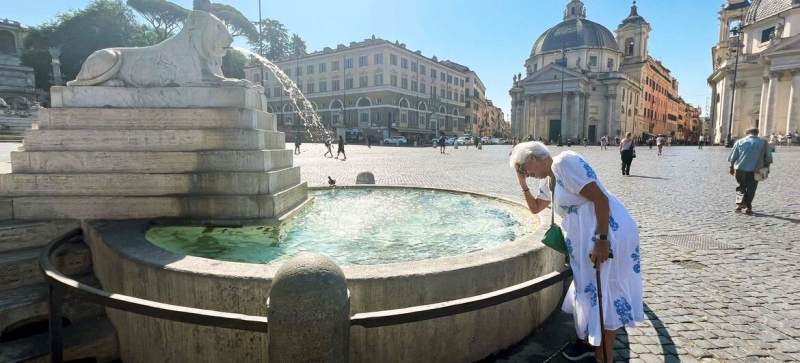

© WHO/S. Tyler Heat stress is the leading cause of climate change-related deaths in the WHO European Region. Hot summer ahead: how to protect your health Climate and environment
Summer has long ceased to be just a time of vacations, sun and walks. Increasingly, heat is becoming a health hazard. Extremely high temperatures are already considered one of the most underestimated causes of death and ill health worldwide.
Climate change is making heat waves longer, more frequent, and more severe. And it’s not just about discomfort. Heat overwhelms hospitals, strains power grids, worsens conditions for people with chronic illnesses, and in the worst cases can cost lives.
While heat affects everyone, not everyone is in the same situation. Elderly people, young children, pregnant women, and people with chronic illnesses and limited mobility are especially vulnerable. Those who work outside, play sports, travel or attend public events are also at risk. People living in poor housing conditions, migrants, refugees and those with limited access to essential services are hit hardest.
That’s why the World Health Organization calls for looking at heat not as a seasonal nuisance, but as a serious public health challenge.
The WHO Regional Office for Europe will release updated guidance on creating heat action plans on 11 June. These plans help countries and cities prepare in advance for periods of extreme temperature by warning people, coordinating services, reducing pressure on hospitals, and protecting the most vulnerable.
In many countries, such plans are already in place and helping reduce the effects of heat. But where there is no such system, each new temperature record can result in additional risks for people and the healthcare system.
However, you can protect yourself from the heat not only at the state level – a lot depends on our daily habits.
What WHO recommends?
First of all, avoid exposure to the sun during the hottest hours of the day and, if possible, transfer physical activity to the morning or evening. It is important to spend at least a few hours in a cool room and never leave children, elderly people or pets in a closed car.
You should keep your home cool by closing curtains during the day, ventilating rooms at night and, if possible, reducing the use of household appliances that produce heat.
It is equally important to avoid dehydration – drink water regularly, wear light clothing and avoid excess sugary, alcoholic and caffeinated drinks.
And one more tip that seems simple but can save lives: keep in touch with each other. On hot days, it is especially important to call older relatives, neighbors or friends who live alone.
If unusual symptoms occur – severe weakness, confusion, high fever, dry hot skin or seizures – seek immediate medical attention.
As part of the #Keep Your Head in the Cold campaign World Health Organization reminds: adaptation to heat is no longer a matter of comfort, but a matter of health and safety. The sooner we begin to change habits and prepare our cities and healthcare systems for new climatic conditions, the greater the chance of preserving what matters most – human lives. Summer remains a time of joy. But today it requires a little more attention and preparation than before.