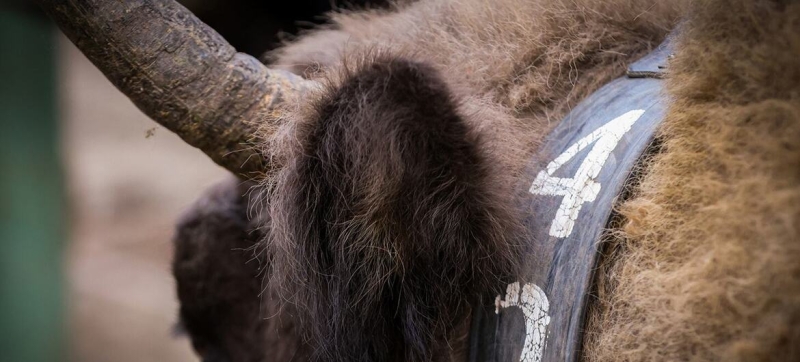

© UNEP/F. Fusstetter The Caucasian bison disappeared from the wild in 1927. Revival of the great herbivores of the Caucasus Climate and Environment
In the shadow of the Shahdag National Park, under the snowy peaks of the Caucasus Mountains, shaggy giants, whom these forests have not seen for more than a century, once again roam.
Most of the local bison – a hybrid of the lowland and Caucasian subspecies – were collected from European zoos and resettled in Azerbaijan over the past seven years. Today, about ninety animals live in Shahdag, including several pregnant females. The revival of the bison population is part of a large-scale national program to restore Azerbaijan’s ecosystems, including the return of species that have disappeared in the wild. The initiative aims to mitigate the effects of climate change, including rising temperatures, disrupted rainfall patterns, and increased risks of fires and landslides. “When we help nature recover, it responds on many fronts,” says Mireille Atalla, Head of Adaptation and Resilience at the United Nations Environment Program (UNEP). “We create benefits for people in the long term.” Ecosystem restoration helps mitigate climate shocks in many ways. Planting mangrove forests protects coastal communities from storm surges and rising sea levels. The revival of wetlands replenishes groundwater supplies, which is especially important during drought. Slope greening prevents landslides caused by extreme rainfall. “Ecosystem restoration helps social and economic systems withstand multiple climate shocks,” Atalla emphasizes.
“Ecosystem Engineers”
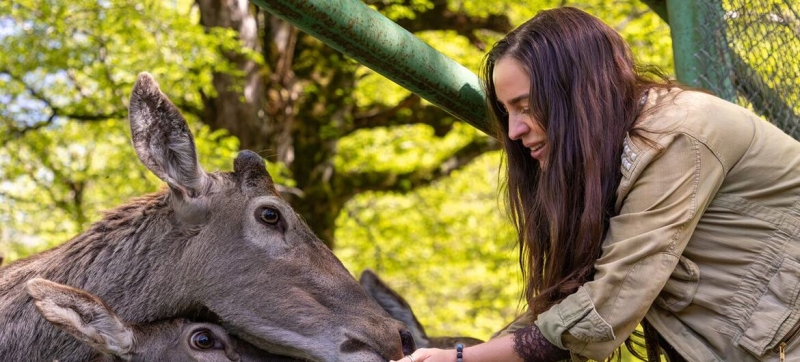
The last wild Caucasian bison was killed in 1927 – the animal became a victim of uncontrolled hunting and loss of habitat. Elshad Asgarov, head of the Azerbaijani branch of the World Wildlife Fund, recalls that during the Soviet period many species were on the verge of extinction: “Soils and forests were severely depleted, many animals lost their natural environment. Today we have a historic chance to bring back lost species.” © UNEP/F. Fusstetter Elshad Askerov, head of the Azerbaijani branch of the World Wildlife Fund. The initiators of the bison return project were the World Wildlife Fund, the Ministry of Ecology and Natural Resources of Azerbaijan and the local organization IDEA. Large animals, Asgarov explains, are “ecosystem engineers”: they spread seeds, fertilize the soil, and their movements and grazing clear dense thickets, creating living mosaics of vegetation. This helps the pastures recover and attracts small herbivores. “Such meadows attract many insects, and insects attract birds,” adds Askerov. “This is how the ecosystem comes to life, and a rich ecosystem is much more resistant to climate change.” The Shahdag bison are descendants of animals from European zoos, in which lowland bison were crossed with the last remaining Caucasian male. Since being released into the wild, more than 25 calves have been born in the park. Over the next 25 years, it is planned to increase the herd to 500 animals – the minimum number to maintain a sustainable population. The revival program in Azerbaijan includes other vulnerable species, such as the gazelle, which once grazed in thousands on the foothills and plains of the Caucasus. In 1960, zoologists counted fewer than two hundred gazelles in the country – they were almost wiped out by poachers and habitat loss. Thanks to the creation of reserves and the release of more than a thousand animals into the wild, today about seven thousand goitered gazelles live in the Shirvan National Park. © UNEP/F. Fusstetter Leyla Aliyeva, director of International Dialogue for Environmental Action, has played a leading role in Azerbaijan’s plans to revive herbivores. Like bison, goitered gazelles influence the landscape with their grazing. They also play another important role – they serve as prey for rare predators: the European lynx, striped hyena and gray wolf. “As the number of potential prey has grown, predator populations have begun to recover,” Askerov says. “Every link in the food chain is important.” The project for the return of bison is being carefully studied by environmental organizations from other countries in the region. “Azerbaijan’s successful example is a model for other countries of the Caucasus,” notes Askerov. “We hope that one day the different herds will meet and once again form a single Caucasian population.”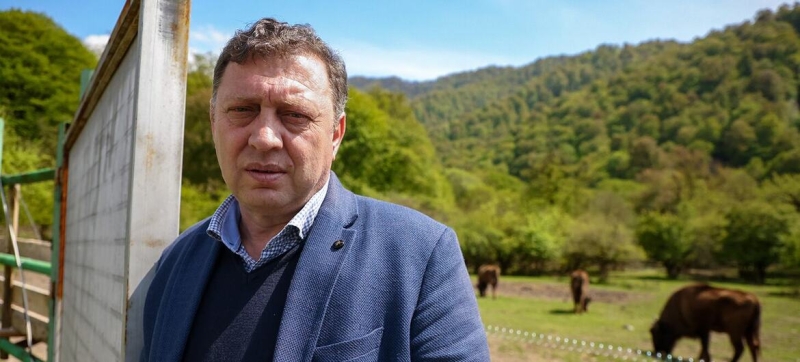
Restoring the food chain