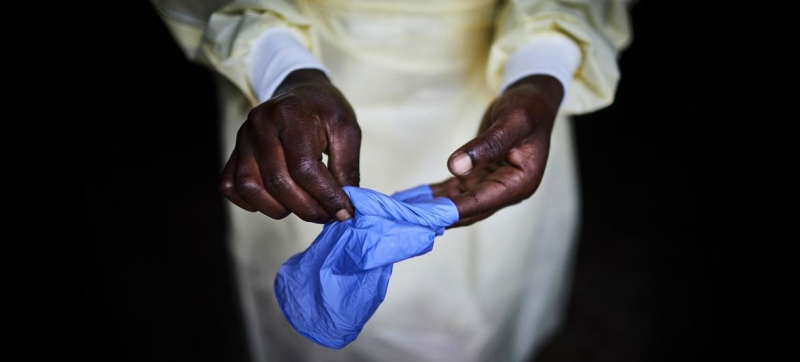

Photo: WHO/H.C. Cunningham The current outbreak of the deadly disease, which WHO has declared a public health emergency of international concern, is spreading faster than doctors can contain it. WHO: Ebola spread is outpacing efforts to combat the virus Health
The Democratic Republic of Congo has reported more than 900 suspected cases of the Bundibugyo strain of Ebola and 220 suspected deaths. The head of the World Health Organization (WHO), Tedros Adhanom Ghebreyesus, announced this on Monday.
The current outbreak of the deadly disease, which the WHO has declared a public health emergency of international concern, is spreading faster than doctors can contain it.
In the Democratic Republic of the Congo, the epicenter of the epidemic, the WHO has raised the national risk level from high to very high. Neighboring countries are also considered particularly vulnerable, including Uganda, where five cases and one death have been confirmed.
Arson of treatment centers in eastern DRC
The population’s distrust of the authorities seriously complicates the fight against the epidemic. This is especially felt in the east of the DRC, where intense fighting is taking place and more than one hundred thousand people have been forced to leave their homes. In the troubled area, unknown assailants set two health care centers on fire.
WHO Africa Emergency Response Director Marie Roseline Belizaire told UN News Service that the attacks were linked to disinformation campaigns on social media. This, she said, significantly slows down the investigation of cases and limits the ability of medical teams to reach affected communities.Strict rules for burying suspected Ebola victims are also causing discontent among the population. Authorities in northeastern DRC have banned funeral ceremonies of more than 50 people, and burials are being conducted by health workers surrounded by armed military and police.
WHO is working with traditional local leaders and healers to step up outreach to the community and improve the safety of health workers, Dr. Belizaire said.
Families of the victims are being allowed to say goodbye to their loved ones, but in order to contain further spread, they are prohibited from touching the body. “We provide personal protective equipment for relatives,” explains Dr. Belizaire, “so they can help place the body of their loved one in a special bag and pray over it.” does not exist.
WHO recommended prioritizing two antibodies in clinical trials, as well as evaluating the antiviral drug obeldesivir as a treatment for people at high risk after exposure.
WHO urgently expands field operations, including contact tracing, setting up treatment centers, strengthening laboratory capacity, patient care, prevention and infection control, risk communication and community outreach. To finance these measures, $3.9 million was allocated from the World Health Organization Emergency Fund.