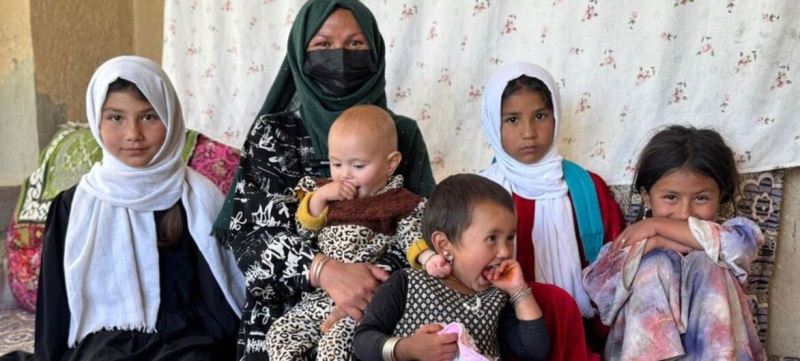

© VPP/D. Milic Afghanistan must comply with its international human rights obligations, including obligations to eliminate discrimination against women and protect children’s rights. Afghanistan: De facto government decree on divorce rules further perpetuates discrimination against women and girls Women
A new decree from the de facto Taliban authorities codifying the principles of divorce marks a further erosion of the rights of Afghan women and girls and further entrenches systemic discrimination in law and practice. This was announced today by the UN Assistance Mission in Afghanistan (UNAMA).
Decree No. 18 defines the grounds on which women can apply to the court for divorce. It operates within a deeply unequal system: while men retain a unilateral right to divorce, women are forced to go through complex and restrictive legal procedures to obtain separation or annulment from their spouse. This situation, the UN mission notes, reinforces structural discrimination and limits women’s autonomy in matters fundamental to their human dignity, security and well-being.
Systematic Restrictions
“Decree 18 is part of a broader and deeply troubling trend in which the rights of Afghan women and girls are being systematically undermined are being destroyed,” said Georgette Gagnon, acting head of UNAMA.
“This decree further institutionalizes discrimination and, coupled with restrictions on girls’ education and women’s participation in public life, perpetuates a system in which Afghan women and girls are denied autonomy, opportunity and access to justice,” she added. she.
The mission notes that the decision should be seen in the broader context of measures affecting women’s rights since the Taliban came to power in 2021. The original decree issued in December 2021 (the Special Decree on Women’s Rights) recognized certain rights of Afghan women, including consent to marriage and the right to inherit. However, subsequent decisions undermined these protections by limiting women’s autonomy before, during, and after marriage. For example, Decree No. 12 in 2026 introduced limited judicial intervention in marital relations, but only in cases of severe battery of a woman, establishing a penalty of 15 days in prison for husbands convicted of serious violence.Of particular concern is the impact of Decree No. 18 on minor girls. Considering that a separate chapter of the decree is devoted to the dissolution of marriage for girls who have reached puberty and are married, the document actually implies that child marriage is permitted. It also allows the girl’s silence upon reaching puberty to be interpreted as consent to marriage. This undermines the principle of free and full consent and does not protect the best interests of the child.
Measures taken by the de facto authorities in Afghanistan since August 2021, including bans on girls’ secondary and higher education and restrictions on women’s access to work, have deprived millions of Afghan women of their rights, weakened their economic participation and deepened poverty, which will have long-term consequences for the country’s development, it emphasizes. UNAMA. In these circumstances, Decree No. 18 exacerbates existing inequalities by limiting women’s autonomy in matters of marriage, dissolution and access to justice.
The UN mission reiterates that Afghanistan must comply with its international human rights obligations, including obligations to eliminate discrimination against women and protect the rights of children. UNAMA calls on de facto authorities to bring their laws, policies and practices into line with international obligations, including upholding the principle of free consent in marriage, ending child marriage, ensuring access to justice and protecting the rights and dignity of all people.