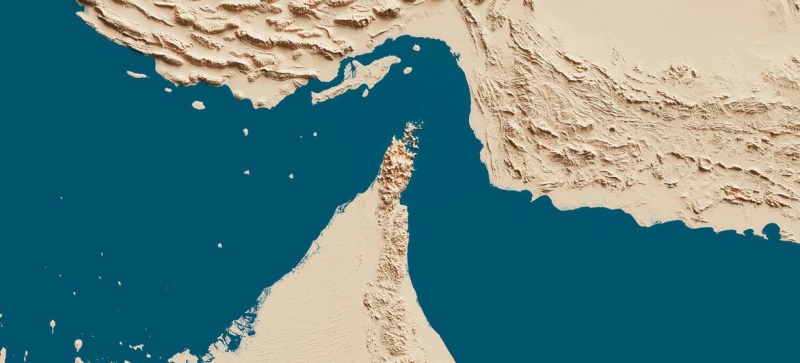

© Unsplash/Planet Volumes Topographic map of the Strait of Hormuz. Civilian ships remain blocked in the Strait of Hormuz due to lack of agreement between countries Peace and Security
The ongoing blockage of ships in the Strait of Hormuz poses a threat to the safety of seafarers, world trade and the global economy. At the same time, the International Maritime Organization (IMO) has a plan to create corridors for the safe evacuation of crews, but its implementation has been slowed down due to lack of agreement between the countries concerned.
IMO Secretary General Arsenio Dominguez said this on Wednesday. According to him, the longer the current situation persists, the higher the risk of a serious incident. In addition, the ongoing blockage of ships in the Persian Gulf is already putting pressure on global supply chains, energy markets and economic stability.“It is completely unacceptable that ongoing disagreements are preventing the implementation of this plan and leaving seafarers stranded on board for many months,” the head of the IMO stressed, speaking at the opening of the 111th session of the Maritime Safety Committee, which takes place in London from 13 to 22 May. He noted that the problem is not the lack of a legal framework or practical solutions, but the inability of the parties to quickly agree.
“These sailors face constant security threats and serious psychological pressure. This situation is unacceptable for civilian personnel,” Dominguez added.
The head of the IMO also said that the organization continues to consult with all stakeholders and is ready to support any initiatives that will help ensure the safe exit of seafarers from the crisis zone while respecting international law and freedom of navigation.
Piracy off the coast of Somalia and autonomous ships
Separately, Dominguez expressed concern about the resurgence of pirate attacks off the coast of Somalia, warning that progress made in recent years in the area of maritime security remains fragile.
During its current session, the Maritime Safety Committee will consider amendments to international binding standards, including the Convention for the Safety of Life at Sea sea (SOLAS), and will also continue work on the first international Code for Autonomous Surface Marine Vessels. According to Dominguez, the development of this document will be an important step for the IMO and will create a global regulatory framework for the safe implementation of new technologies in shipping.
“This will be a clear example of the transition from policy to practice,” he concluded.