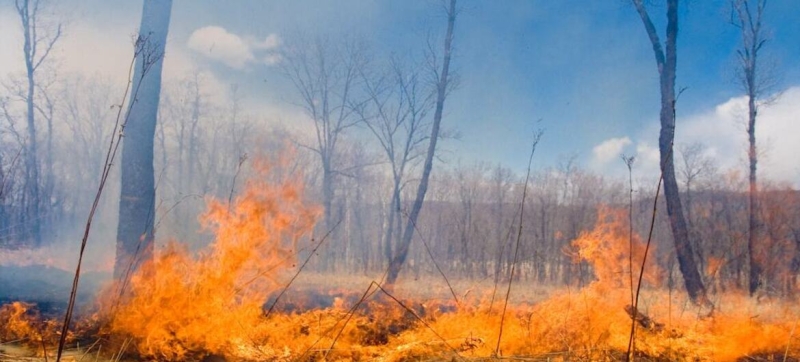

© Konstantin Kobyakov Primorsky Krai, Land of the Leopard National Park, Russia. INTERVIEW | Not only quantity, but also quality: why it is important to consider forests as ecosystems Climate and Environment
One of the main challenges of global forest policy today remains not only the fight against deforestation, but also the prevention of forest degradation – a problem that is becoming increasingly noticeable against the backdrop of climate change, forest fires and ecosystem loss. Konstantin Kobyakov, an expert on the conservation of forest ecosystems of the Russian Nature and People Foundation, spoke about this in an interview with the UN News Service.
This week, the UN Forum on Forests is taking place at UN headquarters, where states are discussing the implementation of global goals for the conservation and restoration of forest ecosystems.
According to Kobyakov, stopping deforestation remains one of the key global challenges. Although the world’s forest area continues to decline, the rate of loss is gradually slowing. However, he emphasized, a more complex problem remains beyond statistics – forest degradation. We are talking about changing species composition, reducing biodiversity, reducing the ability of forests to store carbon, protect soils and perform social and climatic functions.
“It’s not only important whether there is a forest or not. It is important what kind of forest it is and what functions it performs,” the expert emphasized.
Fires, permafrost and climate
In Russia, where about a fifth of the world’s forests are concentrated, the problem of degradation is especially noticeable. Kobyakov named forest fires as one of the main factors in this context.
According to him, after the record seasons of 2019–2022, the situation has somewhat stabilized, but the long-term trend still points to an increase in the area of fires. The expert noted that fires not only destroy forests and biodiversity, but also intensify the climate crisis.
Read also:
INTERVIEW | Expert on the conservation of forest ecosystems: “The forest is like air, while it is there, you don’t notice it”
“We are dealing with a classic self-sustaining feedback: fires lead to greenhouse gas emissions, and climate change increases the risk of new fires,” he said.
Kobyakov called the thawing of permafrost another serious problem. According to him, a significant part of Russian forests is located precisely in the zone of frozen soils. he.
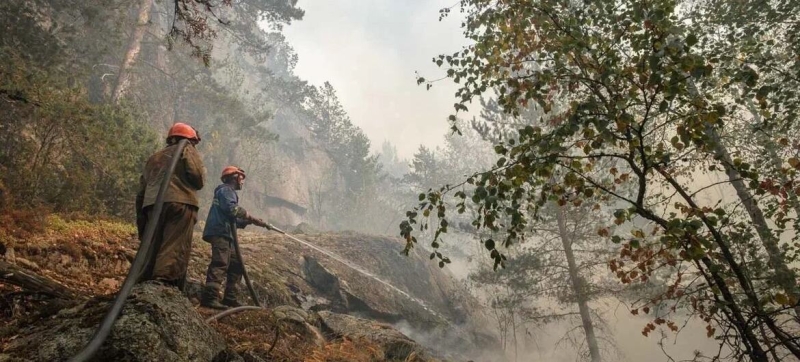
© Association of Volunteer Forest Firefighters Republic of Karelia, Ladoga Skerries National Park, Russia.
In addition, permafrost degradation, like fires, is accompanied by additional emissions of greenhouse gases from soils, which further increases warming.
Climate changes are already affecting the distribution of forests in Russia. In the north, forests are gradually moving into new areas, but such ecosystems remain unproductive and are not able to compensate for losses in the south of the country. In the southern regions, on the contrary, forests become less stable due to heat, droughts and the spread of pests. area
In Russia, the focus is on quantitative indicators – for example, the area of restored forests. At the same time, Kobyakov emphasized, in many cases the forest is able to recover on its own, especially in the northern forest zone. The expert called for more thinking about restoring forest ecosystems, and not just planting trees.
“If we want to restore the forest as an ecosystem, this task is much more complex,” he emphasized.
In his opinion, it is especially important to pay attention to those areas where the forest is no longer able to fully recover on its own due to climate change, fires, soil degradation or human impact. He emphasized that such areas are often located in the more populated southern regions of Russia, where forests are of particular importance to people’s quality of life.
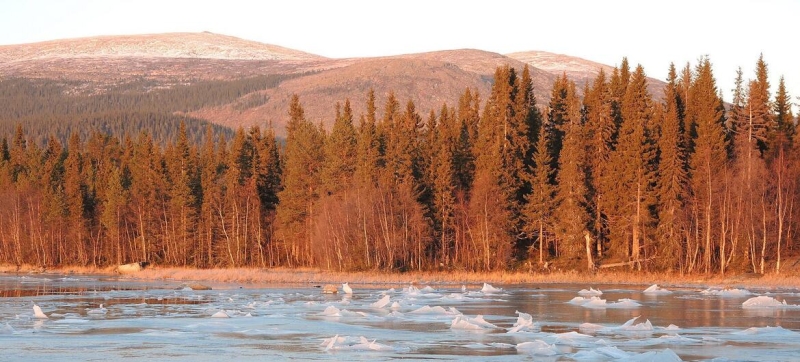
© Gennady Alexandrov Murmansk region, Kola Bay of the White Sea, Russia.
“It’s better to leave the cultivation of industrial wood to the forestry industry, so that companies do it where they directly harvest,” he added.
Kobyakov also gave examples of individual projects for ecosystem restoration that are already being implemented in Russia by non-profit organizations. Among them are attempts to return boxwood to natural ecosystems after destruction by invasive pests, as well as projects to restore coniferous-deciduous forests in the southern taiga. However, such initiatives remain local for now.
“Invisible” forests
Kobyakov also drew attention to the problem of forests that arise on former agricultural lands. According to him, it is these young forests that are one of the largest carbon sinks in Russia today. The expert noted that it is difficult for the state to objectively assess the real balance of forests and the volume of greenhouse gas absorption.
“Such forests are not included in official statistics, but nevertheless they exist and, due to their area, have a significant impact, probably even a global one,” he noted.
According to Kobyakov, a similar process previously occurred in China. There, significant areas of agricultural land were also taken out of use, after which some of the territories began to be overgrown with forests independently, and some – within the framework of government programs.
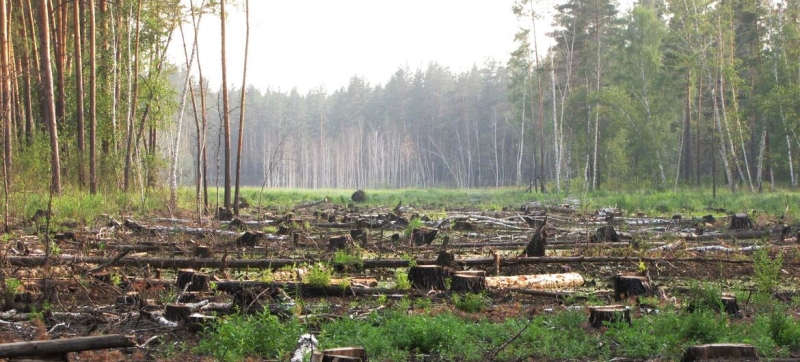
© Alexey Gribkov Altai region, Priob pine forests, Russia.
The Chinese authorities initially included such forests in the system of government accounting and international reporting. According to Kobyakov, this is why China managed to become one of the world leaders in the absorption of greenhouse gases by forests.
In Russia, the expert noted, a significant part of such forests actually remains “invisible” for the official accounting system, despite their environmental and climatic role. One of the key tasks for Russia should be the official recognition of forests on agricultural lands and the creation of a system for their accounting, protection and management, he believes.
Land degradation is a global problem
At the end of the interview, Kobyakov spoke about preparations for the 17th UN Conference to Combat Desertification, which will be held this summer in Mongolia.
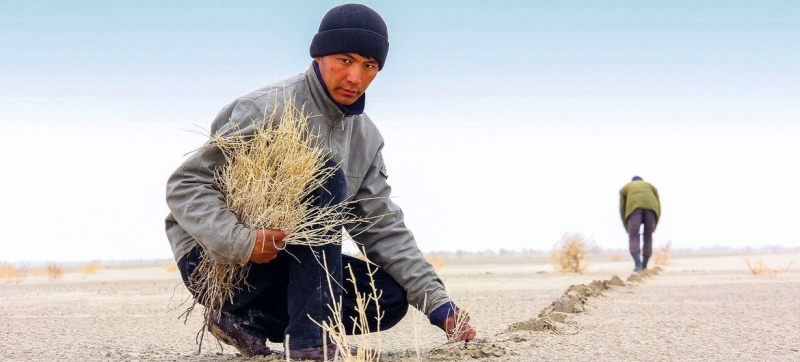
He noted that in the narrow sense, this problem primarily affects arid areas, the area of which is relatively small in Russia. We are talking mainly about the southern regions of the European part of the country and certain territories of Siberia. At the same time, the UN Convention to Combat Desertification considers the issue more broadly – as a problem of land degradation in general, regardless of the climatic zone. Photo by UNDP in Uzbekistan Soil salinity prevents farmers in Uzbekistan from increasing their yields. Many of the country’s most serious environmental problems are related to large-scale degradation of land and ecosystems. Among such processes, he named forest fires, thawing permafrost, soil erosion, droughts and other consequences of climate change. According to him, existing UN international environmental agreements only partially address these issues. The problems of land degradation are mentioned in the climate convention and the Convention on Biological Diversity, but the Convention to Combat Desertification remains the only international mechanism that directly works with land resources. One of the topics that Russian experts plan to raise at the conference will be Russia’s cooperation with neighboring states in the fight against land degradation and desertification. This problem is especially relevant for the countries of Central Asia and Mongolia. The expert named the search for new mechanisms for financing environmental activities as another important area. In particular, Kobyakov considers the use of voluntary land use certification tools promising – by analogy with forest certification systems that are already used in many countries. He recalled that there are large international forest certification systems in the world, and in Russia, after the departure of international operators, national systems continue to operate. According to the expert, this experience can also be used to combat land degradation.