

Unsplash/P. Yuhao University students celebrate graduation day in Singapore. UNESCO: The number of university students worldwide has more than doubled in 20 years Culture and Education
Over the past 20 years, the number of university students worldwide has more than doubled, reaching 269 million in 2024. This is reported in UNESCO’s first report on trends in higher education.
The authors of the study note a sharp increase in international academic mobility: over the same period, the number of students studying abroad almost tripled and reached 7.3 million people. Half of them are studying in Europe and North America.
The number of students enrolled in higher education worldwide has risen from about 100 million in 2000 to 269 million in 2024, according to a new report based on data from 146 countries. Today, 43 percent of young people of the same age – typically from 18 to 24 years old – receive higher education.
At the same time, the level of access to higher education varies significantly depending on the region. If in the countries of Western Europe and North America about 80 percent of young people study at universities, then in Latin America and the Caribbean this figure is 59 percent, in the Arab states – 37, in the countries of South and West Asia – 30, and in African countries – only nine.
However, private educational institutions still provide about a third of the world’s university students. The share of private higher education remains highest in Latin America and the Caribbean, where it stood at 49 percent in 2023. At the same time, as the report notes, only a third of countries legally guarantee free public higher education.
However, the growth in the number of students is not accompanied by an equally rapid increase in the number of graduates. Thus, the proportion of students who completed their studies increased from 22 percent in 2013 to 27 percent in 2024.Although the number of students pursuing higher education abroad has more than tripled, only about three percent of students worldwide take advantage of study abroad opportunities, with significant differences remaining between regions.
For example, seven countries still host half of all international students: the United States, the United Kingdom, Australia, Germany, Canada, Russia and France. At the same time, Turkey and the United Arab Emirates are becoming increasingly popular destinations for study – over the past decade, the number of foreign students there has grown at least five times, and now these countries have almost caught up with France in terms of international mobility.
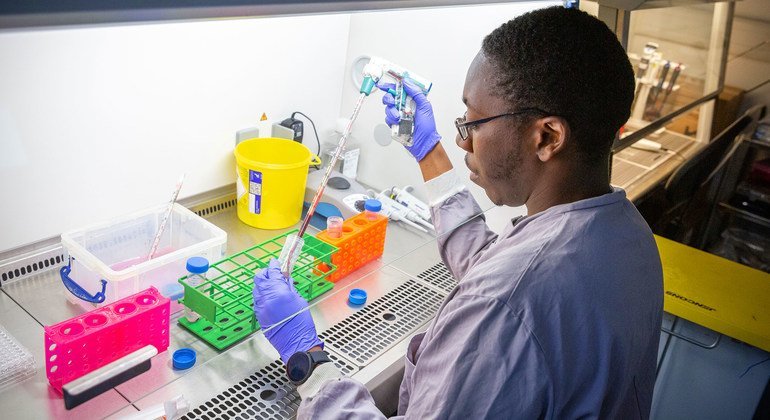
© Imperial College London/T. Angus
The report notes that students are increasingly choosing to pursue higher education within their own region. For example, in Latin America and the Caribbean, the share of intraregional academic mobility increased from 24 to 43 percent between 2000 and 2022, with Argentina becoming the top destination for study. The Gulf countries and Jordan are becoming increasingly popular among Arab students, compared to Western Europe and North America a decade ago.
An important role in the development of international academic mobility is played by UNESCO and its Global Convention on the Recognition of Qualifications relating to Higher Education, as well as its regional analogues. To date, 93 countries have ratified them. The organization notes that the convention not only promotes fair and transparent recognition of diplomas, but also establishes general standards for ensuring the quality of higher education.
The authors of the report also noted that Women now make up the majority of university students: in 2024, for every 100 men enrolled in higher education, there will be 114 women. This trend is noticeable in all regions of the world except Africa. Significant progress, according to UNESCO, has been achieved in the countries of Central and South Asia. However, women remain underrepresented in doctoral education and hold only about a quarter of academic leadership positions.
Inequality, quality of education and financing
Despite some progress, only a third of countries have implemented programs to support access to higher education for underrepresented groups. The report notes that countries such as Chile, Italy, Japan, the Republic of Korea, Mauritius, Mexico, the Philippines and South Africa have reduced tuition fees or completely eliminated higher education fees for certain categories of students.
However, significant barriers to higher education remain for refugees. Although the proportion of refugees pursuing higher education has increased from one percent in 2019 to nine percent in 2025, one of the main challenges remains the recognition of lost or unverified educational credentials, especially in the Global South. and internally displaced persons. The program currently operates in Iraq, Kenya, Uganda, Zambia and Zimbabwe, with plans to expand in the future. Hundreds of applicants have already received such documents.
The report also notes that government spending on higher education averages about 0.8 percent of global GDP. At the same time, budget cuts in many countries are increasing the pressure on universities and highlighting the need to find new funding models to provide quality education.
The study’s authors warn that the rapid growth in student numbers in recent decades is increasing pressure on higher education systems. In this regard, maintaining the quality of education, expanding access to education for socially vulnerable groups and ensuring sustainable funding for universities are of particular importance.
The report also states that digital technologies and artificial intelligence are increasingly changing the educational process. However, in 2025, only one in five universities in the world had a formal AI policy.