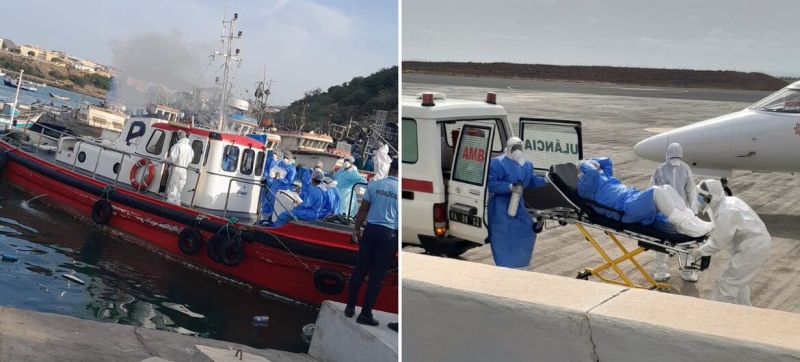

© WHO Three patients with suspected hantavirus infection are being sent to the Netherlands for medical care. WHO on the hantavirus outbreak: the virus is dangerous for those infected, but the risk of transmission is extremely low Healthcare
The risk of hantavirus spreading to the general public remains “absolutely low” and the situation has nothing to do with the COVID‑19 pandemic. Representatives of the World Health Organization (WHO) announced this on Friday at a briefing in Geneva. WHO continues to coordinate the response to an outbreak on a cruise ship off the coast of Cape Verde.
Let us recall that three people died on board the Dutch liner Hondius, several others fell ill, which caused a large-scale international response from countries in Europe, Africa and Latin America. WHO representative Christian Lindmeier noted on Friday that even people who were in close contact with the sick, including a flight attendant who served one of the passengers, received negative test results. According to him, this confirms that the virus is dangerous primarily for those who are actually infected, but does not pose a significant threat to the population as a whole. According to WHO, eight cases of infection have been registered, including five laboratory-confirmed and three suspected. Lindmeier emphasized that even sharing a cabin did not always lead to transmission of the infection, which further demonstrates its extremely limited ability to spread from person to person.
Chains of transmission are carefully monitored
Contact tracing of potentially infected persons continues off-ship. A Dutch flight attendant who had brief contact with a passenger who later died from the infection also tested negative. According to Lindmeier, experts are analyzing the landing lists of planes and ships, as well as the travel routes of people, to exclude all possible chains of transmission. WHO emphasizes that the current outbreak is fundamentally different from the 2020 coronavirus pandemic, which has claimed millions of lives. Transmission of hantavirus typically requires prolonged, close contact—most often between family members, partners, or health care workers. At the same time, the wife of the patient being treated in Switzerland does not show symptoms, which, according to a WHO representative, confirms the low contagiousness of the virus.
How the outbreak proceeded
The first patient known to health authorities fell ill on April 6 and died on board the ship. His wife died after being evacuated to South Africa, where laboratory tests confirmed hantavirus infection. Before boarding the ship, the couple traveled through Argentina, Chile and Uruguay, visiting areas where rodents, natural carriers of the virus, live. Another passenger died on May 2. One man remains in intensive care in South Africa but his condition is improving. Other sick people were transferred to hospitals in the Netherlands. The WHO said there were no symptoms among the passengers and crew remaining on board. Hantaviruses are zoonotic viruses carried by rodents. Human infection usually occurs through contact with infected animals or their secretions. The Andine strain, common in some Latin American countries, is the only hantavirus known to be capable of limited transmission between humans. This is what infected the passengers of the cruise ship Hondius.