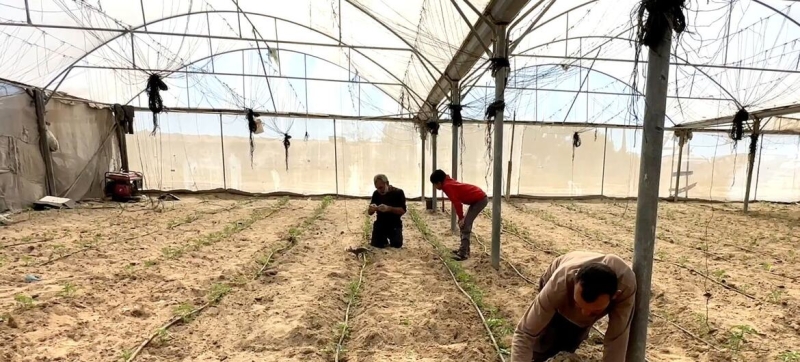

UN News Service Fertilizers are required during certain periods of the sowing campaign. A delay of just a few weeks could result in farmers being forced to reduce their use of fertilizer or eliminate it altogether. Crisis in the Strait of Hormuz: UN warns of possible food shortages Peace and Security
Shipping disruptions in the Strait of Hormuz are beginning to impact not only global oil and gas markets, but also food production. The UN Food and Agriculture Organization (FAO) warns that fertilizer shortages caused by a crisis in one of the world’s key shipping corridors could lead to lower yields and higher food prices as early as the second half of 2026 and into 2027.
Massive crisis
FAO Director-General QU Dongyu issued this warning at a meeting with representatives of more than 40 Mediterranean countries and partner countries gathered in Rome to discuss threats to global food security.
According to the head of FAO, the current crisis goes far beyond geopolitics and already affects trade, agricultural supplies and people’s access to food. “This is not only a geopolitical crisis, but also a blow to the very foundation of the global agricultural and food system,” said Qu Dongyu.
The Strait of Hormuz remains one of the most important routes for world trade. A significant portion of the global supply of oil, liquefied natural gas, sulfur and fertilizers passes through it. Disruptions in ship traffic are already leading to higher energy prices and shortages of fertilizers on the world market.
Farmers can’t wait any longer
FAO emphasizes that agriculture is especially vulnerable to such disruptions, since the agricultural cycle cannot be “paused.” Fertilizers must be available during certain periods of the planting campaign. Even a delay of a few weeks could result in farmers being forced to reduce their use of fertilizer or eliminate it altogether.
“If fertilizers do not arrive on time, crop yields fall no matter what happens later,” the FAO chief noted. Of particular concern is that the crisis coincides with critical planting periods in many food-producing countries. The most vulnerable, according to FAO estimates, remain countries in Africa, Asia and the Middle East, dependent on imports and already facing food shortages, economic difficulties or the consequences of climate shocks.
The organization warns that the consequences could be felt by almost all countries of the world. Declining yields could lead to a reduction in global food supplies and a new round of price increases.
Join efforts
The FAO called on governments to act together. Priority measures include finding alternative trade routes, ending export restrictions, supporting farmers and protecting humanitarian supplies.
Longer term, the organization proposes reducing dependence on limited transport routes and fossil fuels by investing in sustainable agriculture, renewable energy and new fertilizer technologies.
In Rome stressed that the current crisis demonstrates how closely linked energy security, global trade and the food system are. Even local disruptions in one strategic region can quickly impact pricing and product availability around the world.