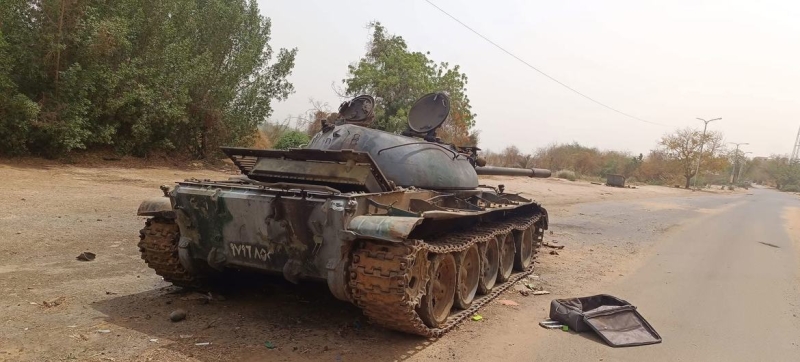

© Nezar Bogdawi Tank in Khartoum, Sudan. Global military spending has risen for 11 years in a row and is 776 times the UN budget. Peace and Security
Global military spending continues to rise, undermining efforts to ensure sustainable development and long-term security. This was stated by the UN High Representative for Disarmament Affairs Izumi Nakamitsu in a message on the occasion of the Global Days of Action on Military Expenditure.
Global military spending reached $2.887 trillion in 2025, up 2.9 percent from a year earlier, according to data released today by the Stockholm International Peace Research Institute. in a row.
For comparison, foreign development assistance amounted to $174.3 billion, 23 percent less than in 2024. Thus, military spending exceeded external assistance by more than 16 times.
The UN budget itself for 2025 amounted to $3.72 billion – 776 times less than global military spending.
“These trends should make us think,” she emphasized. Nakamitsu.
The deadline for achieving the Sustainable Development Goals is less than four years away, but only one-fifth of the targets are on track. At the same time, the annual global financing gap for sustainable development has reached $4 trillion.
“This is not just a lack of resources. This is a lack of the right priorities,” said the head of the UN Office for Disarmament Affairs.
The arms race increases instability
She recalled that increased military spending does not lead to strengthening peace and stability, but, on the contrary, can undermine the foundations of long-term security.
According to Nakamitsu, the arms race only increases escalation, deepens mistrust and increases the risk of mistakes. A vicious circle is formed: the feeling of danger justifies militarization, and militarization, in turn, gives rise to new instability.
The cost of lost opportunities
At the same time, key global threats – climate change, inequality, food insecurity – remain unfunded. strengthening human security,” she said.
What kind of security do we need?
“The question is not whether states have the right to invest in defense – they certainly do. And it’s not about whether there are real threats – they exist,” the UN representative emphasized. “The question is what kind of security we provide and at what cost.”
True security, she said, is determined not by the number of weapons, but by the well-being of people and the state of the planet.
Nakamitsu called for a rethinking of the approach to security in the 21st century and recalled the concrete steps proposed by the Secretary-General: prioritizing diplomacy, strengthening trust, transparency of military budgets and the redirection of some funds to sustainable development.
She concluded with a message to governments, civil society and citizens around the world: “Humanity does not need more weapons. He needs more trust, more cooperation and more solidarity. And above all, he needs peace.”