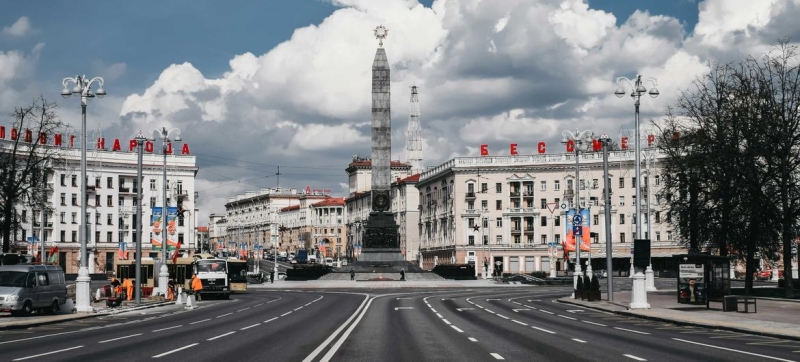

The capital of Belarus is Minsk, Victory Square. UN experts condemned the decision of the Belarusian authorities to invalidate the passports of oppositionists in exile Human Rights
The UN Group of Independent Experts on the Situation of Human Rights in Belarus condemned the decision of the government of that country to invalidate the passports of persons previously detained for political reasons and forcibly expelled from the country after their release in 2025 and 2026.
Experts interviewed a number of former prisoners who were left without valid passports – “contrary to international law and in the absence of legal basis or proper justification.” status, access to employment, health care and basic services, and increased risks of losing citizenship.
“States have an obligation to protect their citizens and ensure that any administrative measures affecting their rights comply with both national and international law,” the experts said in a statement. “The revocation of passports, although within the sovereign prerogative of States, must be carried out in compliance with applicable legal standards.”
Experts recalled that the invalidation of a passport may amount to violations of fundamental rights protected by international law, the Universal Declaration of Human Rights, as well as four articles of the International Covenant on Civil and Political Rights, including provisions relating to freedom of movement, rights entry into one’s own country, the right to recognition of legal personality and the principle of non-discrimination.
The group of experts called on the Belarusian authorities to immediately address this situation, restore the rights of those affected and ensure full compliance with their international human rights obligations.
Special Rapporteurs are independent experts appointed by the UN Human Rights Council to examine either situations in specific countries or thematic issues in all parts of the world. They are included in the special procedures of the Human Rights Council. Special procedures experts are not UN employees and are not dependent on any government or organization. They work in a personal capacity and are not paid for their work.