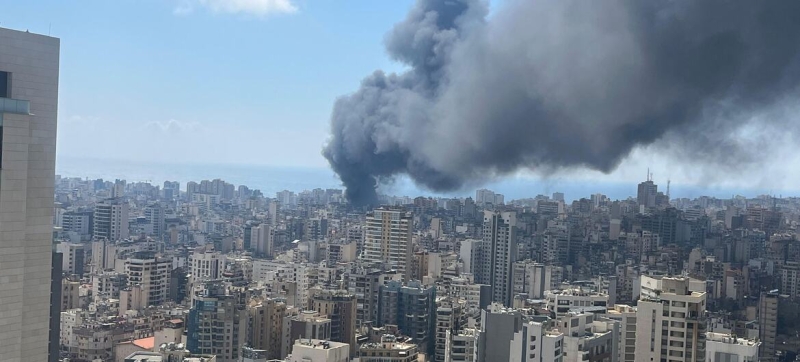

The security situation in Lebanon remains extremely fragile, the World Health Organization (WHO) reports. Lebanon: Airstrike death toll continues to rise Peace and Security
Continued fighting and airstrikes are causing a growing number of casualties in Lebanon. The overall security situation in the country remains extremely fragile, the World Health Organization (WHO) reports.
Since the beginning of March, more than 2,100 people have been killed and almost 7,000 injured in Lebanon; Among the victims are women and children. The number of displaced people has risen sharply, with more than a million people forced from their homes and many now in overcrowded shelters, placing additional strain on service delivery systems.
Detention of a UN peacekeeping convoy
On Tuesday, Israeli troops stopped a UN peacekeeping convoy in southern Lebanon. This happened despite prior agreements with the Israeli side.
The United Nations Interim Force in Lebanon (UNIFIL) reported that the convoy carrying personnel and contractors needed for the operation of the headquarters in Naqoura was stopped a few kilometers from its destination, after which it was allowed to continue on its way. However, local contractors were deployed back to Beirut.
The mission warned that continued restrictions could disrupt the delivery of vital supplies, including food, fuel and water, and hamper its mandate to monitor violations along the Blue Line separating Israel and Lebanon.
“We once again call on the IDF to comply with previously agreed upon agreements and fulfill its obligations to ensure the safety of peacekeepers, as well as to ensure freedom of movement for all UNIFIL patrols and logistics convoys,” the mission said.
Economic Impact: Gaza, Caribbean, Pacific region
The global economy faces renewed challenges as war in the Middle East threatens to derail global economic growth: Even if the conflict is short-lived, global economic growth is projected to slow to 3.1 percent in 2026, with inflation rising to 4.4 percent. If a full-scale war resumes, the forecast may worsen.
Humanitarian operations in Gaza face increasing challenges as critical infrastructure begins to fail. The UN Relief Agency for Palestine Refugees (UNRWA) is forced to reduce the operating hours of generators at its sites due to the risk of mechanical breakdowns, which affects the provision of services to vulnerable populations. parts.
Six weeks after the start of the war in the Middle East, its consequences have closely affected the Caribbean region, which is also threatened by climate problems associated with the natural phenomenon El Niño.
UN experts warned on Wednesday that the war – and in particular the crisis in the Strait of Hormuz – has caused the world to experience one of the biggest energy and trade shocks since the COVID-19 pandemic and Russia’s full-scale invasion of Ukraine in 2022.
The biggest hit will be, according to an analysis by experts from the UN World Food Program (WFP). low-income households.
“Even with a fragile truce now in place, instability remains high – and Caribbean countries that rely heavily on food imports are quickly feeling the effects of the current situation,” the authors of the WFP report note.
Experts warn that there is a 61 percent chance of an El Niño event occurring by the middle of this year. In the Caribbean, this has historically led to heat waves, droughts and crop failures in already struggling countries.
For Pacific island nations, the crisis in the Middle East is not some distant geopolitical event, but soaring fuel prices and unstable electricity systems. Experts fear that communities at the very end of global supply chains could find themselves in even more dire economic straits.
From Fiji to Tuvalu, from the Solomon Islands to the Marshall Islands, authorities are taking emergency measures to save fuel, protect the most vulnerable and keep essential services running.