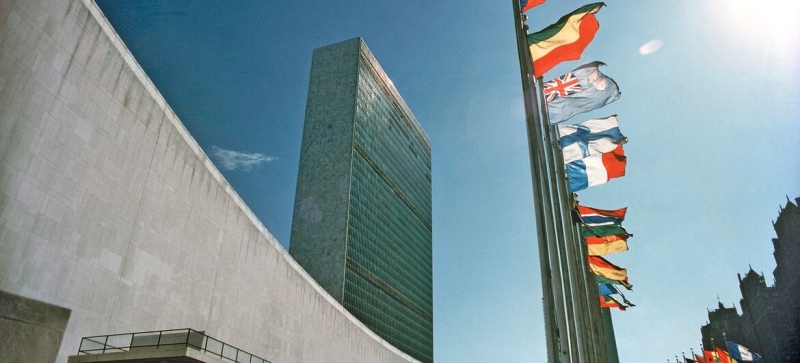

UN headquarters building in New York. The race for the post of UN Secretary-General: gender, geography and political alignment UN
The selection of the tenth UN Secretary-General, who will take office on January 1, 2027, is becoming one of the key diplomatic events in the coming months. Who leads the Organization will determine the direction of global policy, the international community’s ability to respond to crises, and the sustainability of the multilateral system in an increasingly fragmented world.
At the beginning of the year, Member States received an invitation to nominate their candidates by April 1, 2026. The first public dialogues with candidates will take place in the General Assembly at the end of April. This will be followed by closed consultations in the Security Council, where the five permanent members are China, France, Russia, the United Kingdom and The USA traditionally plays a decisive role, since any of them can block a candidacy. Formal approval by the General Assembly is expected at the end of 2026, although actual selection usually occurs between August and October. So far, four candidates have been formally nominated: former Chilean President Michelle Bachelet, who served as UN High Commissioner for Human Rights from 2018 to 2022, International Atomic Energy Agency (IAEA) Director General Rafael Grossi of Argentina, head United Nations Conference on Trade and Development (UNCTAD) Rebekah Greenspan of Costa Rica and former Senegalese President Macky Sall. Notably, three of the candidates represent Latin America, a region widely considered to be “next” in the informal geographic rotation, although no such policy officially exists. At the same time, citizens of the five countries with permanent representation on the Security Council traditionally do not nominate their candidates. The question of whether a woman will be elected for the first time remains open. In the UN’s eight decades of existence, nine men have held the post of Secretary-General, and states are increasingly calling for women to be nominated. However, gender is not a formal criterion, and the final decision still depends on the ability of the permanent members of the Security Council to reach consensus. Recent disagreements between them over the crises in Gaza, Ukraine and Iran show how difficult this process can be. The incoming Secretary-General will succeed António Guterres, who has held the position since 2017. Before him, the Organization was headed by Ban Ki-moon, Kofi Annan, Boutros Boutros-Ghali, Javier Pérez de Cuellar, Kurt Waldheim, U Thant, Dag Hammarskjöld and Trygve Lie. The stakes in this race are high: the new head of the UN will not only have to manage the global bureaucratic machine, but also act as a mediator in conflicts, a defender of international law and the voice of the world community in an era of growing instability.