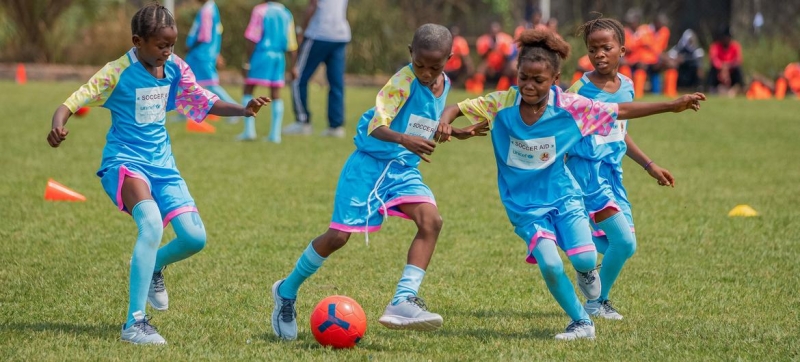

© UNICEF/J. Mulala Girls play football in the DR Congo. How football helps young people talk about mental health Culture and Education
When Dr. Sahira Al-Nahari founded Shifā Art in Saudi Arabia, using art as a catalyst to talk about mental health, she noticed an interesting pattern: the men who came to her therapeutic art workshops often found it difficult to talk openly about their innermost thoughts and emotions.
Over time, Sahira noticed that during class, many of them first started drawing T-shirts or emblems of their favorite teams. Gradually, conversations about everyday anxieties and experiences arose around such drawings.
“On the football field, no one wins alone,” says Dr. Al-Nahari. – Players depend on the entire ecosystem: defenders, midfielders, coaches, doctors and fans in the stands – everyone has their own important role. When we talk about youth mental health, we need an equally broad ecosystem of support.”
Speaking at UN Headquarters alongside UN Assistant Secretary-General for Youth Felipe Paulier, Dr Al-Nahari stressed the power of sport not only to improve the psychological well-being of young people, but also to reduce the stigma of mental illness. young activists, government leaders, civil society representatives and athletes for an event highlighting football as a powerful tool for supporting mental health. This forum is part of the Youth Mental Health and Wellbeing flagship initiative, which aims to move the debate beyond medicine.
Challenges facing young people
According to a UN report published in February this year, one in seven people aged 10 to 19 years lives with some kind of mental disorder. However, about 75 percent of mental problems diagnosed in adults begin to develop before reaching the age of 25. The level of depression among adolescents and young adults has increased significantly in recent years.
The report’s authors emphasize that the mental health of young people depends on a whole range of factors: the quality of education, the situation on the labor market, the atmosphere in the family, the level of poverty, the influence of technology and social attitudes. Therefore, solving these problems requires concerted action in a variety of areas.
“Young people live in an extremely complex world, faced with unpredictable change: economic instability, the impact of armed conflict, forced displacement and social exclusion,” said Felipe Paulier.
In this regard, the World Health Organization recommends the use of programs that help young people develop psychological resilience, offer alternatives to risky behavior, integrate different formats of support and create a supportive social environment. One of these tools is participation in sports activities.
Play relieves stress
The report shows that participation in team sports is associated with lower levels of depression and anxiety, regardless of country of residence. As the most popular sport on the planet, football helps build a sense of community, strengthens social bonds and develops emotional resilience.
“We believe that football, and sport in general, are very powerful agents of change. They bring people together. “Football legends have the power to change public perceptions and create new positive behaviors,” said Paulier.
Both speakers emphasized the special role of football as a universal language that helps young people feel part of something bigger.
Dr. Al-Nahari also noted that young people independently create effective mechanisms for mutual support in matters of mental health, and the task of the UN and the international community is not to lecture them, but to listen and establish close partnerships with them: “The most important players in this field are young people themselves. They don’t stand on the sidelines waiting for someone to come to their aid.”
Still, football alone is not enough…
The “One World, One Game, One Goal” event in New York on Friday demonstrated the potential of football to combat social isolation. However, it is only one element of a multifaceted UN approach to supporting the mental health of young people around the world.
For example, the World Health Organization (WHO) and the United Nations Children’s Fund (UNICEF) are implementing the evidence-based Helping Adolescents Thrive initiative. The program helps governments implement effective systems for psychosocial support for adolescents in schools.
“We want to involve more than just sports,” Paulier said. “We strive to speak to young people in a language they understand.”
But he said, along with raising awareness and implementing support programs, the world needs to take the issue of funding much more seriously. According to WHO, most countries spend less than two percent of their annual health expenditure on mental health. The result is a global funding gap of about $200 billion.
“Behind these numbers are millions of young people who carry pain within them that often goes unnoticed, unspoken and without the support they need,” said Felipe Paulier.