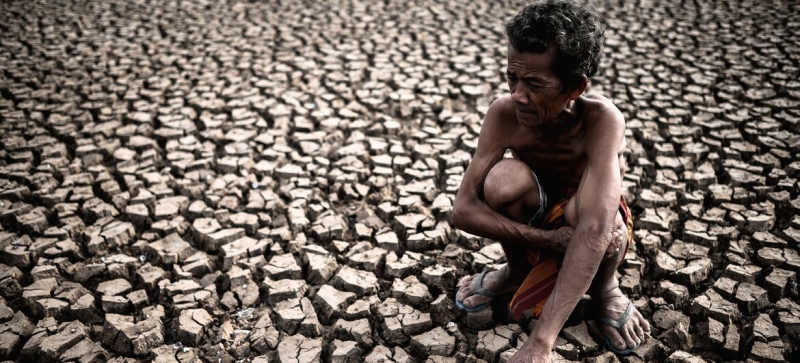

© Adobe Stock/Johnstocker El Niño increases the risk of severe drought and wildfires. El Niño is gaining strength: the planet faces six months of abnormal heat Climate and Environment
The El Niño climate phenomenon, fueled by the abnormally warm waters of the Pacific Ocean, is rapidly gaining strength and has not yet reached its peak. Forecasters have little doubt: this natural phenomenon will last at least until the end of February, and air temperatures across the globe will be higher than usual in the coming months.
The current phenomenon is already fully formed. It will peak and become “very strong” by the end of the year, according to fresh forecasts from the World Meteorological Organization (WMO). The WMO has never made such clear predictions – neither for El Niño itself, nor for the opposite, “cooling phenomenon” – La Niña. In some areas of the Pacific Ocean in July and early August, temperatures at depth were more than 8 degrees Celsius above normal.
This combination of factors points to the unfolding of an abnormally strong climate event – and it’s happening on a planet already heated by greenhouse emissions.
“El Niño is swelling right before our eyes,” said UN Secretary-General António Guterres. “The scientific evidence is clear: the planet has entered uncharted territory, and temperatures continue to rise.”
Colossal Heat Reservoir
El Niño is a natural process that occurs every 2 to 7 years when waters in the central and eastern equatorial Pacific Ocean become warmer than normal. This warming changes the circulation of the atmosphere, redrawing the map of precipitation and temperatures across the Earth.
However, the current cycle is developing under unique conditions. The world’s oceans are already heated to historical highs, which creates an unprecedentedly high temperature background for the natural cycle.
Scientists have not yet directly argued that human-caused climate change is making El Niño itself more frequent or strong. However, a warmer atmosphere and an overheated ocean significantly enhance its consequences, providing the natural phenomenon with an additional “resource” in the form of colossal volumes of heat and moisture.
The dynamics of the process are clearly illustrated by numbers. The so-called Niño 3.4 index, which reflects water temperatures in the central tropical zone of the Pacific Ocean, was an average of 1.5 degrees Celsius above normal from May to July. By July, the deviation reached two degrees, and in individual weekly measurements at the end of summer – 2.6 degrees. © WMO/A. Nasir The world’s oceans are heated to historic highs. Even a very strong El Niño does not mean that disasters of equal severity will hit absolutely all regions. However, from September to November, air temperatures will be above normal for almost all of the land. Precipitation patterns are already taking on El Niño characteristics, with some corners of the planet experiencing heavy rain and flooding, while others are experiencing drought. Other oceanic processes also complicate the situation. In particular, a positive Dipole phase (another large-scale temperature swing) is forming in the Indian Ocean, and the tropical Atlantic also remains unusually warm. Due to the overlap of these factors, it is not possible to provide a country-specific point forecast. But collectively, all indicators point to a period of increased climate risks. “El Niño means “the boy” in Spanish, but this phenomenon has the potential to deal a devastating blow to entire communities and the global economy,” said Celeste Saulo, WMO Secretary-General. “We are already seeing widespread destruction from droughts and floods, and as El Niño strengthens, the consequences will only worsen.” For the first time in its half-century history, the World Meteorological Organization launched a global mobilization of national hydrometeorological services. The goal is to maximize forecasts and strengthen early warning systems as threats evolve. This initiative is designed to help governments and humanitarian organizations prepare for the impacts of El Niño, which could affect particularly vulnerable sectors, including agriculture, health, energy and water supply. “This exceptional El Niño event requires an exceptional level of preparedness and response,” Saulo said.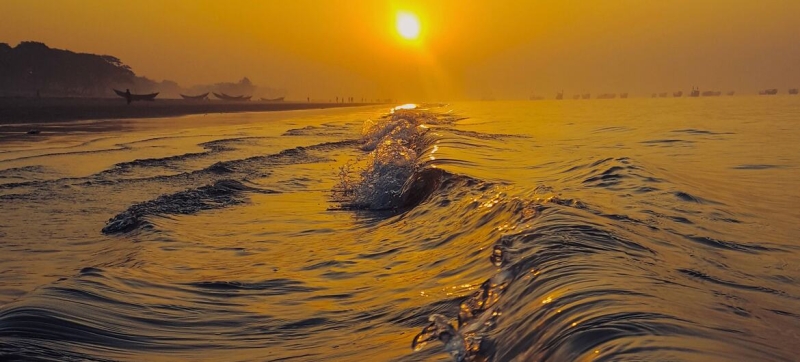
Global scale, uneven consequences