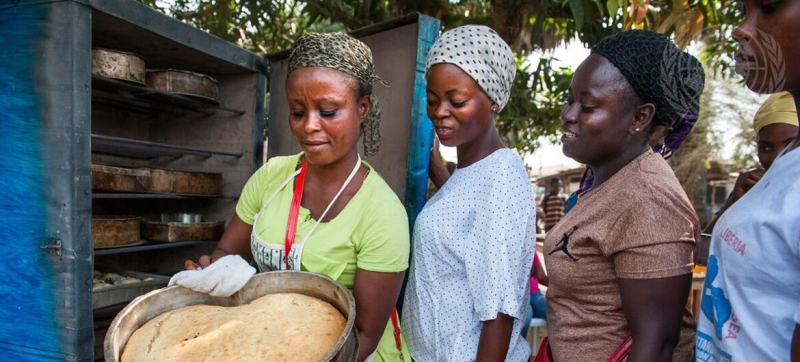

UN About 90 percent of women’s organizations suffered financial losses due to cuts in aid programs. What the UN Trust Fund to End Violence against Women has achieved in 30 years of work Women
Thirty years ago, the UN General Assembly created the first and still only fund in the UN system dedicated exclusively to combating violence against women and girls. Over three decades, the UN Trust Fund to End Violence against Women and Girls has mobilized more than $250 million and supported over 700 initiatives around the world.
In his anniversary message, UN Secretary-General António Guterres called on partners to renew their support for the Fund and invest in women’s organizations around the world.
“Violence against women and girls is a persistent and widespread global scourge. It leaves physical and psychological scars, deprives people of their livelihoods, and interrupts their education. Entire communities are paying the price with weaker economies and growing inequality,” said the UN chief.In 2010–2015, the Foundation allocated 109 grants for $55 million, and in 2021–2025 – 153 grants for $70 million. An independent evaluation of 36 projects completed over the past five years found that all of them produced results, and in most cases long-term ones. The authors of the report emphasize that statistics often do not reflect changing attitudes towards women, trust in help services and the willingness of victims to officially report violence.
However, some numbers speak for themselves. In Somalia, where up to 98 percent of girls are estimated to undergo female genital mutilation, the International Solidarity Foundation worked with religious and traditional leaders, students and journalists. During the project, the share of religious leaders who consider this practice harmful increased from 52 to 96 percent, and among students – from 44 to 91 percent. Parents’ willingness to support refusal from operations rose from 72 to 100 percent. According to the organization’s estimates, the project saved more than 12 thousand girls from genital mutilation.
“For me, the project changed the way of thinking. At first, I believed that circumcision protected the girl so that she would not have illicit sex. Now I know that it brings problems – health, financial and religious,” said a student who participated in the focus group.
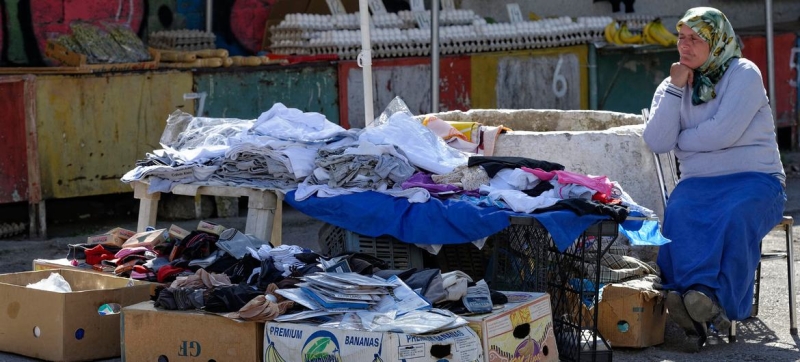
© ILO/M. Crozet A woman in Albania sells goods on the street.
Sometimes results can be achieved by investing very little money. In the Western Balkans, three organizations – Forumi Gruas Elbasan in Albania, the SOS helpline for women and children in Montenegro and the Center for Girls in Serbia – received grants ranging from $100,000 to $200,000 each. They worked with those who are usually overlooked by the care system: elderly rural women, including those from Roma communities, who were hesitant to seek help due to language barriers and cultural taboos, and schoolgirls who had experienced domestic violence since childhood. the norm.
Local women’s groups that are trusted in these communities have come up with their own ways to reach people, from volunteer hotlines to teaching first aid skills to older women. In Serbia, the Center for Girls worked directly in schools: girls learned about their rights and passed them on to their peers. Small sums to support existing successful projects often turn out to be a more effective investment than funding new large-scale initiatives.
Husbands, priests and imams
Another conclusion of the assessment: the greatest effect comes from working not only with women themselves, but also with those who form norms in society – men, religious leaders, officials.
In Liberia, the organization Episcopal Relief & Development relied on priests and imams. Christian and Muslim leaders worked together to study sacred texts and develop materials for their communities. Over six years, the project reached almost 30 thousand people, and the number of women subjected to partner violence decreased by 8 percent. In India, Sahayog created 100 men’s groups in two regions with high rates of domestic violence. The men who completed the training became an example for their fellow villagers and worked in conjunction with hundreds of local women’s organizations.
“Before, it never occurred to me to discuss anything with my wife – I made the decisions. But after studying and talking in the group, I realized that it is important to consult with my wife and make decisions together. She must be an equal partner. Now we decide everything together, and I see that this has helped the family: my wife tells me how to spend money more wisely,” said one of the participants.
Protection and justice
Another direction is training those who, as part of their duty, must protect women. In Peru, Paz y Esperanza has trained more than a thousand judges, prosecutors, police officers and other officials on gender and disability issues. The proportion of women with disabilities who formally reported violence increased from 13 to 37 percent. The authors of the assessment especially emphasize: this is a sign that women have begun to trust the system more, and not that there has been more violence.
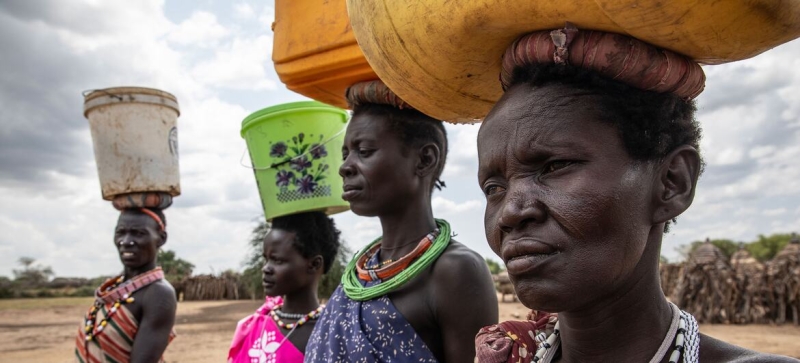
© VPP/G. Vivacqua Women in South Sudan go in search of water.
In South Sudan, where state courts are largely shut down due to conflict, StewardWomen set up mobile courts and worked with traditional institutions to ensure cases were heard in a victim-sensitive way. In three years, 58 cases were brought to verdict, and more than 400 victims of rape and forced marriage received medical, psychological and economic assistance.
Breaking the cycle of violence
Many women return to abusive partners simply because they cannot feed themselves and their children. Therefore, a number of projects focused on economic independence. In Kenya, the Catholic organization Trócaire worked with 4,500 girls in eight informal settlements, teaching them skills.
“I am now a single but happy mother – having left an abusive marriage. My skills as a hairdresser and seamstress allow me to feed my children, pay rent and even save a little,” said one participant.
In Pakistan, CBM created a helpline and 100 self-help groups for women with disabilities, and also helped them obtain electronic ID cards. Without them they could not qualify for social support and remained in situations where they were subjected to violence from partners or relatives.
Warning Signs
Despite these successes, the situation in the world remains difficult. Almost every third woman reported experiencing violence, and in 2024, every ten minutes, one woman or girl was killed by an intimate partner or family member. According to a UN Women survey, 90 percent of women’s organizations have suffered financial losses due to cuts in foreign aid budgets, and almost half are at risk of closure. The demand for the Fund’s support exceeds its capabilities many times over: in 2025 alone, applications were received for more than 2 billion dollars.
“More resources are required, and many problems remain unresolved. Conflict, climate change and new technologies are putting women and girls at increasing risk – along with unrelenting attempts to take away their rights,” said the UN Secretary-General. All grants will be for a minimum of four years, with a potential of six years or more, and each will include not only project funds, but also flexible funding for the needs of the organization itself.
Priorities include combating new forms of technology-related violence, violence in climate and humanitarian crises, and supporting adolescent girls.