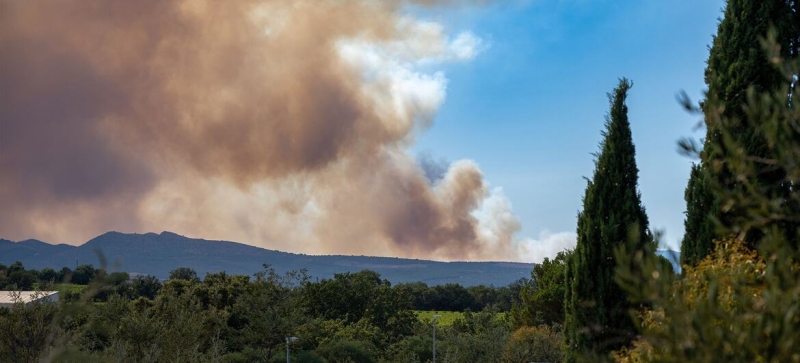

© Adobe Stock/Bruno Western and Central Europe are experiencing historic rainfall deficits. Pictured: forest fire in France Drought and heat in Europe and North America are increasing pressure on forests and urban environments Climate and Environment
According to the European Drought Observatory, 50 percent of the European Union and United Kingdom are currently experiencing varying degrees of drought. Critical precipitation deficit leads to a sharp decrease in soil moisture and deterioration of forests.
Combination of unfavorable factors
As reported by the United Nations Economic Commission for Europe (UNECE), the combination of prolonged drought, heat stress, increased risk of forest fires, as well as secondary threats, including the large-scale spread of bark beetles and phytopathogenic diseases, is leading to unprecedented drying out of forests throughout region.
In Western and Central Europe, historic rainfall deficits—with some areas experiencing the longest and most sustained annual deficits in more than 60 years—have caused widespread leaf loss and damage to forest canopies.
Urban Heat Island Effects
These trends are on top of pre-existing problems. According to baseline data from the UNECE Forest Profile 2025, up to 73 million hectares of forests have been affected by insects, diseases and adverse weather events in the region over time. At the same time, trees in cities across the region are experiencing the effects of extreme urban heat island effects and water shortages. This threatens air quality, public well-being, and the ability of cities to cope with the impacts of climate change.
From response to prevention
In the face of increasing risks, UNECE member states are moving from crisis responses to proactive, long-term adaptation strategies.
As part of the meeting of the UNECE Committee on Forests, which will take place from 4-6 November 2026, countries are working on pilot reporting methodologies to track damage caused by abiotic factors – droughts, hurricane winds and forest fires, as well as biotic factors, including pests. This will allow for transparent data sharing and prompt action.
Municipalities are actively using initiatives such as the Trees in Cities Challenge to expand sustainable urban tree cover, reduce heat loads and integrate living green infrastructure into the city planning.
UNECE support
UNECE platforms also help the forest sector adapt to structural changes by promoting circular use of wood and optimizing forest product value chains. The goal is to support economic stability in the face of uncertain raw material supplies.
By strengthening transboundary cooperation and implementing integrated landscape management, UNECE and its member States are working together to preserve the ecological integrity and economic viability of forests for future generations.