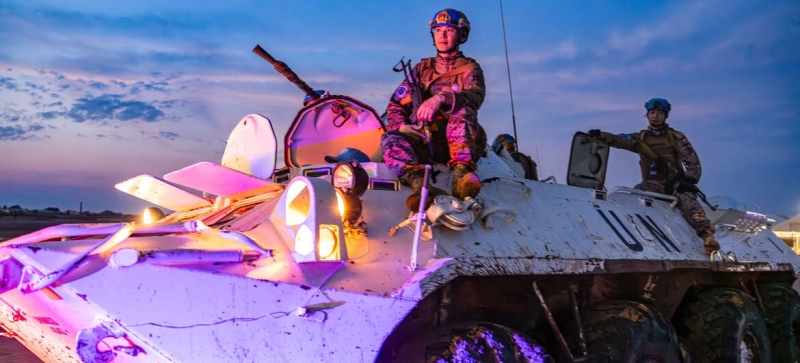

Photo UN/G. Cunha Night patrol by UN peacekeepers in Bentiu, South Sudan. Guterres presented a plan to restart the entire UN peacekeeping system UN
There are more wars in the world today than at any time since 1945, and more people have died in combat in the past five years than in the previous 25 years. UN Secretary-General Antonio Guterres recalled this on Wednesday when presenting a report on the future of peacekeeping to the General Assembly.
The head of the Organization emphasized that the very nature of conflicts is rapidly changing: drones are being increasingly used, the possibility of using lethal autonomous weapons based on artificial intelligence is being discussed, and the threat of using nuclear weapons is growing. “The proportion of conflicts resolved through peace agreements is the lowest in decades,” the Secretary-General said.
Amid geopolitical tensions and polarization, UN peacekeeping operations are facing a crisis of resources and mandates.
“The views of [UN] member states are increasingly They differ not only in how to respond to threats to peace, but also in how these threats themselves should be understood. This could result in mandates that lack clarity,” Guterres noted. threats
To return peacekeeping to effectiveness, the Secretary-General called on the international community to undertake a major “reboot” of the entire system and adapt it to new realities.
In the report released today, entitled “Review of the Future of All Forms of UN Peace Operations,” Guterres offers practical recommendations covering the full range of peacekeeping tools – from the Office of the UN Secretary-General’s Personal Envoy for Sudan and the UN Regional Center for Peacekeeping. preventive diplomacy for Central Asia to large-scale multidimensional missions such as in the Democratic Republic of the Congo and South Sudan.
The report calls for a shift in focus to preventive diplomacy, peacebuilding and close partnerships with host countries. The UN head emphasized that
peacekeepers cannot act in the conditions of a complete lack of political will of the parties.
The Secretary General stated the pointlessness of sending contingents to “hot spots” without basic agreements. We cannot maintain peace where there is no peace,” he said.
The new UN strategy also involves a clear “division of labor” with other structures of the Organization and increased flexibility and responsiveness of missions. Against the backdrop of cuts in funding for peacekeeping operations, Guterres called for strengthening their technological capacity. about the need to protect mission personnel.
“Attacks against UN peacekeepers must stop and those responsible must be brought to justice. No impunity. There are no exceptions,” he said. The report also examines the role of regional organizations, including the African Union and the implementation of resolution 2719 on the financing of peacekeeping operations carried out under its auspices. The Secretary-General noted that in some cases, peace enforcement operations led by regional coalitions, but strictly within the framework of international law.
“According to Chapter VII of the UN Charter, peace enforcement may include a number of coercive measures, including the use of military force, taken with the authorization of the Security Council to maintain or restore international peace and security. Unlike UN peacekeeping operations, enforcement actions do not necessarily require the strategic consent of the parties to the conflict,” said Guterres. Their success depends on the extent to which their mandates correspond to the needs on the ground, on the will of the parties and on the level of political support from the Security Council and Member States,” he concluded.