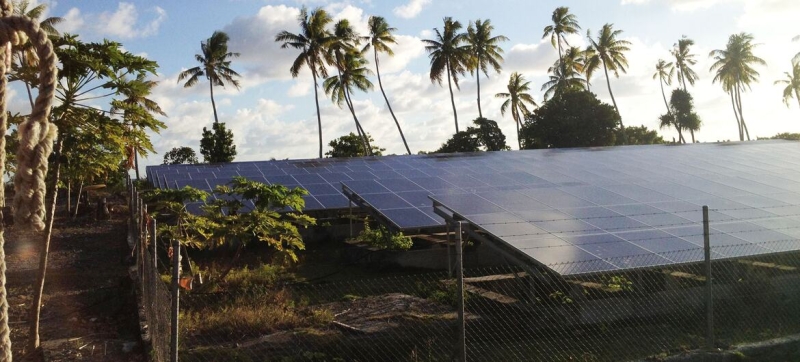

© UNDP/A. Egan Solar panels in Tokelau. The transition to clean energy requires land resources. Can it also help restore them? Climate and Environment
What if the infrastructure needed to combat climate change could also help restore the land on which it sits? At the UN Conference on Combating Desertification in the Mongolian capital, Ulaanbaatar, experts discussed how to combine renewable energy development with land conservation and restoration. Participants presented successful examples of this approach from around the world.
Thus, in South Africa, lands degraded as a result of mining are used to locate renewable energy facilities; In the deserts of China, solar panel installation is combined with gardening and water harvesting, while in India, solar-powered irrigation systems allow farmers to produce food and clean energy in the same areas. The area of land covered by such infrastructure is expected to increase from the current 500,000 hectares to three million hectares by 2032.
Renewable energy development has the potential to be “one of the largest land-use transformations in history,” said Julian, head of the Biodiversity and Land Division at the United Nations Environment Program (UNEP). Blanc.
“The main question is no longer whether renewable energy will develop. It will develop. The question is whether this development will be carried out in such a way that the condition of landscapes and ecosystems improves, and people find themselves in more favorable conditions than before,” he said. panels, to areas through which power lines pass. Multi-purpose projects that, along with energy production, contribute to land restoration can achieve maximum effect.
According to Murali Thummarukudi, director of the G20 Global Land Initiative at the UN Convention to Combat Desertification, the condition and characteristics of land must be taken into account even before projects begin. “If the right location is chosen, solar energy can become not only a source of energy, but also a tool for restoring ecosystems. However, in other environments the outcome may be different,” he said, emphasizing that local conditions are critical, whether it be the grasslands of Mongolia or the deserts of China. flood risk.
Even carefully designed facilities can create problems if there are too many of them in one area. For example, a UNEP assessment found that several hydroelectric dams in the Shire River basin in Malawi could have negative impacts on fisheries resources, biodiversity and downstream communities.
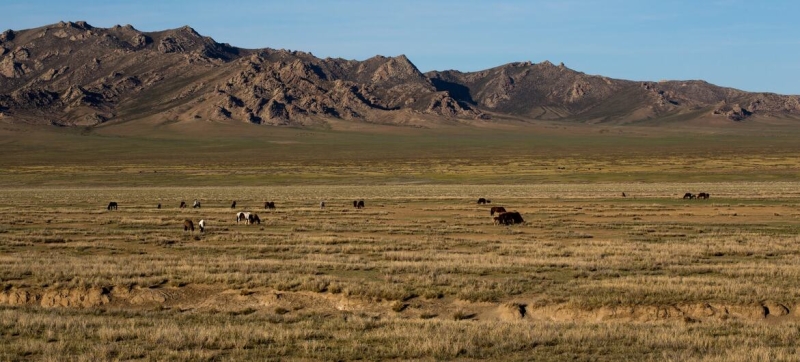
FAO/K. Purevrakchaa Almost 77 percent of Mongolia’s land resources are subject to degradation.
According to Julian Blanc, the approach to project planning needs to change: before choosing a site for infrastructure construction, the entire surrounding landscape should be assessed – its biodiversity, water resources, human settlements, animal migration routes, as well as susceptibility to floods and droughts. Nowadays, a site is often selected first and only then are the possible environmental impacts analyzed.
He added that local communities and their knowledge should also be taken into account in planning, since residents may be aware of the risks of droughts, floods and other hazards that technical assessments do not always reveal.
Investing not only in electricity
Careful planning makes it possible to find areas where renewable energy development does not conflict with other types of land use, noted Gayatri Nair, an employee of the International Renewable Energy Agency (IRENA).
She cited as an example a successful solar-powered irrigation program in India that helps farmers with small plots of land. Instead of competing with agriculture for land, solar energy has become an additional source of income for farmers.
At first, farmers were hesitant to install solar panels on their plots. However, using a digital platform developed with a partner organization, they were able to determine which parts of their land were best suited for the panels.
The local power company then helped create a digital payment system that allowed farmers to get paid for the excess electricity they generated. Some of the energy is used to run irrigation pumps, and the sale of the surplus provides farmers with additional income.
Promising approach, but not a universal solution
While similar examples from different countries provide reasons for optimism, they do not represent a ready-made model that can be applied everywhere.
UNEP will soon launch a global collection of examples of renewable energy projects that take into account the interests of land use, water and biodiversity conservation, and local communities. This will enable countries to draw on a broader evidence base as they develop renewable energy.
As UN Secretary-General António Guterres has said, the world must simultaneously “eliminate dependence on fossil fuels” and “ensure extensive conservation and restoration of nature.”