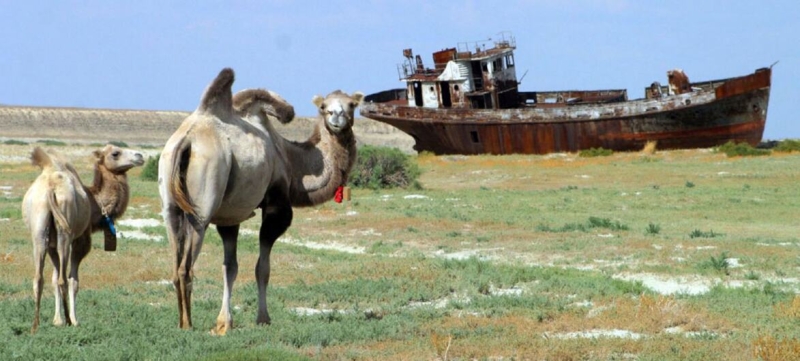

© UNDP The Aral Sea, once the fourth largest lake in the world, has dried up, leaving behind 5.4 million hectares of salt desert. The land that feeds the world: how pastures are being restored in Kenya and Kazakhstan Climate and Environment
What Botswana, Kazakhstan and Kenya Have in Common? The lesson they’ve all learned over the years: Rangeland restoration is most effective when science is combined with traditional knowledge.
On Monday, world leaders will gather for the Conference of the Parties to the United Nations Convention to Combat Desertification in Ulaanbaatar, Mongolia. Protection and restoration of pastures will be one of the main topics of the meeting.In northern Kenya, a herdsman peers into the cloudless sky, waiting for rain that keeps coming. The grass on which his herd feeds is becoming less and less every day.
And he is not alone. From the savannahs of Africa to the plains of Central Asia, millions of people face the same problem. They all depend on lands that many of us don’t even think about. We are talking about natural grasslands and pastures.
What are natural grasslands and why are they important?
Natural grasslands are found on every continent except Antarctica. These are grasslands, shrub steppes, semi-deserts and dry lands that people do not cultivate in the usual sense of the word. However, they serve as the “supporting structure” for the entire global food system.
- Two billion people depend on them for food, livestock and daily income
- They provide nearly 70 percent of the world’s livestock feed.
- Yet up to 40 percent of this land has already been degraded or is on the verge of extinction due to droughts, overgrazing and decades of neglect relationships.
When a pasture dies, it’s not just an abstract environmental loss. These are livestock that have nothing to eat, these are emptying markets and the food security of entire communities is collapsing before our eyes.
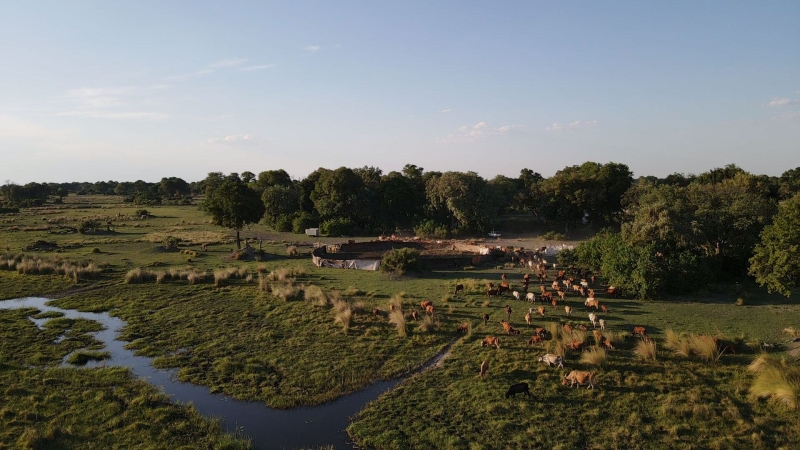
© UNDP Pastures occupy a significant part of Botswana’s territory.
Three countries – one warning signal
Botswana
Grassland covers most of this country in the south Africa and form the basis of its economy – from beef exports to safari tourism. However, until a recent national assessment of ecosystems, no one had a complete picture of their real state.
The results were disastrous: grasslands were shrinking, invasive weeds were encroaching, and droughts were becoming more frequent, leaving the land less and less time to recover.
One encouraging finding, however, is that where traditional community-based land management institutions are still strong, pastures are in better condition. This is an important reminder that local knowledge is a real asset, not just nice words.
Kazakhstan
Central Asia’s Aral Sea, once the world’s fourth largest lake, has dried up, leaving behind 5.4 million hectares of salt desert.
In the neighboring Kyzylorda region, more than 80 percent of pastures have already been degraded, and toxic dust storms carry salt thousands of kilometers around. This is a stark example of how an environmental disaster in one place can poison the earth and ruin the lives of people far beyond its borders.
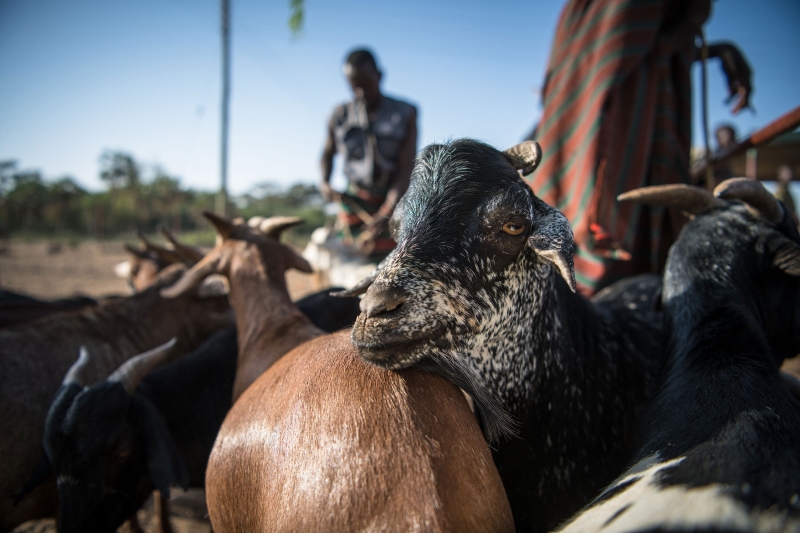
© UNDP Livestock pastures in Kenya are steadily turning into barren lands.
Kenya
Marsabit County in northern Kenya is home to the Chalbi Desert. Satellite images dating back to 1990 show how grasslands are steadily turning into barren lands. If nothing is changed, within a couple of decades the desert will double in size and swallow up the pastures that fed generations of nomadic tribes.
What is being done to solve the problem?
In all three countries, the response is following a similar, promising path: combining hard science with the experience of the people who live on the land.
Botswana involved more than 2,000 people – government officials, scientists and traditional knowledge custodians – in a national ecosystem assessment. This has created a strong evidence base for future land policy.
Kazakhstan commissioned a detailed study of the links between climate, land and water, which is now guiding plans for restoration of pastures and irrigation. At the same time, a program is underway to plant saxaul on the dry seabed: the green shield already covers 337,000 hectares, and by 2030 its area could reach 1.1 million hectares.
In Kenya, satellite data over 33 years was compared with the memories of elders who know what the earth looked like before. On this basis, practical solutions are already being created: flood control dams in Kalach, pilot sites for grass restoration and educational trainings that will allow local communities to monitor environmental changes themselves.
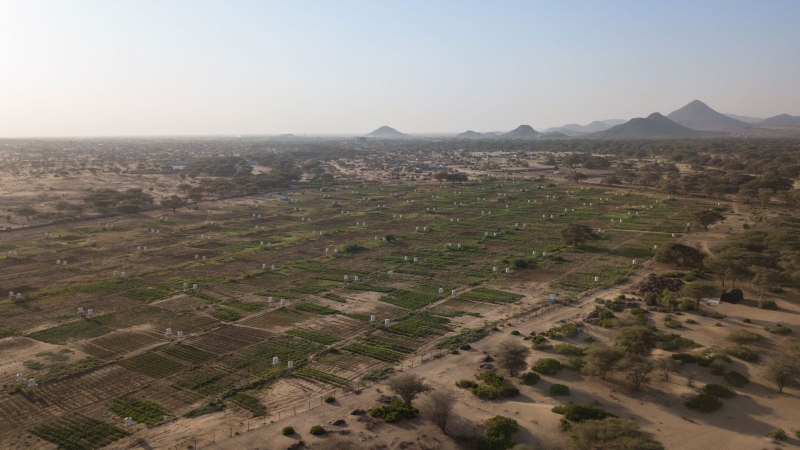
© UNDP Irrigated pastures in northern Kenya.
Responsibility for your land
Lands separated by thousands of kilometers are united by one simple truth: restoration of nature produces results only when people see their own experience and knowledge in the proposed solutions. Dry numbers alone will not save pastures – they are saved by a sense of responsibility for their land and living practical experience.
For a shepherd still peering into the cloudless sky, this union of science and tradition can be the difference between death and survival of his herd.