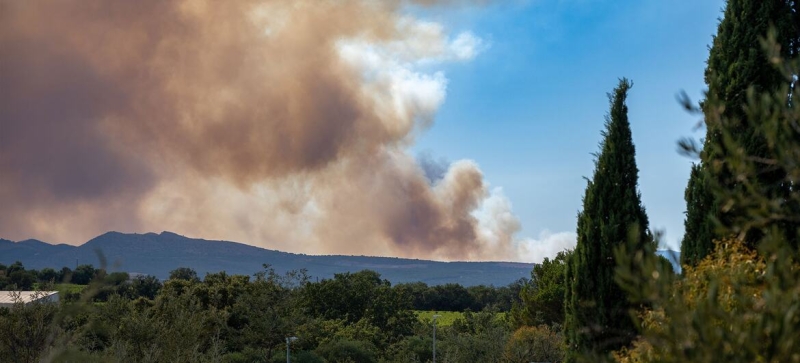

© Adobe Stock/Bruno Smoke from a forest fire that broke out near Perpignan, France. July 2026 broke temperature records in several regions of the world Climate and Environment
Last month was the second hottest July globally on record, with sea surface temperatures reaching record levels for the month. Extreme heat, drought, wildfires and floods continue to cause severe damage to people, economies and ecosystems around the world. The World Meteorological Organization (WMO) reported today.
According to the European Copernicus Climate Change Service, the average global surface air temperature in July was 1.47 degrees Celsius above the pre-industrial average (1850–1900).
Heat continues to break records
At Western Europe experienced its hottest June to July period on record. Extreme heat waves continue into August, with some countries experiencing their fourth wave since May.
High temperatures, extremely low soil moisture and drought are having devastating impacts on ecosystems, agriculture, river levels, transport and energy, while increasing the risk of wildfires.
According to France’s national weather service, extreme heat is expected across almost the entire country this week, with temperatures in many areas exceeding 35 degrees Celsius. The Swiss weather service has issued an “orange” alert for temperatures expected to rise above 35 degrees in the second half of the week. In the UK, the national weather service forecast temperatures in parts of the south by August 13 England may reach 36 degrees. in Latin America.
However, the average July temperature across the entire European continent ranked only eleventh on record thanks to cooler weather in Eastern Europe and Scandinavia.
Forest fires
In July, Western Europe saw exceptional intensity of forest fires, both in terms of area burned and volume
According to the Copernicus program, emissions from forest fires in France since the beginning of 2026 are already comparable to or higher than the extreme seasons of 2022 and 2023 and could make this year one of the worst in the last 24 years. In Spain, emissions from forest fires are also significantly higher than the average for this time years.
Large fires continue in the western United States. In Canada, according to the Canadian Forest Fire Information System, 591 active wildfires have been registered, of which 43 remain uncontrolled.
Global warming and atmospheric processes
Po According to WMO Chief of Climate Information John Kennedy, the current situation is due to a combination of long-term global warming and a persistent circulation of high and low pressure areas covering the Northern Hemisphere.
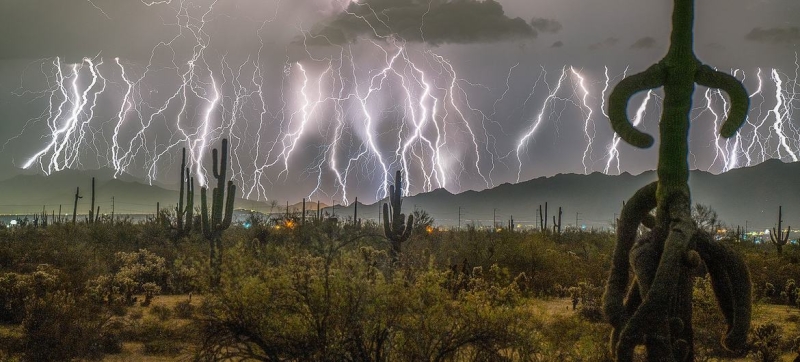
© WMO/E. Mitchell Severe storm in the United States.
“Areas of high pressure are typically associated with hot, dry weather, while areas of low pressure are associated with cooler, wetter conditions,” he explained.
Such areas of high pressure can persist for several weeks, Kennedy said. They caused extreme heat in Central Asia, North America and Western Europe in June. In July and early August, a similar pattern was observed in the same regions, as well as in parts of East Asia.
Record warm ocean
July recorded the highest sea surface temperature on record for that month outside the polar range, according to the Copernicus Monthly Bulletin regions.
Exceptionally warm temperatures were observed across much of the tropical Pacific Ocean, where El Niño conditions persist and are expected to intensify in the coming months.
Off the coast of Europe, record high temperatures in the Atlantic Ocean and western Mediterranean were accompanied by widespread and in some places very intense marine thermal waves.
Drought in some regions, floods in others
In many areas of Western Europe, drought persisted and intensified. Particularly low rainfall and soil moisture levels were recorded in France, Spain, parts of Germany, the UK and eastern Europe. Due to the drought, water levels in many rivers were significantly below normal. The Seine, Rhine and Danube were particularly affected, affecting water supply, agricultural irrigation and power generation.
Outside of Europe, precipitation was below normal in northern Canada, the central United States, the Maghreb, parts of the Horn of Africa, Siberia, southern Central Asia, parts of China, as well as Argentina, Uruguay, Bolivia and Brazil.
At the same time, precipitation was above average in the eastern United States and northern Mexico, Alaska and Canada, eastern Russia, Afghanistan, parts of the Indian subcontinent, eastern China and Japan, as well as Chile and southern Brazil.
Read also:
The UN warns that the world is entering a period of unprecedented heat
Floods have been reported in the USA, Chile, Brazil, Afghanistan, India, Pakistan, Bangladesh and China, among others. Heavy monsoon rains continue in West Africa, accompanied by flooding.
WMO has warned of the risk of heavy to very heavy rain, flash floods and landslides in north-eastern and western India, eastern Pakistan, Nepal, Bangladesh, Bhutan, Myanmar and some countries in Southeast Asia.
In India, monsoon floods have already killed dozens of people. According to the Meteorological Department, very heavy rains are expected this week in the central and northwestern regions of India, as well as in the Himalayas. In addition, around August 12, a new low pressure area should form in the Bay of Bengal, which will bring intense rainfall to the east coast of the country.
In China, mass evacuations of the population were carried out before the landfall of Typhoon Dolphin – the thirteenth of the current season and one of the longest. The National Meteorological Office has issued numerous warnings due to strong winds, heavy rainfall and the risk of coastal and inland flooding.