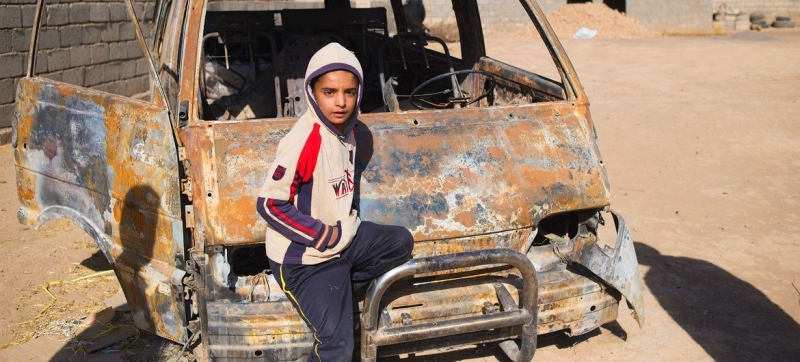

© UNICEF/L. Mackenzie The situation in Iraq and Syria requires constant vigilance on the part of anti-terrorist authorities. UN Security Council meeting on counter-terrorism: Daesh is fragmented, but the threat remains Peace and Security
The threat posed by the Islamic State (Da’esh) continues and is becoming increasingly serious. Representatives of the UN Counter-Terrorism Office and the Counter-Terrorism Committee Executive Directorate (CTED) warned about this when speaking at a Security Council meeting on Wednesday.
CTED Deputy Head Carmen Cantor said that over the past six months, Daesh and its affiliates have remained active and adapted to new conditions, “despite constant counter-terrorism pressure.”
She stressed that terrorists have been particularly active in Africa in recent years, and the situation in Iraq and Syria requires vigilance. The closure of the Al-Hol displaced persons camp in Syria was a significant event, but at the same time revealed the difficulties of working with former members of the group and their families.
Kantor noted that terrorist structures are actively exploring the digital space – from social networks and gaming platforms to artificial intelligence. “Propaganda is no longer about shaping narratives. It has become a tool that facilitates the activities of terrorist groups, helping them recruit supporters, mobilize resources and expand their influence beyond their own countries,” she said.
Special attention at the Security Council meeting was given to the growing use of unmanned systems and improvised explosive devices, especially in Africa. In this regard, the Counter-Terrorism Committee Executive Directorate, together with partners, is promoting the implementation of the Abu Dhabi Guidelines to Counter the Use of UAVs by Terrorists.
Carmen Cantor also expressed the need to protect critical maritime infrastructure and strengthen information exchange.The head of the Office of the UN Under-Secretary-General for Counter-Terrorism, Oguljeren Niyazberdiyeva, noted that, despite the efforts of states, Daesh continues to pose a serious threat to international peace and security. According to her, the group’s central leadership has been weakened, but its branches retain the ability to act autonomously, using local instability to recruit and plan operations.
Niyazberdyeva identified three key areas of counter-terrorism activities. The first is the need for international cooperation as terrorist networks increasingly operate across borders. The second is a focus on the rapid expansion of the use of artificial intelligence, encrypted communications, digital platforms, virtual assets and unmanned systems, which requires increased regulation and interaction with the private sector. Third, the imperative of respect for international law, including human rights and humanitarian law, as the basis for the effectiveness and legitimacy of counter-terrorism measures.
Both speakers called for increased international cooperation, adaptive and contextual approaches, and comprehensive measures based on international law. “Only through constant international cooperation and an integrated approach will we be able to effectively counter the threat posed by Daesh and its associated groups,” emphasized Carmen Cantor.