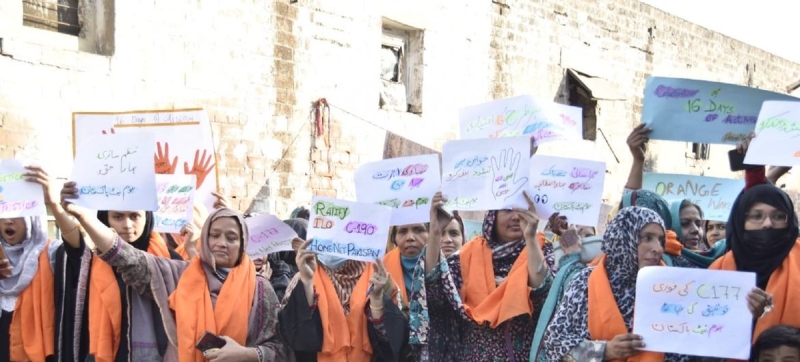

HomeNet Pakistan Informal domestic workers in Pakistan demand trade union rights as well as social protection (archive). Women in the world of work: the path to leadership is still not open to everyone Women
Women make up half of the world’s population, but still do not have equal opportunities in the world of work. According to the International Labor Organization (ILO), only 48 percent of women were represented in the formal labor market in 2025, compared to 73 percent of men. On average, women earn 23 percent less and perform more than three-quarters of all unpaid care work.
At management levels the gap is even more pronounced. According to the United Nations Development Program, women hold about 38 percent of management positions and just over 31 percent of leadership positions worldwide. Their representation remains especially low in areas that determine the future of economic growth, innovation and investment.
“Barriers affect women differently. Privilege can mitigate them, while discrimination can increase them. For some women, the ladder to leadership is difficult. For others it is broken. And for many, it doesn’t exist at all,” said Peggy Hicks, Director of the Department of Thematic Cooperation, Special Procedures and the Right to Development at the UN Human Rights Office. Despite progress, women continue to face unequal access to decent work, unpaid caregiving responsibilities, stereotypes, violence and harassment in the workplace. The situation is also aggravated by discrimination based on race, ethnicity, disability, age, socio-economic or migration status.
Women’s path to leadership positions in Morocco60~/h2>
Wafa Asri, Secretary General for Vocational Training at the Ministry of Employment of Morocco, has been involved in training, employment and human capital development for more than 30 years.
She says her main challenge was not the workload, but the need to prove that women have the same right to occupy leadership positions as men – especially to colleagues with traditional gender views. roles.
“Leadership cannot simply be proclaimed. It is built day by day through competence, consistency and personal example,” Asri said.
She launched Direction Femmes, a program that helps women develop leadership skills and prepare for high-level positions. Thanks to this and other initiatives, women’s representation in ministry leadership increased from less than 20 percent to about 35 percent.
Asri emphasized that mentoring programs alone are not enough. Laws are needed to ensure gender equality, flexible working conditions, affordable child care, combating stereotypes and examples of women leaders.
She also noted significant progress in education. When Asri studied engineering, less than 15 percent of the students in her class were girls, but today the proportion is more than half. More women in Morocco are choosing careers in traditionally male-dominated industries such as mining, automotive and aviation.
Protecting the rights of domestic workers in Tanzania
Thousands of women and girls in Tanzania perform housework and care for others every day. Most of them are employed in the informal sector, receive low wages, work long hours and have virtually no social protection. They also have difficulty reporting abuses and seeking justice.
However, significant progress has been made on this issue. The Tanzanian government is reviewing minimum wage regulations, labor laws and public policies to strengthen protection for domestic workers. The UN Human Rights Office, together with the ILO and the Tanzania Labor College, is helping them assert their rights and participate in decision-making.
“In the past, most of them did not want to be called domestic workers. They thought it was shameful. But thanks to constant educational work, today they can say without fear: “I am a domestic worker,” said Asteria Mathias, representative of the Tanzanian trade union CHODAWU.
Since 2011, the union, the UN and other partners have been developing a peer training program. Initially, 50 domestic workers participated, and now their number exceeds 200. Another 1,281 women in eight regions of the country received vocational training certificates. rights.
Why women should participate in decision making
Acting Executive Director of Global Women Leaders Voices Cristina Gallach began her journalism career in Barcelona in the early 1980s. Even then, she noticed that the bulk of the reporting work was carried out by women, and leadership and management positions were almost entirely occupied by men.
Later, while working in the structures of the European Union, Gallah participated in a mission to ensure security at the border crossing between Israel, Gaza and Egypt. There was not a single woman in the organizing group, so there were no women among the police sent to the border either.
As a result, women crossing the border had to be searched by men, which was unacceptable. Organizers had to quickly deploy female police officers.
“This is a concrete example of why women must be involved in decision-making at all levels, both in the planning stage and in the implementation of decisions,” said Gallach.
She subsequently participated in the development of Spain’s first feminist foreign policy, and at the UN she led the preparation of the first strategy for gender equality in Department of Public Information.
Gallach urged women seeking careers in diplomacy and public service to build mutual support networks, seek out mentors and speak out against discrimination.
“We are in a challenging time for gender equality. There is a pullback in many areas. We can resist him and continue to move forward only by supporting each other and not being afraid to talk about problems,” she emphasized.