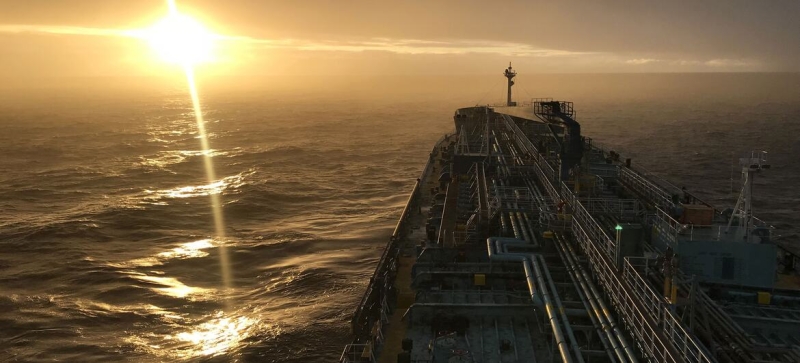

© IMO/Ch. Tunai The IMO condemns all unjustified attacks on civilian merchant ships caused by geopolitical conflicts, wherever they occur. Head of the International Maritime Organization calls for an end to attacks on civilian ships Peace and Security
Secretary General of the International Maritime Organization (IMO) Arsenio Dominguez issued a statement condemning the recent attacks on civilian merchant ships in the Azov and Black Seas.
“While recent events have focused international attention on the situation in and around the Strait of Hormuz, we must not lose sight of the fact that seafarers continue to face serious threats in other parts of the world,” he said.
Dominguez condemned all unjustified attacks on civilian merchant ships caused by geopolitical conflicts, wherever they occur. He said such acts endanger seafarers, threaten the safety of shipping, disrupt global supply chains and undermine the principles on which international shipping is built.
“Seafarers should never become victims of conflicts to which they are not a party. Every seafarer, no matter where he serves, deserves to work in conditions of safety,” the head of the IMO emphasized.Meanwhile, the Council of the International Maritime Organization, following the 137th session, reaffirmed the importance of maintaining freedom of navigation in accordance with international law. The Council condemned attacks on civilian merchant ships in the Strait of Hormuz and called for a de-escalation of tensions in the Middle East.
In a resolution adopted at the session, the Council emphasized that the right of transit passage through straits used for international shipping should not be subject to threats, restrictions, denials, impediments, violations, or suspension. The IMO Executive Body also recalled that any measures taken by coastal States to regulate the movement of ships in vital sea lanes must comply with the agency’s standards under the International Convention for the Safety of Life at Sea (SOLAS).
With regard to the situation in the Strait of Hormuz, the Council stated that any agreements between coastal States in the region must guarantee non-discriminatory and unhindered rights of transit passage for all ships through the internationally recognized traffic separation scheme adopted by the IMO in 1968. The Council also reaffirmed that passage through the strait should remain free of any duties and charges in accordance with international law, including the IMO Convention.
The Council directed the Secretary-General of the IMO to explore options for ensuring safe maritime communications and to engage with coastal States, other Member States and industry to coordinated and sustainable restoration of unhindered navigation through the strait.