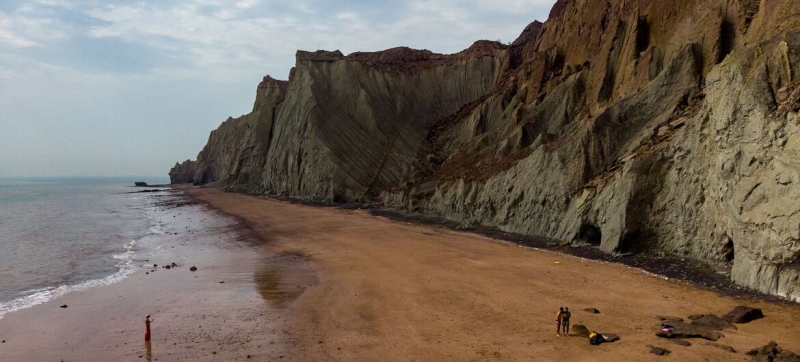

© Adobe Stock/Roger Iranian island of Hormuz. Strait of Hormuz: New attacks increase instability in energy markets Peace and Security
Renewed attacks on shipping in the Strait of Hormuz have destabilized energy markets. International Maritime Organization (IMO) chief Arsenio Dominguez condemned “reckless attacks” in the narrow waterway, which is a vital artery for meeting global energy needs. The UN agency calls for “maximum restraint and de-escalation.”
Three merchant ships, as well as Iranian targets, are reported to have been hit in the last two days.
Significant Risk
UN Secretary-General António Guterres said the resumption of back-and-forth attacks between the US and Iran over the past 24 hours is alarming and risks reversing diplomatic progress made since the ceasefire was agreed upon in April. “A return to full-scale military action would have catastrophic consequences for the peoples of the region, for international peace and security, and for the entire global economy,” he said. UN Spokesperson Stephane Dujarric.
“These reckless attacks have once again put innocent sailors in mortal danger. No seafarer should risk their life simply to do their job,” Dominguez stressed, calling on flag states, shipowners and operators not to expose crews to “undue risk” while transiting the strait. About 6,000 sailors remain trapped in the Strait of Hormuz on hundreds of ships; Previously, an average of about 130 ships per day passed through it.
Today, traffic volumes on this route have decreased significantly, although before the latest escalation, shipping began to recover. This occurred as part of a temporary ceasefire enshrined in a memorandum of understanding that the United States and Iran signed last month.
Commenting on the worsening situation, the United Nations Economic Commission for Europe (UNECE) noted that the already difficult situation of countries dependent on energy supplies from the Persian Gulf will continue worsen.
“We can expect prices and their volatility to remain high and supply disruptions – especially in local markets – to continue in the coming months,” said Dario Liguti, head of the UNECE Sustainable Energy Division.
The economist explained that although global shortages of fuel and fertilizers have so far been avoided, the consequences of the disruptions will still be felt, “even if the situation quickly normalizes.” In addition, Liguti stressed that strategic oil reserves are now at their lowest levels in decades.
“If instability continues, we should prepare for a new surge in prices and larger shortages of raw materials,” he said in an interview with the UN News Service.
Heat wave intensifies uncertainty
The situation is complicated by extreme heat waves this summer caused by the powerful climate phenomenon El Niño. According to forecasts, this natural phenomenon will only intensify in the coming months. As Liguti explained, this will lead to increased energy consumption for space cooling, put additional strain on energy infrastructure and limit access to water resources needed to cool power plants.
To mitigate the impact, including on the transport system, the UNECE representative stressed the urgent need to improve resilience to new energy shocks. To do this, it is important to save energy through efficiency measures, reduce the burden on limited resources by reducing overall energy consumption, and replenish reserves.
“Longer term, we are also seeing a renewed interest in many countries to invest in their own energy production and distribution, as well as in renewable sources,” Liguti said.