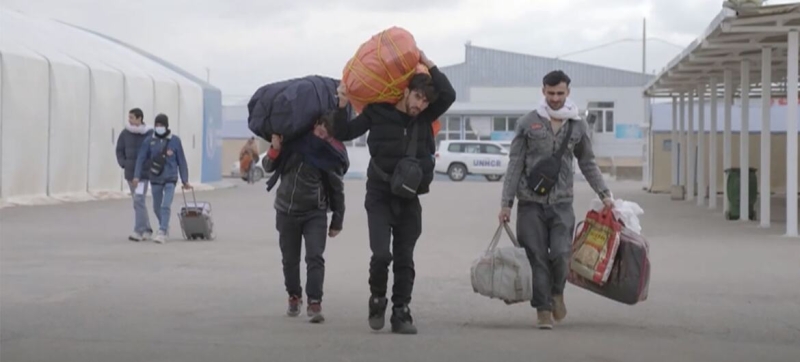

© UNHCR Afghans returning from Iran arrive at the border checkpoint. UN unveils $529 million aid plan for Afghan returnees Refugees and Migrants
The UN, together with non-governmental organizations, has presented a plan to provide humanitarian assistance to Afghan returnees for 2026. The plan will support approximately 2.7 million Afghans who are projected to return from Iran and Pakistan between April and December 2026 years.
Scale of return
According to available data, almost 5.9 million people have returned to Afghanistan since September 2023, which means that in more than two years the country’s population has increased by 10-12 percent (not taking into account annual population growth, which is estimated at 2.74 percent in 2026). In 2025 alone, 2.9 million returnees arrived in the country, and in the first four months of 2026, another 600 thousand people.
An estimated 1.7 million more Afghans from Iran and about one million from Pakistan.
“We are talking about a serious demographic and socio-economic problem that requires long-term measures and full funding,” said the acting UN Humanitarian Coordinator in Afghanistan, Tajudin Oyewale.He noted that more than half of the returnees are women and children, many of whom were born and raised outside Afghanistan and lack strong ties to local communities. In addition to emergency humanitarian assistance, he said, long-term investments in housing, health care and job creation are needed to avoid increased poverty, social tensions and repeated displacement of the population. The response plan is based on a two-tier strategy that includes both emergency assistance at the border and support for the medium- to long-term reintegration of returning Afghans.
Thus, it is planned to allocate $100.7 million for emergency response measures at the border. This is multidisciplinary assistance, including cash payments, medical and sanitation services, food and transportation, which will be provided at the main official border crossings with Iran and Pakistan under the leadership of the International Organization for Migration (IOM).
Reintegration and support communities
Another $428.5 million is planned to be used to support reintegration in areas of return. The program will focus on restoring access to essential services, including education, health and water, creating economic opportunity and ensuring housing and land rights. The needs are enormous, but the potential of UN agencies, non-governmental organizations and our partners remains significant,” said Tamindri De Silva, representative of the international humanitarian organization World Vision International in Afghanistan.
According to her, about $100 million is required for the work of humanitarian organizations on the border alone. However, available funding will only allow a small percentage of returnees to be assisted. The United Nations and partner non-governmental organizations have called on donors to fully fund the 2026 plan to assist Afghan returnees in order to prevent the deterioration of the humanitarian situation, as well as create the basis for the reintegration of millions of Afghans.