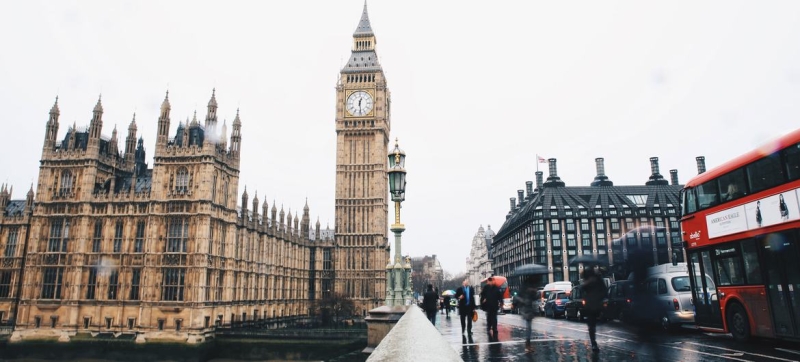

© Unsplash/H.Fin London, capital of Great Britain. UK: UN independent expert expresses alarm over infringement of right to protest International Law
UN Special Rapporteur on freedom of peaceful assembly and association Gina Romero has called on the UK to uphold its international human rights obligations as it introduces legislation restricting protest activity and political calls for a total ban on pro-Palestinian demonstrations.
“The UK Crime and Policing Act, which comes into force on 29 April, introduces provisions that are fundamentally inconsistent with international human rights obligations relating to the rights to freedom of peaceful assembly, association and expression,” Romero said.
“Of particular concern is the vague concept of ‘cumulative disorder,’ which gives law enforcement excessive discretionary powers to restrict assemblies, ignoring the principle that peaceful protests inherently involve some level of disorder that must be tolerated,” she added.
Romero also noted that criminalizing mask wearing under the law is “particularly problematic in times of increased surveillance, as anonymity is often necessary to protect privacy and prevent intimidation effects.”
The law also imposes additional restrictions on rallies near places of worship. Thus, the Special Rapporteur noted, the state risks creating “forbidden zones” for dissent. Authorities must facilitate assemblies within “sight and sound” of the target audience, Romero said.
In late April, following a series of stabbings in London’s Golders Green, British Prime Minister Keir Starmer said he would consider banning some pro-Palestinian protests due to the “cumulative impact” they have on the country’s Jewish community. The announcement followed opposition calls for a moratorium on all pro-Palestinian protests, which were supported by the UK’s Independent Expert on Terrorism Law. He argues that “it is clearly impossible at this point in time for such demonstrations not to ‘breed’ anti-Semitism.”The Special Rapporteur called on the UK Government to refrain from banning pro-Palestinian marches under the pretext of preventing antisemitism.
“Antisemitism is a serious problem that needs to be addressed through targeted and legal action. It cannot justify a complete ban on peaceful protests,” she said.
Romero expressed concern that the government’s approach appeared to impose increased controls on protest activities associated predominantly with Muslim communities, while similar controls were not applied to other forms of protest that have been directly linked to anti-Semitic and racist incidents. International law prohibits discrimination in the exercise of the right to peaceful assembly on grounds such as religion and race.
“Where restrictions target specific behavior – such as anti-Semitism – but are applied in a way that places a disproportionate burden on one community defined by religion or ethnicity, this may amount to discrimination,” it said expert.
“Freedom of assembly is a fundamental principle of a democratic society. Banning pro-Palestinian protests would be an attack on democracy. This is especially important to remember in anticipation of the actions dedicated to the anniversary of the Nakba, which will take place on May 16,” she said.