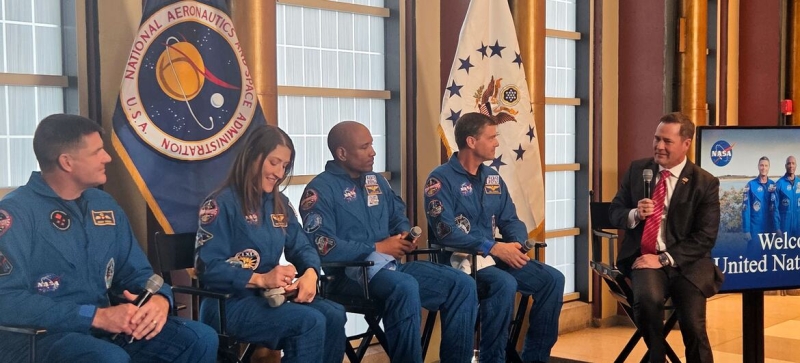

Photo UN/P. Dawkins US Ambassador to the United Nations Mike Waltz speaks with astronauts on the Artemis 2 mission at UN headquarters in New York. Small Earth and its big prospects: what the Artemis 2 astronauts told the UN after flying around the Moon Climate and Environment
Astronauts from NASA’s Artemis 2 mission, who made a historic flyby of the Moon a month ago, delivered a message at UN headquarters that sounded like a reminder that humanity is capable of so much when we work together. The visit was part of a long tradition: cosmonauts and astronauts have been coming to the UN for decades to talk about peace, international cooperation and the shared future of the planet.
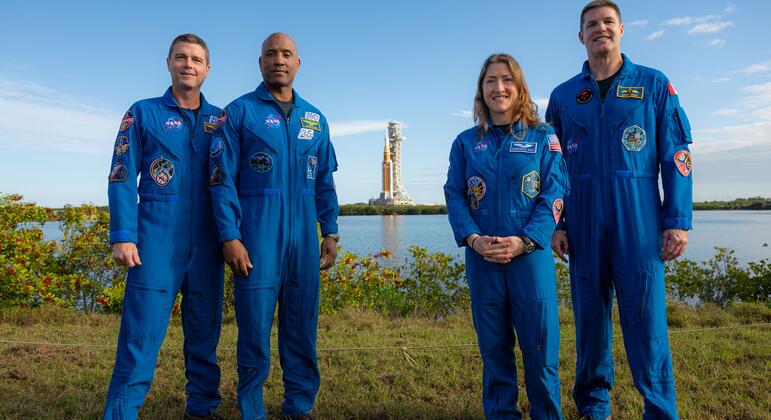
The four-person crew completed the longest manned flight in history, passing beyond the far side of the Moon and successfully returning to Earth after ten intense, eventful and inspiring days. In this short time, as it was emphasized during the meeting, the astronauts “captured the imagination of billions” and reawakened in people a sense of belonging to space exploration. UN headquarters remembers well those who stood at the origins of the space age. Yuri Gagarin and Valentina Tereshkova, who appeared here in the 1960s, symbolized not only technological progress, but also the fact that space is a space where humanity can be united. Since then, representatives of different countries have again and again addressed the international community, emphasizing that space exploration is impossible without cooperation and shared responsibility.
Artemis 2 was a continuation of this idea. The mission was not only a technological breakthrough, but also an example of international partnership: the project involved various countries and institutions, including the European Space Agency, and scientific instruments and systems were created with the participation of specialists from all over the world.
© NASA/J. Kraus
“I had the opportunity to talk to all the crew members on the way here,” said US Permanent Representative to the UN Mike Waltz, who led the meeting with the astronauts, “and I was convinced that they were quite ordinary, but very motivated, three Americans and a Canadian.”
The astronauts emphasized that the task before them was not only testing the ship, but also to remind people on Earth: humanity is capable of great things when we work together.
Earth from the Depths of Space
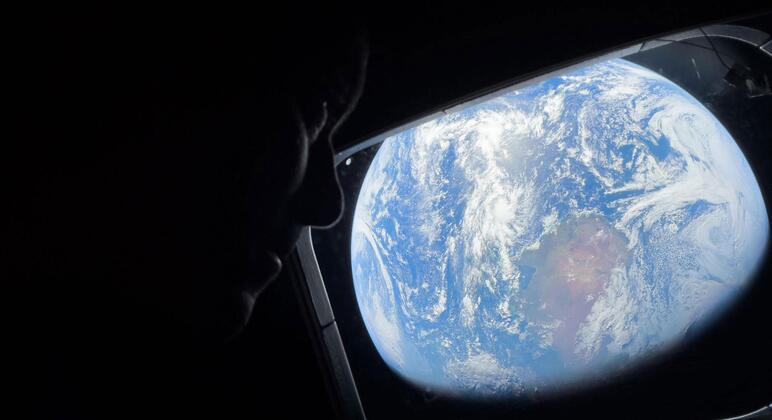
The most powerful experience for all the astronauts was the picture of the Earth seen from the depths of space. From a distance of hundreds of thousands of miles, the planet seemed small, fragile, almost weightless against the backdrop of endless darkness, emphasizing the uniqueness of the Earth and the fact of the existence of life on it. “I felt a sense of great gratitude for what I see,” said Mission pilot Victor Glover. “But I was even more grateful that we would be back soon.”
© NASA
Astronaut Christina Cook, in turn, spoke about her sudden awareness of the scale of humanity in the boundless space.
“We do things that we consider significant and important, but we must remember that nothing lasts forever for us. There is nothing that is guaranteed for us,” she said. “This is our world, and what we do with it is our choice.”
Life on board
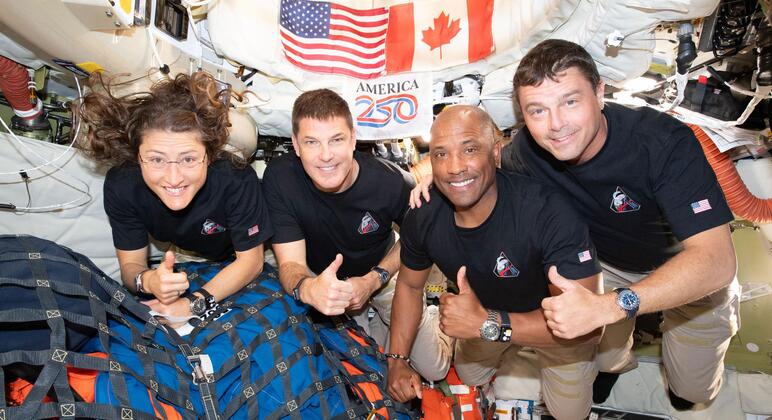
Life inside the ship was extremely stressful throughout the mission. The crew had to combine experiments, navigation, systems control and constant adaptation to weightlessness.
“One day I unsuccessfully opened a bag of food, and pieces of granola from it showered on Victor, who was flying past me at that moment,” said Canadian astronaut Jeremy Hansen. “He told me not to worry about it, took out a spoon and started eating granola straight from his suit.”
Sleeping in floating sleeping bags, long work hours, the need to maintain physical and psychological balance were all part of the daily routine.
“For the first 36 hours of the flight, we were faced with the task of pointing the ship to the Moon,” said mission commander Reed Wiseman. “Afterwards we got together and decided that the priority now becomes the condition of all four of us. We need to eat, we need to sleep, but it’s difficult to sleep because it’s an interesting mission, you’re full of adrenaline and you want to keep working.”
© NASA
The return of man to the Moon
The Artemis 2 mission is only the beginning of a long journey. The program involves returning humans to the Moon, establishing a sustainable presence on its surface and building infrastructure, including a lunar base, that will allow long-term exploration. These plans are based on the Artemis Accords, an international set of principles to which dozens of countries have already joined.
Speaking from the UN platform, the astronauts addressed young people, urging them not to be afraid to ask questions and listen carefully to the answers, because it is curiosity and perseverance that shape future explorers.
At the end of the meeting, the crew reminded: the mission Artemis 2 was measured not only by distances and the level of technology development. Space helps us see the Earth as it is: unique, common, in need of care, and capable of uniting people.