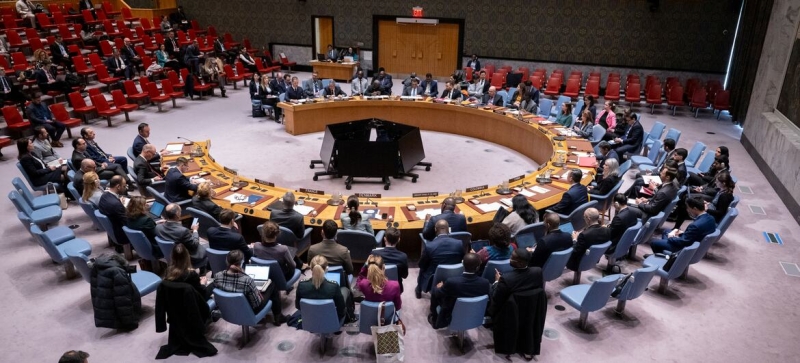

Security Council meeting. Sima Bacchus called on the Security Council to recognize women as key “agents of peace” in the Great Lakes region Peace and Security
The leadership skills and capabilities that women leaders possess are unique and have the potential to transform and stabilize the situation in the Great Lakes region. The Executive Director of UN Women, Sima Bacchus, stated this at the UN Security Council.
The African Great Lakes region is the area in East Africa around a group of large lakes in the East African Rift Zone, including Rwanda, Burundi, Uganda, western Tanzania and eastern Democratic Republic of Congo. The UN is actively working in the region, focusing on stabilizing the situation in the DR Congo and neighboring countries through the activities of the UN mission in the DRC (MONUSCO). However, the mission must completely withdraw its contingent from the country by the end of 2026.
Bacchus recalled that the first Security Council resolution on women, peace and security was adopted in 2000, largely thanks to Nelson Mandela. He supported the efforts of the women of Burundi, whose ideas eventually formed the basis of the Arusha Accords that ended the civil war.
The head of UN Women noted significant progress in expanding women’s representation in politics and peacekeeping. In Uganda, women’s participation in some peace committees increased from 17 percent in 2022 to 46 percent in 2025. In addition, 11 of the 12 countries of the International Conference on the Great Lakes Region already have national action plans on the Women, Peace and Security agenda. The new regional plan for 2026–2030 focuses on the integration of women into state-building processes and the fight against gender-based violence, including in the digital space.
Bacchus paid special attention to the situation in the Democratic Republic of the Congo (DRC). She emphasized that peace in the region directly depends on the situation of women in this country. Progress, she said, will only be possible when women are no longer seen as victims or spoils of war.
Bacchus noted the increasing participation of women in the country’s political leadership, which has already led to results: hundreds of members of rebel groups and military personnel have been tried for sexual violence.
“Peace in The DRC will only be possible when women are treated… as empowered agents of stability, accountability and peace,” Bacchus said.
She expressed concern that despite women’s participation in processes under the auspices of the African Union, important diplomatic documents such as the Washington Accords sidestep gender issues. She called on the Security Council to support equal representation of women in peace negotiations.
Bacchus also recalled the upcoming adoption of the African Union Commission’s framework, which will set a minimum of 30 percent for women’s representation in mediation missions.
The head of UN Women called for defending the activities of the UN peacekeeping mission in the DRC. Bacchus, in particular, recalled the hundreds of trials against perpetrators of violence that the mission has made possible, and the support that peacekeepers provide to human rights defenders. She emphasized that the Blue Helmets send their patrols to places where there are alarm calls from local women and open their bases to displaced people who are at risk danger.
“Now think what will happen if all this is canceled. Remember that 60 percent of women human rights defenders in North Kivu report constant threats. Consider the reports from Doctors Without Borders of the 28,000 victims of sexual and gender-based violence recorded in the first half of last year,” said Bacchus. thousands of women agents of peace throughout the Great Lakes region, at a fraction of the cost of the war, and with incomparably better results,” said Bacchus.