

Brian Cox, British astrophysicist and television presenter. The successful completion of the Artemis 2 mission marks the dawn of a new era in astronautics Economic development
After a 10-day journey around the moon, four astronauts from NASA’s Artemis 2 project successfully returned to Earth last Friday. The historic mission, which set a record for the longest human flight into space, was a major step toward returning to the lunar surface for the first time since 1972, and also laid the foundation for future space exploration.
The UN Ambassador for Space Affairs, world-famous astrophysicist and television presenter, Professor Brian Cox, said in an interview with the UN News Service that it is no longer just about space exploration, but also about improving the lives of every person.
Space Economy
Ultimately, the Artemis program aims to establish a permanent human presence on the Moon, explore its south pole and test technologies for future manned missions to Mars. “As we venture into space, we need to remember that we are not leaving our planet, and the planet remains important to us… we are doing this to improve our lives on this planet,” said Professor Cox. According to the scientist performing See also the role of UN Ambassador for Space, space exploration is no longer science fiction, but “an important part of each of our lives and our Earth-based economy.” Space technology has the potential to help solve some of the biggest challenges facing our planet, including climate change, disaster relief and sustainable development. “An increasing number of things we take for granted here on Earth are already part of the space economy.” – Professor Cox emphasized. Satellite imagery makes it possible to monitor crop yields, more effectively manage water resources and track deforestation in real time. Satellite communications can support distance learning in isolated schools and telemedicine in remote areas.
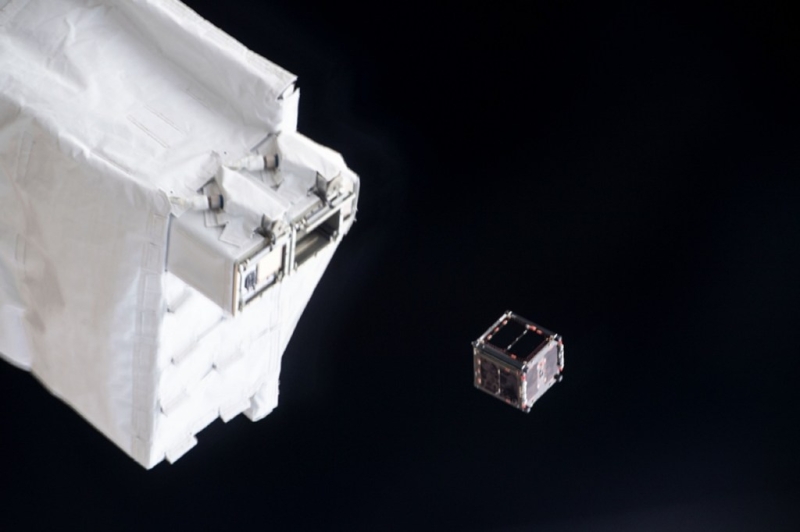
MIR-SAT1: the first ever satellite launched by Mauritius and launched into orbit from the International Space Station.
The Role of the UN
According to Professor Cox, the role of the United Nations beyond the stratosphere is unique: it is a structure that contributes to strengthening the capacity of countries in the field of peaceful exploration and use of space. The UN provides a platform for building consensus among member states, including on potentially difficult issues such as cooperation on lunar exploration, space traffic and planetary protection. “Space brings people together because there are no borders,” he says.
Space Wisdom
“We often idealize space, but this is not naive idealism,” emphasizes Professor Cox. In particular, he recalls the 1975 Apollo-Soyuz mission, a pivotal episode of scientific and political cooperation between the United States and the Soviet Union, when the two countries’ spacecraft docked in orbit for the first time. “It was unthinkable that the United States and the Soviet Union, as it was then, would cooperate in space and together develop technologies that we still use today,” he said. Among the items exchanged between the Soviets were and American astronauts, there was a UN flag, symbolizing recognition of the achievements of all mankind in space.
Common benefits
“If everyone has the opportunity to contribute to and benefit from space exploration, it will be easier to move forward,” says Professor Cox. “Progress will come faster if everyone cooperates.” The UN, along with its partners, helped countries such as Kenya, Mauritius, Moldova and Guatemala launch their first satellites. As more nations join the space club, the United Nations is helping emerging spacefaring nations develop national space legislation consistent with international obligations.
The Space Debris Problem
Space is limitless, but it is becoming increasingly crowded. In 2025, more than 4,500 new satellites were launched, compared with just over two hundred ten years earlier. Many space objects are destroyed in orbit, forming debris. It is estimated that there are currently up to 130 million pieces of debris in near-Earth space. Even very small debris, less than one centimeter in size, can cause catastrophic damage. Scientists are warning of the threat of Kessler syndrome, a chain reaction in which collisions of space objects create more and more debris, leading to further collisions. As we develop infrastructure in space and rely more on it on Earth, serious problems grow, warns Cox.
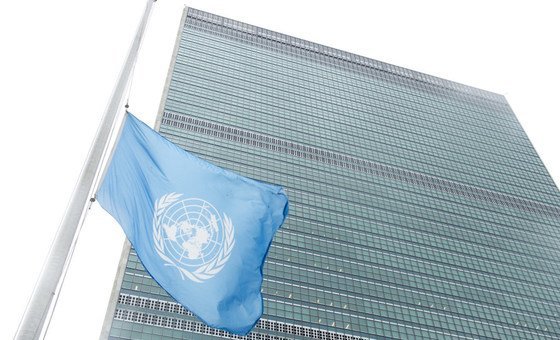
UN flag on Mars?
The professor says that what he would most like to see in his life is the discovery of “another living world”: “I would not be surprised if microbes were discovered on the satellites of the planets of the solar system or on Mars. However, I would be very surprised if any complex life forms were found in the solar system.” Brian Cox is looking forward to the next moon landing and hopes that one day people will set foot on Mars: “I think that when we plant a flag on the surface of Mars, it will be the flag of the United Nations.”