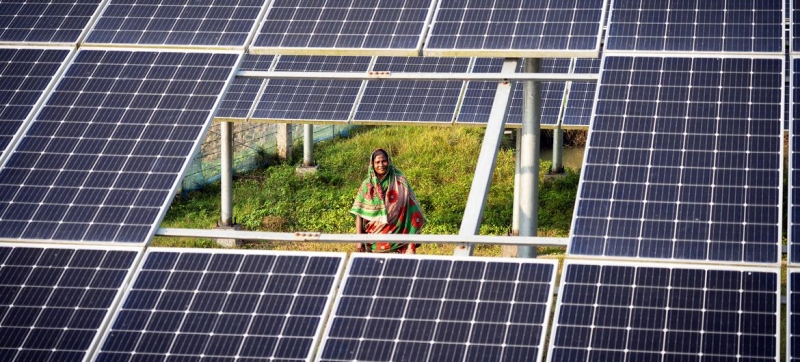

The transition to clean energy such as solar is accelerating around the world. Consequences of the Middle East crisis: South Asia on the verge of an energy shock Economic Development
The war in the Middle East has threatened the economic stability of South Asian countries. Experts from the UN Economic and Social Commission for Asia and the Pacific (ESCAP) warn that the region is facing unprecedented risks, but they can become a catalyst for the transition to renewable energy sources.
Oil shock
World energy markets are in a frenzy: oil prices have soared to record levels for the entire period since the 2008 recession. The main reason is restrictions on shipping in the Strait of Hormuz, through which about 20 million barrels of oil pass daily, or 20 percent of all oil in the world.
For South Asian countries, these are not just numbers, but a direct threat to the economy. Thus, India imports almost half of its crude oil and a significant part of liquefied natural gas (LNG) through this strait. Pakistan and Bangladesh depend on LNG supplies from Qatar and the UAE (up to 72 percent of all gas imports). Sri Lanka and the Maldives are already facing a deteriorating balance of payments that threatens rising inflation and devaluation of national currencies.
Economies under attack
Dependence on fossil fuels makes the region vulnerable to such situations. Rising energy prices instantly affect all sectors of the economy. In particular, agricultural products become more expensive and the pace of industrial production slows down.
For developing economies, where affordable energy is the foundation of growth, such shocks can lead to a protracted recession.
“Window of opportunity”: transition to renewable energy
Despite the gloomy forecasts, analysts see a “window of opportunity” in the current crisis. In the face of global instability, energy security can no longer rely solely on fossil fuels, ESCAP experts emphasize, calling on countries in the region to join forces to create an environmentally friendly and independent energy future.
Forced abandonment of expensive imported fuels could accelerate the transition to renewable energy sources, which could potentially result in a “triple-fold” for the countries of South Asia win.”

Using the sun, wind and hydro resources of the Himalayas will reduce dependence on volatile world prices and ensure energy security.
Investment in the production of solar panels, batteries and grid modernization will create new jobs and stimulate economic growth.
In addition, the transition to “clean” energy will help solve the problem of catastrophic air pollution in the megacities of South Asia, which, in turn, will improve public health.
The path to a “green” future
Successful examples of the development of the green industry in South Asia already exist: cross-border trade of electricity between India, Nepal, Bhutan and Bangladesh proves the effectiveness of regional cooperation.
However, for a full breakthrough, the countries of the region need to overcome the financial deficit and modernize outdated energy networks.