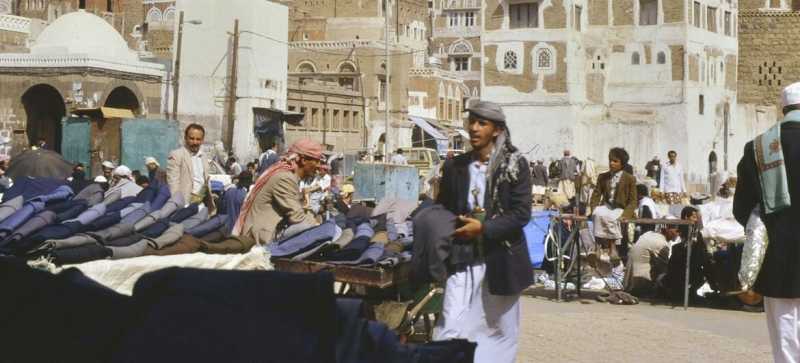

Market in Sana’a, Yemen. Escalating conflict in the Middle East wipes out a year of economic growth in the Arab region Peace and security
The military escalation in the Middle East, which has now entered its fifth week, could lead to a large-scale setback in socio-economic development in Arab countries. This is the main conclusion of the authors of the report of the United Nations Development Program (UNDP), presented on Tuesday in Amman, Jordan.
According to preliminary estimates by UNDP experts, the region risks losing from 3.7 to 6 percent of total GDP, or $120–194 billion. This amount exceeds the entire economic growth that was achieved in the Arab region in 2025. At the same time, the unemployment rate could rise by four percentage points, which is equivalent to the loss of 3.6 million jobs. Up to four million people could fall below the poverty line. The authors of the UNDP analytical report emphasize that even short-term conflict can cause “deep and widespread socio-economic consequences that will persist for a long time.” The most serious macroeconomic losses are predicted for the countries of the Gulf Cooperation Council, where high dependence on trade and energy markets makes the economy particularly vulnerable. In this subregion, the decline in GDP could reach 5.2-8.7 percent. The sharpest increase in poverty – by five percent – is expected in the Eastern Mediterranean, where another 2.85-3.3 million people could find themselves without a livelihood. This would account for more than 75 percent of the total increase in poverty in the region. In the least developed Arab countries, the impact will also be significant, given the low underlying resilience of their economies. In North Africa, the potential impact of the conflict is assessed as moderate. According to Abdalla Al-Dardari, director of the UNDP Regional Bureau for Arab States, the crisis should be a signal for a rethink of development strategies in the Middle East. He stressed the need to diversify the economy, strengthen logistics and expand partnerships, which will reduce vulnerability to possible shocks and conflicts. UNDP also warned of a decline in the Human Development Index: for the region as a whole, this indicator is expected to fall by 0.2-0.4 percent, which corresponds to a rollback of six months or even a year from the achieved level. In the Gulf countries, the decline could be even more significant – up to two years of development.