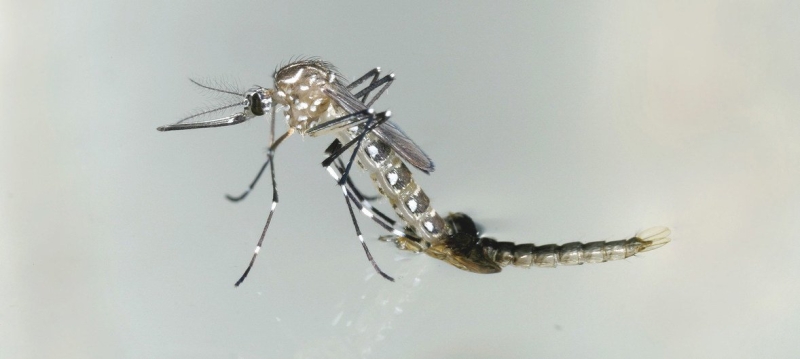

Warmer weather and changes in precipitation create favorable conditions for mosquito breeding. The IAEA and the city of Graz presented the first results of an experiment on mosquito sterilization Climate and Environment
The International Atomic Energy Agency (IAEA) and the Austrian city of Graz announced the first results of an experiment to sterilize male mosquitoes. This technique could form the basis of a pest control strategy that involves mass safe breeding and sterilization of insects using radiation.
The Aedes albopictus mosquito, also known as the “tiger mosquito”, was first discovered in Austria in 2012 and has since spread to all of the country’s federal states. Graz has seen a particularly high mosquito population in recent years. In response to the growing number of complaints, as well as the increasing risk of the spread of arboviruses in Europe, the city of Graz sought the support of the IAEA, headquartered in Vienna, to initiate an MRR study. populations.
Experiment progress
Over seven weeks in August and September last year, more than 800,000 sterile mosquitoes were released into a 15-hectare area of garden plots in southern Graz. These males have been sterilized by radiation, meaning that if they successfully mate with wild females, no offspring will be produced.
Mosquito populations, including invasive species such as Aedes albopictus, are growing rapidly across Europe and the world due to changing weather patterns, urbanization and intensified international trade. Warmer weather and changed precipitation levels create favorable breeding conditions, allowing species previously restricted to the tropics to establish themselves in temperate latitudes. Range expansion poses increasing public health challenges as mosquitoes transmit dangerous diseases including chikungunya, dengue and Zika virus.
Data Analysis Results
Analysis of data from recaptured mosquitoes in a study conducted jointly by the City of Graz and the IAEA provides key scientific information on the size of the wild mosquito population, the distance that sterile males can travel, their survival in the wild and their mating competitiveness.
“Preliminary results give us the basis for determining the optimal way to implement the insect sterilization method in Graz, said Hanano Yamada, entomologist at the Joint FAO/IAEA Center for Nuclear Technologies in Food and Agriculture. “This information is needed to determine the scale, frequency and geographic scope of future releases of sterile mosquitoes as part of pest control.”
High efficiency of the technique
Preliminary results of the study demonstrated the high effectiveness of the technique. Egg sterility rates were approximately 70 percent, and the number of females caught in traps decreased significantly during the study period compared to the adjacent untreated site. This demonstrates that sterile males successfully compete with wild ones and that their release can significantly reduce mosquito numbers in densely populated urban areas.
Based on the findings, the City of Graz and the IAEA are preparing recommendations on next steps for the 2026 mosquito breeding season.