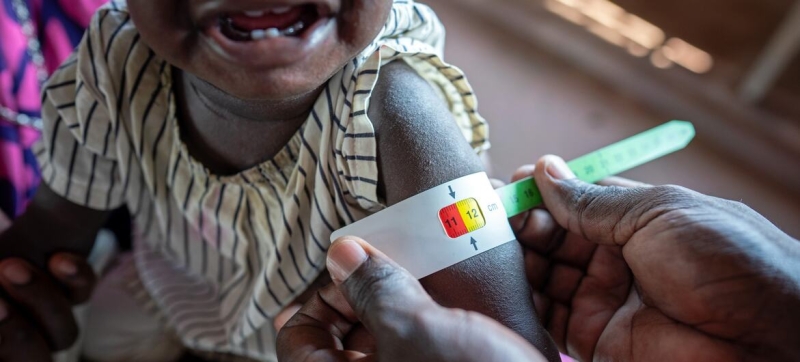

© UNICEF/M. Naftali The health worker measures the child’s arm circumference to determine the level of malnutrition. Conditions are forecast to worsen for millions of people in 13 hunger hotspots Humanitarian aid
Between June and November 2026, food insecurity is expected to further worsen in 13 hunger hotspots. The Food and Agriculture Organization of the United Nations (FAO) and the World Food Program (WFP) warn about this today.
The new edition of the Global Food Crisis Network’s biannual Hunger Hot Spots report identifies Sudan, South Sudan, Yemen and Palestine as the most critical hotspots in terms of the extent and severity of hunger.
Nigeria has been added to the list of countries of greatest concern. The population of Borno State is projected to face catastrophic levels of hunger in the coming reporting period. Somalia was also included in this category, where residents of the Burhakaba district in the Bai region are facing widespread famine.
Conflicts, crises and lack of funding
Armed conflicts and violence remain the main factors aggravating the situation; they affect 12 of the 13 hot spots. Food shortages are also linked to economic turmoil and severe funding shortfalls. In addition, El Niño could bring uneven rainfall, droughts and floods.
Meanwhile, funding for food aid, emergency agricultural support and nutrition programs fell by about 59 percent between 2022 and 2025. At the same time, the number of people facing severe food insecurity in crisis areas has risen to approximately 266 million.
Additional shocks are worsening the outlook for millions of people around the world. This is due to the “domino effect” of the conflict in the Middle East and the Ebola outbreak in the eastern regions of the Democratic Republic of the Congo (DRC).
The most critical hotspots
In Sudan, the risk of mass famine between now and September 2026 has been identified in 14 state areas North Darfur, South Darfur and South Kordofan; In 13 areas this threat is expected to continue until the January 2027 harvest. By May 2026, an estimated 19.5 million people – 41 percent of the population – suffered from high levels of acute food insecurity. According to forecasts, the number of people in a catastrophic situation will increase in 15 districts to 200 thousand people in June-September 2026, compared to 135 thousand in February-May 2026.
In South Sudan, the report estimates that between April and July 2026, 7.8 million people – 55 percent of the population – will face a severe nutritional crisis. The risk of mass famine is predicted in four districts until July 2026.
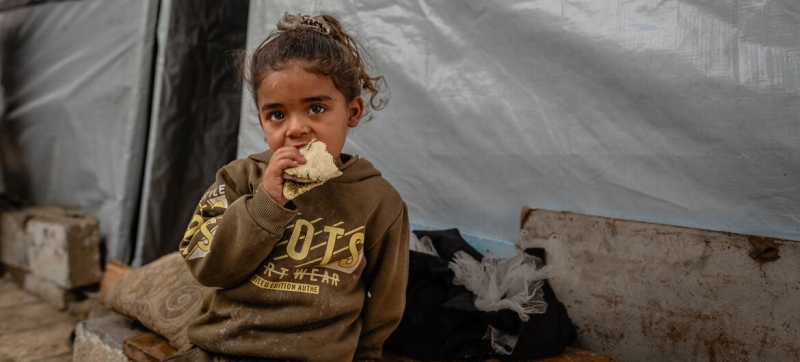
© VPP/M. Le Lijour A girl eats a piece of bread near a tent in Gaza City.
Yemen’s acute food insecurity rates are expected to remain among the worst in the world in 2026. Earlier estimates suggested that more than half the population—18.3 million people—were food insecure. Some 5.4 million people in government-controlled areas will be at crisis levels or worse between June and September 2026, according to a new analysis.
Nigeria is now at maximum alert level with about 34.8 million people facing high levels of acute food insecurity in June-August 2026, including 1.8 million people in the emergency phase and about 15 thousand people in the disaster phase in Borno State.
The situation in the Gaza Strip has improved since the October 2025 ceasefire, but remains fragile. The entire territory remained at risk of famine until mid-April 2026, with 1.6 million people experiencing severe food insecurity and requiring urgent assistance (77 percent of the population analyzed). At the time of writing, forecasts for the period from June to November 2026 were not available.
High levels of acute food insecurity are predicted for 6 million people in Somalia between April and June 2026. A risk of mass famine has now been identified in the Burhakaba region. This reflects the overall deterioration of the situation in the country, caused by years of drought, record low harvests, conflict and the effects of the Middle East crisis.
High Alert
Afghanistan continues to suffer from prolonged droughts, high food prices and escalating conflict.
Read also:
15 thousand kilometers: how the World Food Program is helping Afghan schoolchildren
In the Democratic Republic of the Congo, the situation remains dire, which due to conflict in the eastern provinces and large-scale population movements. The Ebola outbreak poses a new risk, threatening to worsen acute hunger by disrupting markets, restricting mobility and hampering humanitarian operations.
Haiti, previously classified as a “maximum concern” area, has moved to the “very high concern” category. This reflects limited local improvements, including slower inflation and improved access to some roads, although the overall situation remains highly fragile.
Other hot spots
Myanmar and Mali are classified as hot spots where conditions are expected to worsen. Conflict, economic pressure and climate instability increase the vulnerability of the population. Lebanon and Madagascar were added to the list of “hot spots” due to the escalation of hostilities in late February 2026 and adverse, unpredictable weather conditions respectively.

© VPP/S. Barral WFP delivers humanitarian aid to Haiti.
Overall, the report points to worsening prospects for millions of people in the second half of 2026, with unprecedented levels of catastrophic famine persisting or threatening multiple regions. scaling up humanitarian assistance, ensuring safe access, investing in livelihoods and strengthening community resilience.
“The warnings in this report cannot be ignored,” said WFP Acting Executive Director Karl Skau. “Conflict, upheaval and natural disasters force families to make impossible decisions about who will eat and who will go to bed hungry.”
The report emphasizes that early response saves lives and is significantly more cost-effective than responding to an already established crisis. Without stronger political commitment, predictable financing and collective action, the situation in the world’s most vulnerable regions will only worsen in the coming months.
“We already know where the next hunger emergencies will occur,” said FAO Deputy Director-General Beth Bechdol. “The question is whether we can act quickly enough and on the scale needed.”