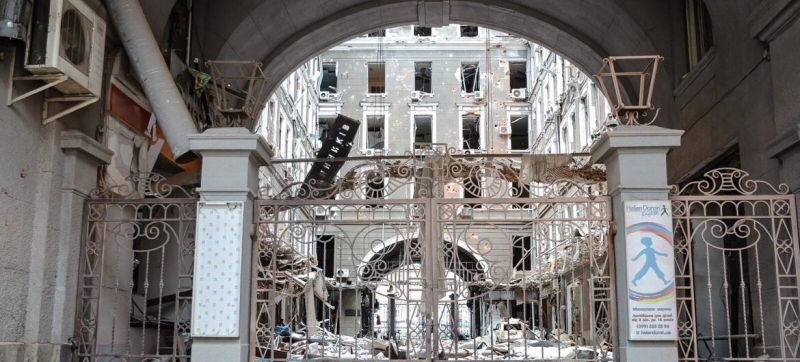

© Kharkov City Council Since the start of the full-scale war in Kharkov, about 13 thousand buildings have been damaged or destroyed, including approximately 10 thousand residential buildings. Reviving hope under fire: how Kharkov is planning its future amid the ongoing war Peace and Security
Every day in Kharkov begins with uncertainty. The howl of air raid sirens interrupts my sleep. Rockets are hitting residential areas, industrial zones and roads. Children study underground. During the bombings, people rush to the metro station. And yet, amid this destruction, Ukraine’s second largest city is doing what seems almost impossible in wartime – planning for its future.
“We need to rebuild the city, despite the war,” Kharkov Mayor Igor Terekhov said in an interview with UN News Service on the sidelines of the 13th World Urban Forum (WUF13) in Baku. “Because we understand perfectly well: if we don’t rebuild, there will be only ruins, people will leave and never come back.” invasions.
According to the mayor, about 13 thousand buildings were damaged or destroyed in the city, of which approximately 10 thousand were residential buildings. About 160 thousand people lost their homes.
“Shelling occurs every day, and it’s terrible,” Terekhov shares. “People are very tired of constantly trying to survive.”
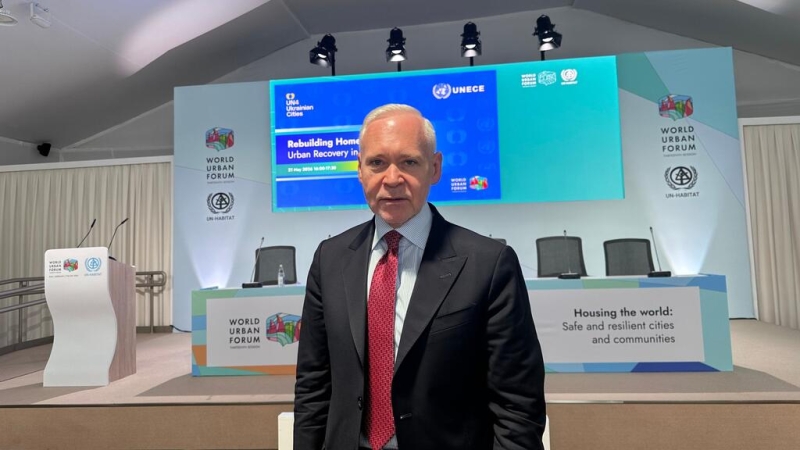
© EEC/V. Kalashnikov Igor Terekhov, mayor of Kharkov.
And yet, despite daily attacks, urban planners, architects, engineers and international organizations are working hand in hand with Ukrainian authorities to imagine what the city could become after the war.
At the center of these efforts is the UN4UkrainianCities initiative led by the United Nations Economic Commission for Europe (UNECE). It supports the reconstruction and modernization of Kharkov, as well as Nikolaev.
The goal of the project is not just to respond to emergencies, but also to help cities rebuild to smarter, greener, and more sustainable standards.
To many outsiders, long-term urban planning in the midst of war may seem premature. But for those who work in the field, waiting is not an option.
“The country is still under attack and emergency work is still needed,” Tamara Fortes told UN News Service at a forum in Baku. “But mitigation and large-scale restoration must go hand in hand.”
Fortes explains that the project is designed so that today’s urgent repairs will work for the development of the city in the future.
“If you build something right now, without thinking about the long term, in ten years it may not be unnecessary for the city,” she says. “So we help cities think not only about the current emergency, but also about how emergency measures will fit into tomorrow.”
Tomorrow takes shape in the new concept of the master plan of Kharkov. It is based on sustainable infrastructure, affordable housing, innovative public spaces and economic revitalization. The project combines strategic planning with pilot projects that test ideas at the neighborhood level.
One of the largest projects is taking place in Northern Saltovka, a hard-hit residential area. What began as an architectural competition moved into the technical implementation stage. New projects with energy-efficient insulation, modular extensions and strengthening of load-bearing structures are being developed for five residential areas and a kindergarten. The goal is purely practical: to prepare detailed technical documentation that city officials can immediately present to donors, investors or development banks as soon as funding becomes available.
“We are moving from concepts to action,” Fortes emphasizes. “We don’t just analyze and evaluate, we give cities what they can actually build.”
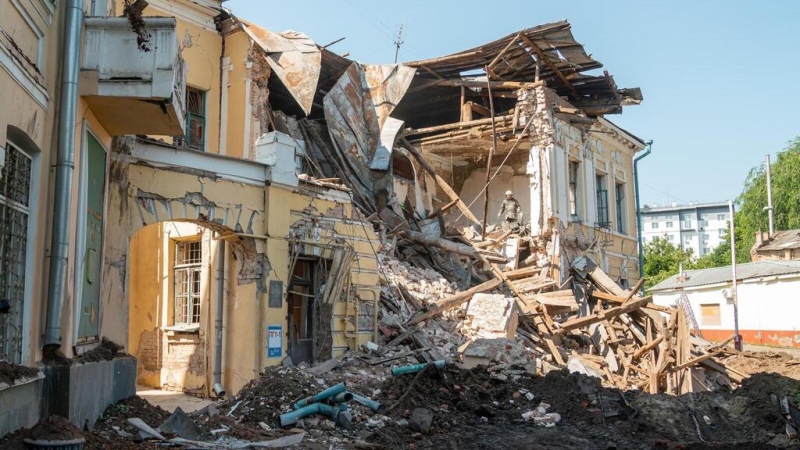
© Kharkov City Council Kharkiv, once a thriving industrial, scientific and cultural center of Ukraine, is among the cities hardest hit since the full-scale Russian invasion began.
Kharkov’s broad vision includes five major pilot initiatives combining heritage conservation, sustainability and innovation. One of the projects is dedicated to the restoration of the historical center damaged by the war, adapting ancient interiors to modern social and cultural needs. Another project aims to transform industrial waterfronts into green public corridors along the city’s entire 25-kilometer river system.
The science and technology district, close to leading universities, is designed to attract young talent and help diversify the economy. And industrial zones that depended on coal are being reimagined as clean manufacturing hubs powered by renewable energy.
This work goes far beyond infrastructure. UNECE, together with Ukrainian partners, is developing housing policy reform at the national level, including laws on social rental housing and housing management.
Meanwhile, local authorities must face the harsh realities of war on a daily basis.
“It’s impossible to get used to this,” Mayor Terekhov says quietly. “Perhaps there is some dulling of feelings, but people are constantly under threat.” He tells of children forced to study underground due to air raids, of passengers coming under fire on public transport, and of families living under endless psychological stress.
Yet he emphasizes that recovery cannot be put off until later. “If we don’t think today about how to restore the city and how to live in the future, then nothing will happen,” he is convinced. “People live today with the hope that we will rebuild everything.”
This hope is especially important for a city known for its architectural heritage. Museums, libraries and ancient mansions of Kharkov were seriously damaged. Terekhov recalls the attacks on the famous Kharkov State Scientific Library named after V. G. Korolenko and historical buildings next to the art museum.
“These are the pearls of Ukraine,” he says. – Some buildings cannot be restored to their original form because they were hit by several ballistic missiles at once. But we are trying to preserve this architecture.”
The planning process itself changed as the war progressed. According to Fortes, flexibility has become one of the main priorities. “Sometimes there is no electricity. Sometimes there is no internet. Sometimes people sit in bomb shelters,” she says. “So we realized that the project must constantly adapt to urban realities.”
A crisis is not a reason to stop thinking about the future
Weekly meetings with local officials allow planners to adjust schedules and priorities in real time. Ukrainian specialists, students and local residents are deeply involved in the process. International study tours—including recent training in Italy on decentralized energy systems—are helping municipalities prepare for future challenges.
But Fortes believes the sharing of experience is mutual. “The world has a lot to learn from Ukraine,” she says. “A crisis is not a reason to stop thinking about the future.”
War forces architects and designers to rethink the very concept of urban space. Now, new residential projects in Kharkov are incorporating dual-use underground spaces: in peacetime, they serve as ordinary public infrastructure, and during attacks they become shelters.
“In peacetime, this could be a parking lot. In military use, it turns into a shelter,” explains Fortes. The same approach applies to kindergartens and schools, some of which are designed with underground classrooms.
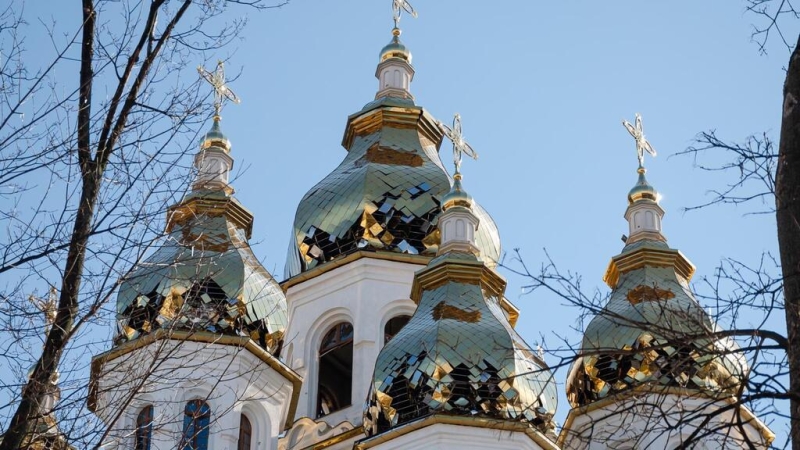
© Kharkov City Council The authorities and residents of Kharkov have to deal with the brutal realities of war every day.
This approach is partly adopted from Finland, where civil defense infrastructure has long been integrated into everyday life in many cities, Fortes says. Underground facilities that are normally used for sports, car parking or recreation can quickly turn into emergency shelters if necessary. “People don’t always notice them,” she says, “but they’re already there.”
She believes such ideas could have relevance far beyond Ukraine, as cities around the world face not only the threat of war, but also climate disasters and other crises that require greater resilience.
“The crisis is happening at the local level – at your street, in your home,” she concludes. “Cities must be prepared.”
In Kharkov, preparedness now means much more than just the availability of shelters and emergency repairs. It means preserving community, protecting the identity of cities, and giving people a reason to stay—or one day return home.
“Our cities will no longer be the same as they were before the war,” says Mayor Terekhov. “We need a new vision.”