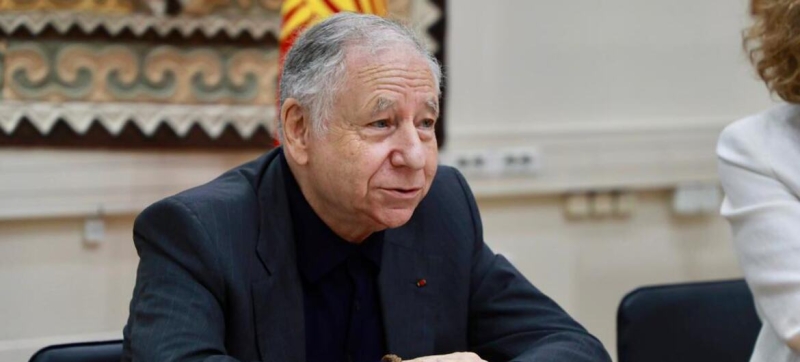

UN in Kyrgyzstan UN Secretary-General’s Special Envoy for Road Safety Jean Todt during a visit to Kyrgyzstan. UN special envoy: deaths on roads can be prevented Healthcare
Road accidents cost Kyrgyzstan $372 million annually, and Azerbaijan about $940 million. The UN Secretary-General’s Special Envoy for Road Safety, Jean Todt, recently visited both countries. In an interview with the UN News Service, he spoke about the results of his trip and the situation with road safety in the world.
Kyrgyzstan: The Cost of Accidents and the Readiness for Progress
Road accidents cost the Kyrgyz economy an estimated $372 million annually, equivalent to nearly four percent of the country’s gross domestic product. Pedestrians account for 40 percent of fatalities, and almost 22 percent of all road accident victims are children under 18 years of age.
During his visit to Bishkek, Todt met with representatives of the ministries of internal affairs, transport, health, education and emergency situations. According to him, the country’s authorities are determined to change the situation.
“In Kyrgyzstan, I saw a serious willingness to push for change,” he said.
In February 2026, the Kyrgyz Ministry of Transport and Communications approved guidelines for safe and inclusive road design. Modern safety requirements are now mandatory when developing new road projects.
The country also has laws regulating speed, drunk driving, the use of motorcycle helmets and mobile phones while driving. However, as experts note, it is necessary to strengthen control over compliance with these rules and improve the collection of data on road accidents.
According to Todt, effective measures have long been known. “Education, increased law enforcement, quality helmets, use of seat belts in front and rear seats, speed control, combating drink and drug driving and telephone use will all change people’s behavior and make road users less vulnerable,” he said. tasks
In Azerbaijan, the number of road accidents in 2025 decreased by 12.3 percent compared to the previous year. A decrease of 12.8 percent was also recorded in 2024.
“Azerbaijan has already begun this work. They understand the importance of the problem and are taking action,” Todt noted.
The country is implementing a national strategy in the field of road safety.
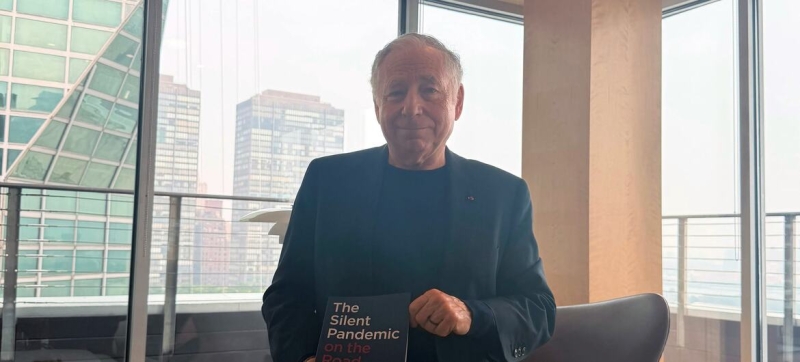
UN News Service Jean Todt holds a copy of his book “The Silent Pandemic on the Roads.”
Commenting on the Formula 1 races in Baku, Todt noted that motorsport shows how effective strict safety controls can be.
“On the Baku track, even high speed remains safe, because the rules are followed, the appropriate equipment is used, and the cars meet strict requirements. But this is an organized show. A completely different situation arises with the daily use of a car or for a pedestrian, if the rules are not enforced as strictly,” he said.Around the world, about 1.2 million people die on roads every year, and approximately 50 million more are injured, including those leading to disability. Road traffic accidents remain the leading cause of death for children and young people aged five to 29. About 90 percent of fatalities occur in low- and middle-income countries.
Todt calls it a “silent pandemic” because in many countries crashes and deaths have become part of everyday life.
“People are getting used to situations. In many countries, they have never seen a proper safety helmet in their life. It is necessary to disseminate best practices and apply them in developing countries,” said the Special Envoy.
Read also:
INTERVIEW | How to ensure the safety of pedestrians and cyclists in post-Soviet countries
According to him, unlike many other global crises, there is already a proven “recipe” for combating road injuries: education, effective legislation, safe cars and roads, and quality care after accidents. motorsport to road safety
Todt has served as Special Envoy of the UN Secretary-General since April 2015. Before that, he headed the Fédération Internationale de l’Automobile, the organization that coordinates Formula 1, and held senior positions at Ferrari and Peugeot Citroen. Todt began his career as a motorcycle racing athlete.
He said that his personal interest in road safety stems from his long career in motorsports.
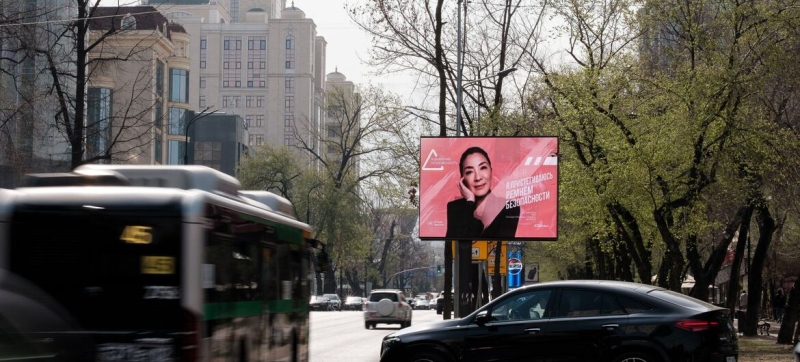
UN in Kazakhstan UN Global Campaign for Road Safety on the Streets of Kazakhstan.
“When I started, auto racing was very dangerous. People weren’t surprised if someone died in a racing car. Today, on the contrary, everyone will be surprised by a serious injury, because enormous progress has been made in the area of safety,” Todt said.
The measures that have proven effective in motorsports should also be applied on ordinary roads, he said.
“I hope that in 10 or 20 years, an injury on the road anywhere in the world will cause the same surprise,” – he added.
We need to start with the children
The Special Envoy believes education is the basis for long-term change.
“If you teach a boy or girl at six, seven or eight years old to behave correctly on the road, they will teach this to the adults with whom they ride in a car or on a motorcycle. And when they have their own transport, they will already know how to use it safely,” he said.
At the same time, training should be accompanied by the inevitability of punishment for violations. According to Todt, a person who is confident that there will be no consequences for speeding or other dangerous actions will be less likely to follow the rules. Corruption is a particular problem.
“Law enforcement cannot work in the presence of corruption,” the Special Envoy emphasized. cities
The development of electric bicycles, electric scooters and delivery services creates additional risks even in developed countries. Todt drew attention to the situation in New York, where many users of the new transport ride without helmets, drive onto sidewalks and violate traffic rules.
A separate danger is presented by the system of remuneration for couriers, in which their earnings depend on the number of completed orders. The pressure to deliver more orders may push drivers to rush and take risks.
Regulation and oversight must evolve along with new forms of mobility, Todt says.

© UNICEF/T. Bindra Many developing countries continue to rely on outdated vehicles and infrastructure.
Autonomous cars could also make roads safer in the future, but the Special Envoy warned against placing too much faith in the technology. In the countries where the majority of traffic fatalities occur, cars often remain in service for 20 to 40 years, public transport is poorly developed, and basic rules are not enforced.
So in the near future, autonomous vehicles will not be able to solve the problem where it is most acute.
Meeting in UN
On July 20–21, the UN headquarters in New York will host a High-level meeting on improving road safety. Heads of state, ministers and experts will discuss how to accelerate the achievement of the global goal of halving the number of road deaths and injuries by 2030.